



United States President Donald Trump has made a civil nuclear agreement with Saudi Arabia conditional on the kingdom recognising Israel, a day after the two governments signed the deal.
In a post on his social media platform on July 23, Trump said the agreement “is totally subject to Saudi Arabia joining the very respected and successful Abraham Accords”. He added that there would be no enrichment of nuclear material under the arrangement.
White House press secretary Karoline Leavitt confirmed the condition at a briefing hours later, telling reporters “the deal is off” if Riyadh declined. She said Washington would continue talking to its Saudi counterparts.
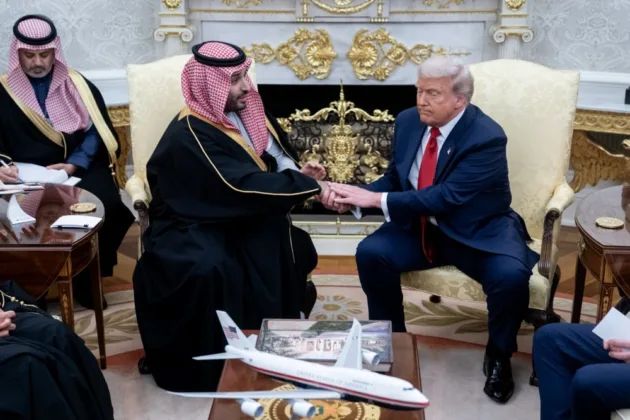
The agreement was signed on July 22 by US energy secretary Chris Wright and Saudi energy minister Prince Abdulaziz bin Salman. The Department of Energy presented it as a peaceful nuclear cooperation agreement accompanied by a bilateral safeguards deal.
Neither government has published the text, which must go to Congress for review. Reports have put its duration at 30 years and its value in the tens of billions of dollars.
No mention of the accords appeared in the documents announced in Washington. Broadcaster CNN reported that the condition took the administration’s own negotiators by surprise, and that the White House had asked the energy department to delay the announcement.
The deal is structured to give American firms the central role in building Saudi reactors, at the expense of foreign rivals. France’s EDF had been among the approved bidders for the kingdom’s first large power station, alongside South Korea’s KEPCO, Russia’s Rosatom and China National Nuclear Corporation.
Saudi Arabia has said for years that it will not establish relations with Israel without a credible path to a Palestinian state. Several European Union member states, among them France, Spain, Ireland and Belgium, have recognised Palestinian statehood since 2024.
The Abraham Accords, brokered during Trump’s first term, normalised relations between Israel and the United Arab Emirates, Bahrain, Morocco and Sudan. Riyadh stayed out.
Israeli Prime Minister Benjamin Netanyahu’s office welcomed the announcement, describing Saudi accession as “an historic leap forward for peace”. The Saudi government had not commented publicly by the evening of July 23.
The International Atomic Energy Agency said it had been notified of plans to request verification measures tied to the bilateral arrangement and that it awaited the formal request.
The exchange came as the war with Iran continued to push oil prices higher, with Congress split over whether to force an end to American involvement.