


The European Union’s next long-term budget has entered its final stretch with a compromise on the table that protects farm aid and takes almost half of its cuts from competitiveness spending.
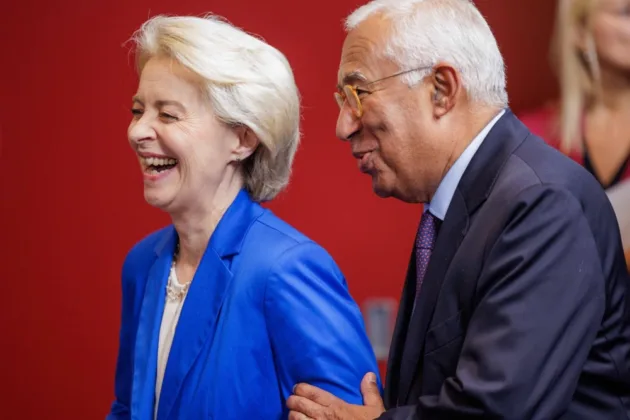
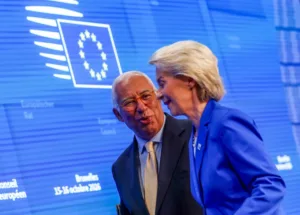
European Council President António Costa has taken over the talks from the rotating presidency and is preparing a revised negotiating box for a special summit in Brussels on November 26-27. Leaders are also due to meet informally in Dublin on November 13.
The European Commission tabled its proposal for the 2028-2034 Multiannual Financial Framework (MFF) on July 16, 2025. It was worth almost €2 trillion in current prices, or €1.763 trillion in 2025 prices.
On October 10 the Irish EU Council presidency put forward a revised negotiating box that set commitments at €1.622 trillion in 2025 prices. That is about €141 billion, or 8 per cent, below the Commission’s figure.
Nearly €67 billion of the cut came from the heading for competitiveness, research and security, which fell by almost 13 per cent to €455.6 billion. It covers the new European Competitiveness Fund, Horizon Europe at €140 billion and the Connecting Europe Facility at €61.9 billion, including €14 billion for military mobility.
External spending took the steepest proportional hit. The Global Europe heading dropped by 17 per cent, from €190 billion to €156.9 billion.
A separate Ukraine Reserve, outside the budget’s ceilings, was set at €88.9 billion for 2028-2034, down from about €100 billion.
The heading covering cohesion, agriculture and fisheries, the largest in the budget, shrank by only 3 per cent to €914.2 billion. Within it, minimum income support for farmers was held at about €261 billion, the same as in the Commission’s proposal.
The national and regional partnership plans, which merge cohesion and farm funding into one envelope per member state, were cut from €771.3 billion to €746.7 billion.
Spending on the EU’s own administration was trimmed by €9.2 billion to €95.3 billion.
Who pays is as contested as what is spent. The Commission wants five new own resources, including the Corporate Resource for Europe (CORE), an annual lump-sum charge of €100,000 to €750,000 on companies with net turnover above €100 million.
The Commission estimated that CORE alone would raise about €6.8 billion a year.
The Irish box keeps a turnover-based corporate contribution in square brackets, alongside levies linked to tobacco, electronic waste, emissions trading and the EU’s carbon border tax. None of them has been agreed.
It also leaves open an option for crisis borrowing of up to €350 billion, which would need a qualified majority in the Council and the consent of the European Parliament. That text, too, remains in square brackets.
Both choices run into the net contributors. On August 27 Germany, the Netherlands, Austria, Finland, Sweden and Denmark demanded in a joint statement that the Commission’s plan be cut by several hundred billion euros, with all spending headings contributing.
The six said new common borrowing was “not the solution” and that EU institutions should organise their workload within existing staff levels.
The Irish plan won no significant backing at the October 15-16 summit. Before it opened, net contributors meeting at the initiative of Austrian Chancellor Christian Stocker, now joined by Belgian Prime Minister Bart De Wever, agreed that it offered no basis for a deal, according to the Austrian chancellery.
“We must not forget: the EU budget means an increase of 49 per cent, and that is simply still too much,” Stocker said. His office put the current framework at about €1.2 trillion.
Any deal requires the unanimous backing of all 27 member states and the consent of the European Parliament, so a single government can block it.
The talks are now entangled with Ukraine’s needs before the new budget starts. President Volodymyr Zelensky told EU leaders on October 16 that the war would cost his country €155 billion in 2027 and asked them for at least €70 billion more.
That would come on top of the €90 billion EU support loan for 2026 and 2027. In their conclusions, leaders said they would “revert to the issue in a timely manner”.
After the summit Costa said leaders had asked the Commission for a proposal to cover Ukraine’s additional financing needs for 2027. It is due to be discussed at the same special summit.
The calendar adds pressure. Spain holds a snap general election on November 29, two days after the summit closes, while France, Italy and Poland face elections in 2027.
Leaders have set the end of this year as the deadline for the next European Union budget, so that it can take effect on January 1, 2028. Should the November summit fail, the next chance would come at the regular European Council on December 17-18.