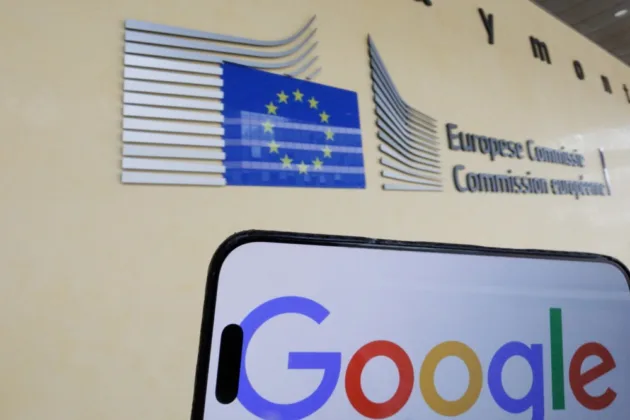







Google has rewritten how its “site reputation abuse” spam policy works for search users in the European Economic Area (EEA), a change that follows an EU antitrust inquiry opened after news publishers said the old rule was costing them traffic and advertising money.
The company’s own search documentation now states that, inside the EEA, pages hosting third-party content will no longer face a manual penalty of the kind applied elsewhere.
Those pages may instead be treated as separate from the main domain and ranked on their own merits. Manual actions already taken under the policy for EEA results are to be lifted.
Google said the change would take effect on August 30, covering the 27 EU member states plus Iceland, Norway and Liechtenstein.
Outside the EEA the older, harder line remains.
The European Commission opened a Digital Markets Act (DMA) investigation on November 13, 2025. The act is the EU law designed to rein in Big Tech.
Officials said Google appeared to demote news media and other publisher sites in search when those sites carried content from commercial partners, a common way for newspapers and magazines to earn money through affiliates and third-party online advertising.
European Commission competition chief Teresa Ribera said publishers were not being treated in a fair, reasonable and non-discriminatory way, adding the Commission would investigate to make sure news publishers were “not losing out on important revenues at a difficult time for the industry”.
German firm ActMeraki and European publisher groups were among those who complained.
Google called the probe misguided and said it risked harming users by weakening defences against “parasite SEO”, in which low-quality pages ride on a trusted domain’s ranking. Google’s Pandu Nayak said the investigation “risks rewarding bad actors and degrading the quality of search results”.
On May 6, 2026, Google’s parent company Alphabet offered Brussels changes to the spam rule to head off a fine.
Interested parties were given a short window of about a week to comment.
On May 8 Commission spokesman Thomas Regnier said the first package was “not strong enough”.
The public text of later talks has not been released in full.
What is public is the split now written into Google’s spam policies.
In the EEA, a news site that hosts casino, affiliate or partner pages is less likely to see the whole property dragged down. Those partner pages are meant to compete with similar pages rather than inherit the host brand’s authority.
Google’s updated rules also give EEA publishers a faster reconsideration procedure and access to independent mediation in disputes.
Outside Europe a manual action can still hit how the site appears.
A DMA finding can carry a fine of up to 10 per cent of worldwide turnover, rising to 20 per cent for repeat infringements.
Google’s running total of EU competition penalties has passed €10 billion, including an €890 million DMA package in July 2026 for self-preferencing in Search and restrictions in the Play Store, and a €4.1 billion Android fine, which the European Court of Justice upheld on July 2, 2026.
The July package, adopted on July 23 and split into €460 million over Search and €430 million over Google Play, was Google’s first penalty under the act and the largest Brussels has issued under it so far. Earlier sanctions include €2.42 billion in the 2017 Shopping case and €2.95 billion over advertising technology in September 2025.
The spam case is a smaller file than those, but it sits on the same political fault line.
Washington treats many Brussels tech cases as disguised tariffs, though regarding the issues with news sites and publishers, Google faces similar complaints across the Atlantic. US President Donald Trump warned on August 25, 2025, that digital markets regulations were “designed to harm, or discriminate against” American technology, threatening tariffs and export restrictions in response.
European publishers treat Google’s ranking rules as a private regulator of their business model.
Google still says the aim is to keep results useful and to stop deceptive practices.
The EEA carve-out shows where that claim meets the DMA’s demand that a designated gatekeeper rank others fairly. Google Search has been regulated as a “core platform service” since Alphabet was designated a gatekeeper under the act in September 2023.
Whether the new treatment restores publisher revenue, or merely shifts partner content into a separate pile of results, will now have to be measured in traffic figures.
“We welcome the repeal of this policy, which unfairly penalised publishers and other business users of Google Search,” Regnier said, as quoted by Reuters.
Regnier added that the Commission would monitor the application of Google’s new policy to ensure it complies with the DMA, and that publications would no longer see their sites demoted merely for carrying third-party content.
The Commission has not announced that the investigation is closed.
Nearly 300 French daily newspapers have filed a complaint with France’s competition authority over Google’s AI-generated search summaries. The Alliance de la Presse d’Information Générale (APIG) announced the move on August 11. https://t.co/Skjlm5pYsE
— Brussels Signal (@brusselssignal) August 12, 2026