





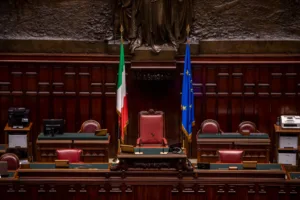


Italy has adopted a new electoral law that guarantees a working parliamentary majority to any list or coalition winning at least 42 per cent of the national vote.
The Chamber of Deputies approved the text on October 8 by 227 votes to 164 in a secret ballot, completing the passage of a reform the Senate had cleared in September. Both chambers have now passed an identical text.
The law scraps the mixed system in force since 2017, under which about a third of seats were filled in first-past-the-post constituencies, and replaces it with a fully proportional one.
A list or coalition that clears the 42 per cent threshold is awarded 70 additional seats in the 400-member Chamber of Deputies and 35 in the 200-member Senate. The bonus is capped so that the winner cannot exceed 220 deputies and 113 senators.
Where no bloc reaches the threshold, seats are distributed proportionally among parties taking at least 3 per cent of the vote, with a 10 per cent floor for coalitions.
Coalitions and parties will have to name their candidate for prime minister when they register, although Italy’s president formally appoints the head of government, so the designation carries no legal weight. Voters will be able to indicate up to three preferences among candidates standing below the blocked list leaders.
The reform also raises from 1,500 to 6,000 the number of signatures parties outside parliament must gather in each constituency to field candidates.
Prime Minister Giorgia Meloni said the mechanism was designed to produce stable and coherent majorities whatever the political orientation of the government, and argued that whoever wins an election should be able to govern. Her coalition became the longest-serving Italian government since the Republic was founded in 1946 on September 4.
Opposition parties, which have nicknamed the law the “Melonellum”, said the bonus distorts the weight of votes and is intended to keep the Prime Minister in office. One opposition deputy went on hunger strike during the final stages of the debate.
The centre-left is expected to seek a ruling from the Constitutional Court, which has previously struck down elements of Italian electoral laws. The Council of Europe’s Venice Commission advises against altering the core elements of an electoral system less than a year before polling.
Italian media reported that the Government was already preparing adjustments in case the court intervenes, particularly over the Senate bonus, as the upper house is elected on a regional basis.
The result of the next election, due by autumn 2027, remains open. Roberto Vannacci’s National Future party is drawing votes from the right and could leave Meloni’s bloc short of the 42 per cent it needs.