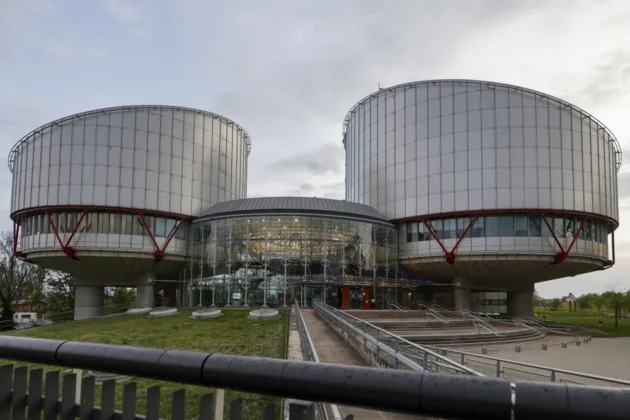





The case of Spanish woman Noelia Castillo has returned to the European Court of Human Rights (ECtHR), six months after her death.
The Strasbourg court has formally communicated an application brought by her father, Javier Castillo, to the Spanish Government. It will now examine whether the authorities respected Noelia’s right to life and provided adequate safeguards before allowing her euthanasia to proceed.
Noelia was euthanised on March 26 in Sant Pere de Ribes, Barcelona province, northeast Spain. She was 25.
Her death followed a lengthy legal battle that began after Catalonia’s Guarantee and Evaluation Commission approved her request for euthanasia in July 2024. The full 19-member commission backed the request unanimously on July 18 of that year, and the procedure was then held up for some 601 days as her father pursued the case through the courts.
Euthanasia has been legal in Spain since Organic Law 3/2021 took effect on June 25, 2021.
On March 10, the ECtHR rejected a request by her father for interim measures that would have suspended the procedure. That ruling, though, did not address the merits of the case.
Strasbourg will now consider whether the process leading to the authorisation and eventual euthanasia provided the protections required under the European Convention on Human Rights.
The application, Castillo Gerónimo v Spain, was lodged on April 9 and communicated to the Spanish Government on August 20. The court has specifically asked whether Spain fulfilled its positive obligations under Article 2 of the Convention, which protects the right to life, and whether Spanish law provided sufficient safeguards.
It will also examine a possible violation of Article 8, which protects private and family life.
The case file contains another unusual element. Two experts on the Catalan commission reportedly simulated a disagreement so that the case would be referred to the full commission for consideration.
Spanish courts ruled that this had not weakened the safeguards surrounding the procedure but instead resulted in an additional layer of scrutiny. They also found that Noelia had the capacity to make the decision and had consistently maintained her request since April 2024.
The Supreme Court, which dismissed her father’s appeal on January 29, described the authorisation given by the doctors involved as “irregular and censurable” while holding that the irregularity had not affected the substance of the case. The Constitutional Court rejected a further appeal from him in February.
Her father presents a very different account of what happened. His lawyers argue that Noelia suffered from serious psychological problems following, among other experiences, sexual abuse and a suicide attempt that left her paraplegic. She said in interviews that she had been sexually assaulted on three occasions but had never reported it, so the allegations were never investigated or tested in court.
They also allege that she did not receive adequate psychiatric treatment before her euthanasia was authorised. The father is represented by Polonia Castellanos, president of the Spanish Association of Christian Lawyers (Abogados Cristianos), which has also brought criminal complaints against members of the commission.
Noelia herself publicly insisted before her death that the decision was hers and that she had remained consistent in wanting the procedure to go ahead. Her mental health, though, remains one of the central questions surrounding the case: where does the line lie between an autonomous decision and one significantly shaped by a person’s psychological condition?
The European Centre for Law and Justice (ECLJ) has asked to intervene in the Strasbourg proceedings as a third party. It confirmed at the beginning of October that it had applied to the registrar of the court’s Fifth Section for leave to do so.
The ECtHR is not, at this stage, deciding on the general legality of euthanasia. The issue before the court is narrower: whether, in Noelia’s particular case, the Spanish State did everything required under the Convention before allowing an irreversible decision to be carried out.