








Prosecutors controlled by the centre-left Government led by Prime Minister Donald Tusk are reported to have managed to get the chief executive of the collapsed Polish cryptocurrency exchange Zondacrypto to co-operate with their investigation.
Zondacrypto has in the past few years been involved in funding right-wing opposition party events and foundations in Poland. Tusk’s party has accused the opposition-allied President Karol Nawrocki of vetoing, on three occasions, legislation to regulate the crypto-asset market under the influence of that company, most recently on June 11, 2026.
Prosecutors at the regional prosecutor’s office in Katowice, southern Poland, opened an investigation into Zondacrypto, one of the biggest crypto exchanges active on the Polish market, on April 17, 2026, with officials looking into allegations of fraud against customers and money laundering. The inquiry has since been extended until January 17, 2027.
Zondacrypto folded in April after customers were unable to withdraw money invested in crypto assets. Initial estimates put customer losses at at least 350 million złoty (€82 million), but Onet reported on August 24 that investigators now assess them at no less than 2.4 billion złoty (€565 million).
By July, prosecutors had received more than 3,600 reports from alleged victims, seized 162 devices and secured more than 250 terabytes of data from Zondacrypto servers. A joint Polish-Estonian investigation team was set up at the end of May, the exchange being operated by an Estonian-registered company, BB Trade Estonia OÜ.
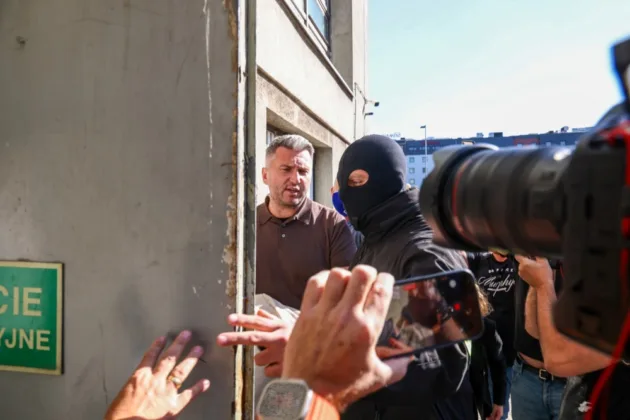
According to reports of August 23 in the government-controlled Polish television and radio as well as the pro-Tusk government portal Onet, Przemysław Kral, the chief executive of Zondacrypto, has been granted so-called “small crown witness” status under Article 60 of the criminal code, a mechanism which allows for plea bargaining to reduce punishment in exchange for disclosing information. Poland’s prosecution service though has not disclosed the precise nature of the charges brought against Kral.
Kral took over as head of the exchange, then known as BitBay, in 2021 from its founder, Sylwester Suszek, who disappeared on March 10, 2022 in unexplained circumstances and has not been found since. Prosecutors merged the Zondacrypto file with the Suszek case on August 3. Kral alleges that Suszek held the key to a wallet containing 4,500 bitcoins, worth more than $300 million (€276 million), owned by Zondacrypto.
The company has also faced allegations over who in fact controlled it, with the liberal daily Gazeta Wyborcza reporting on April 27 that the company had been taken over by Russia’s Tambovskaya organised crime group via entities registered in the United Arab Emirates. The paper cited a note by Poland’s Internal Security Agency (ABW) which put the takeover in July 2018.
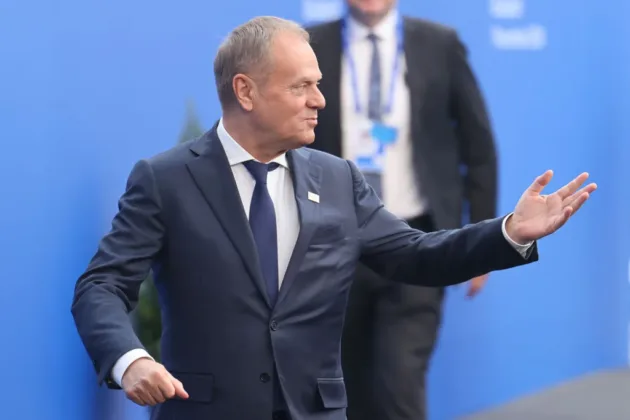
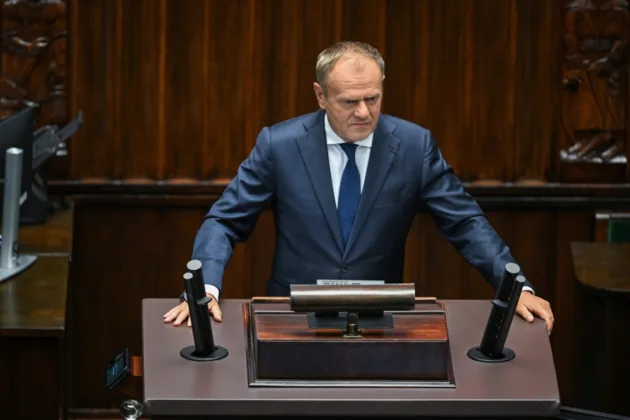
Prime Minister Donald Tusk has also alleged that Russian mafia money and funds linked to Russian intelligence were behind the company.
Kral rejected allegations of Russian links as “absurd” and thus far the charges of Russian involvement have not been confirmed.
The now defunct Zondacrypto was the main sponsor of a Conservative Political Action Conference (CPAC) conference held in Jasionka, near Rzeszów, southeast Poland, on May 26-27, 2025, during the country’s presidential election campaign, at which Nawrocki spoke and which was co-organised by Polish independent conservative media outlet TV Republika.
Kral is also reported to have made payments to foundations managed by Confederation MP Przemysław Wipler and Zbigniew Ziobro, the former justice minister in the last Law and Justice (PiS) government. According to Onet, the Sovereign Poland Institute, chaired by Ziobro, received 450,000 złoty (€106,000) and the Good Government foundation linked to Wipler received €70,000.
Ziobro, now a deputy leader of PiS, is living in the US and is wanted in Poland under a domestic warrant and a European Arrest Warrant over an investigation into the Justice Fund, in which prosecutors allege 26 offences including leading an organised criminal group. He denies wrongdoing.
Zondacrypto has been a sponsor of the Polish Olympic Committee and been involved in providing funds for a variety of sporting events in the country as well as being a sponsor of the Polish Olympic team, having become general sponsor of both for 2026-2028 in the autumn of 2025.
Journalists at Superwizjer, a TVN24 programme, and the Wirtualna Polska portal reported that Radosław Piesiewicz, the head of the committee, received an expensive Patek Philippe watch worth €40,000 from Kral. Piesiewicz has gone on the record saying that he paid Kral for the watch but has not produced any invoices to back up his claim.
Kral’s reported cooperation with the government’s investigators follows a change in his legal representation, which appears to have prompted a change in his approach to the case.
He had up until recently been represented by Bartosz Lewandowski, the lawyer who represents opposition politicians such as Zbigniew Ziobro in cases brought against them by the Tusk administration.
Onet reported, though, that Kral has now established contact with lawyers Jacek Dubois and Roman Giertych and has, with their help, been negotiating his position in the investigation.
According to portal Niezależna this was done with the support of justice minister Waldemar Żurek and senior prosecutors in a bid to ensure that Kral testified against opposition politicians.
According to reports, senior prosecutor Marek Wełna, head of the Silesian division of the national prosecutor’s office, together with Giertych and Dubois, went to meet Kral in the first half of 2026 in an undisclosed location abroad. According to Rzeczpospolita and Onet, the meetings took place in Gulf states, including Dubai, and in Sicily, Italy, and were not recorded as formal interviews. Kral at the time was effectively in hiding from government investigators.
Giertych is an MP for the ruling Civic Coalition (KO) party and the attorney for the Tusk family. Both he and Dubois have experience representing individuals who have cooperated with prosecutors in investigations involving alleged wrongdoing by former PiS government officials.
The Tusk government has promised to investigate the alleged wrongdoing by the last Conservative PiS government and has unleashed scores of investigations and charged several PiS politicians with offences including supposedly acting as an organised criminal group.
The Zondacrypto affair has though given the government the chance to attack right-wing politicians for their actions since they became the opposition and to question the sources of funding not only for them but also for right-leaning media such as TV Republika and Kanał Zero.
The government-controlled TVP on August 23 claimed that the popular internet broadcaster Kanał Zero, which has nearly 2.5 million subscribers, had attempted to obtain a large advertising contract from Zondacrypto. Krzysztof Stanowski, the owner and chief executive of Kanał Zero, replied that no such contract had ever materialised.
Stanowski also noted that Zondacrypto had advertised with many commercial media outlets during its existence, and he slammed the government-controlled broadcaster for attempting to associate his media operation with the collapsed cryptocurrency exchange.
The opposition PiS, who have been accused of being involved in taking money from Zondacrypto, by implication in exchange for supporting legislative outcomes favourable to the company, hit back at a press conference held on August 24.
The PiS candidate for Prime Minister Przemysław Czarnek told reporters that he had no fears with regard to the matter since PiS was not the party in power. Instead he questioned what the government had done in response to the affair.
“How is it that people suspected of committing serious crimes and defrauding Poles on a massive scale were able to do so completely with impunity, when the government and the services knew about it, had information about Mr Kral’s potential criminal activity and Zondacrypto’s harmful activities affecting thousands of Poles on a massive scale, something like the Amber Gold scandal[?]”
The Amber Gold affair arose when, during the lifetime of a previous Tusk government (2007-2014), a company offering more than 10 per cent on deposits supposedly guaranteed by gold reserves turned out to be a financial pyramid which collapsed, with savers’ losses put at some 851 million złoty (€200 million).
It later transpired that the authorities had suspected for months that the business was a financial pyramid, yet prominent politicians from Tusk’s party participated in the promotion of OLT Express, a Polish private airline offering cheap flights that it later turned out was one of the means of siphoning off funds from the para-bank.
Czarnek asked why Kral was able to leave Poland without any trouble and was found later to be negotiating with pro-government lawyers to turn state witness.
President Nawrocki’s aides also responded to the attacks on the head of state for his alleged links to the cryptocurrency exchange. Speaking in Bucharest in May, Nawrocki himself said the affair stemmed from the failure of Poland’s security services to warn either him or the Prime Minister.
His aides have also stressed that no amount of regulation could have prevented the Zondacrypto affair because the exchange was registered in Estonia and not in Poland.
In reality the Polish right is divided on the issue of regulating the cryptocurrency markets. The PiS leader Jarosław Kaczyński, who is 77 years old, has on several occasions made it clear that he would personally like to see bitcoins banned, and 17 PiS MPs tabled a bill in May to outlaw crypto-asset business in Poland altogether.
The much younger Confederation leader Sławomir Mentzen, who stood in the 2025 presidential election, though, is an investor on the bitcoin market and an opponent of excessive regulation. Most Confederation voters tend to come from the younger generations which are interested in the bitcoin market.
President Nawrocki, who is 43 years of age, has tended to support the Confederation’s stance on this matter, consistently arguing that the government proposals went further than the EU regulation on markets in crypto-assets (MiCA) and that during the presidential election campaign he had pledged that he would not sign legislation that increased regulation beyond that required by European legislation.
Nevertheless, few on the Polish right doubt that there will in the coming weeks and months be sustained attempts to link them with the failed cryptocurrency exchange and show them to have been under the influence of Zondacrypto during the legislative process.
Tusk and his political allies have since Nawrocki’s election been involved in a sustained campaign to delegitimise the President in the eyes of the public.
It began immediately after his election with unsubstantiated allegations that there had been serious irregularities in the counting of the ballots on election day. It intensified with a campaign aimed at persuading the then speaker of parliament Szymon Hołownia to refuse to take the oath of office from Nawrocki, for allegedly there being no court to verify the election result.
Tusk supporters such as Roman Giertych argued that the chamber of the Supreme Court charged with signing off on the result was illegitimately constituted. It was, though, exactly the same chamber that had validated the parliamentary, European and local government elections without any challenge from the ruling party.
Tusk and his party were smarting from having lost the presidential election after their tactics of smearing Nawrocki with allegations about past football hooliganism, illegal acquisition of a flat from a pensioner and unsubstantiated accusations that, when a student, Nawrocki had been involved in procuring prostitutes for hotel guests when working as a security guard in Gdańsk.
The sniping has continued with Nawrocki in office, with him being dubbed an “addict” for the fact that he uses a nicotine booster when he cannot smoke.
The government is furious about the fact that the President has vetoed more than 40 of its bills and refused to sign off on ambassadors the government wants in foreign capitals. In return it has blocked over 20 of Nawrocki’s legislative initiatives.
Nawrocki’s popularity has not suffered. CBOS put trust in the President at 55 per cent in July, while an IBRiS poll conducted on July 24-25 gave Tusk 35.5 per cent. But with the 2027 parliamentary election fast approaching and Nawrocki being seen as a key to getting the fragmented right-wing opposition to cooperate, at least after the poll, Tusk continues to see reducing Nawrocki’s popularity as one of the keys to being able to stay in the office of PM beyond next year.
If the head of the failed Zondacrypto could testify that, for example, the company had illegally bankrolled Nawrocki’s campaign, the government would hope that this could shift the dial. There would have to be hard evidence, though, rather than hearsay for such an allegation to stick and be believed in the feverish polarised atmosphere of today’s Polish politics.