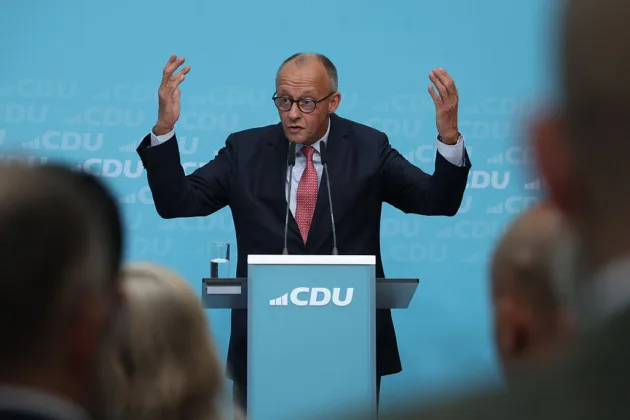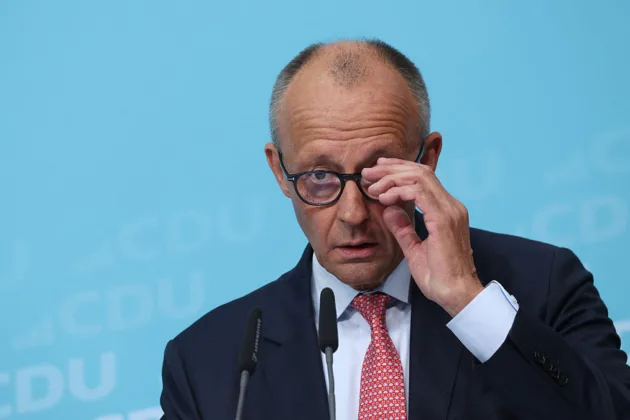







Die Linke (the Left) has won the Berlin state election, more than doubling its share of the vote and pushing Chancellor Friedrich Merz’s Christian Democratic Union (CDU) into second place.
According to the state returning officer, Die Linke took 25.7 per cent of the vote on September 20, up from 12.2 per cent in 2023. It is the party’s best result in the city.
The CDU, which has governed Berlin in coalition with the Social Democratic Party (SPD) since 2023, fell to 18.8 per cent. That is a loss of 9.4 percentage points.
Alternative for Germany (AfD) came third with 16.3 per cent, its best result in the capital. The Greens took 14.3 per cent, while the SPD finished fifth with 12.1 per cent, down 6.3 points.
The Sahra Wagenknecht Alliance (BSW) won 4.7 per cent, short of the 5 per cent needed to enter parliament.
On the preliminary figures Die Linke would take 38 of the 130 seats, ahead of the CDU on 28, the AfD on 24, the Greens on 22 and the SPD on 18. Die Linke, the Greens and the SPD would together hold 78 seats, well above the 66 needed for a majority.
The CDU campaign was led by finance senator Stefan Evers rather than Governing Mayor Kai Wegner. The party’s leadership has long ruled out working with Die Linke, though the question has divided the CDU.
Die Linke is the successor to the Socialist Unity Party (SED), which ruled communist East Germany. Its lead candidate, the lawyer Elif Eralp, campaigned on rents and called for large housing portfolios to be taken into public ownership.
Addressing supporters, Eralp said love and justice had triumphed over hate in the city. She promised to change Berlin together with voters from that day on.
Former governing mayor Michael Müller of the SPD, who ran the city from 2014 to 2021, warned that a coalition with Die Linke would be very difficult. He said he had led a red-red-green government for five years but that the party’s new figures came from activism and lacked political experience.
Merz described the night’s results as a disaster for the CDU. On the same day, the AfD won the state election in Mecklenburg-Western Pomerania, northeast Germany, where the CDU fell below the 5 per cent threshold.
A survey by Infratest for public broadcaster ARD published before the vote found that 90 per cent of Germans rated the performance of the federal government negatively.