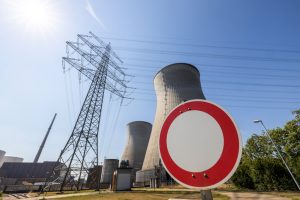







A drone has hit the cooling tower of a reactor unit at the Kursk nuclear power plant in western Russia, the International Atomic Energy Agency (IAEA) has said.
The agency said it had been informed that the strike took place early on September 17 and that the unit was running at the time. Its operating mode did not change and there was no fire.
IAEA Director General Rafael Grossi said attacks on nuclear facilities were unacceptable wherever they happened because they could endanger nuclear safety and security.
He repeated his call for “maximum military restraint to prevent the risk of a nuclear accident”. The agency, which has kept monitoring missions in place since 2022, gave no assessment of the damage.
The IAEA did not say who had launched the drone or identify the unit involved. Russian state news agency TASS described the incident as a Ukrainian strike, while Kyiv made no claim of responsibility.
The station stands at Kurchatov, about 60km from the border with Ukraine. It combines an ageing plant built around Soviet-era RBMK reactors, the design used at Chernobyl, with the newer Kursk-II, whose first unit entered commercial service this year.
A drone damaged a cooling tower at the unfinished second unit of Kursk-II in July. Regional authorities said then that the structure had not been put into service and reported no injuries or radiological effects.
The latest strike came days after US President Donald Trump announced an energy truce that neither Kyiv nor Moscow confirmed. Ukraine attached conditions to any halt and the Kremlin would not promise reciprocal restraint.
Both sides have kept hitting energy targets since. Russian drones struck petrol stations in Kyiv on September 15 and Ukraine reported a strike on a refinery in the Volga region the same day.
Trump has blamed the war, rather than the conflict in Iran, for the rise in diesel prices that has hit European and American consumers this year.
Kyiv has made refineries, fuel depots and export terminals the main targets of its long-range drone campaign, arguing that oil revenues finance the invasion.
Nuclear sites have been drawn into the fighting on both sides of the border. Russia and Ukraine have traded accusations over the Zaporizhzhia plant in southern Ukraine, Europe’s largest, which Russian forces seized in 2022.
The European Union has repeatedly demanded that Moscow return the site to Ukrainian control and has warned that military activity around it risks an accident with consequences well beyond the region.
The Kursk plant itself has been hit before. A drone damaged an auxiliary transformer there in August 2025, setting off a fire and cutting the output of one reactor, with the IAEA reporting normal radiation levels afterwards.