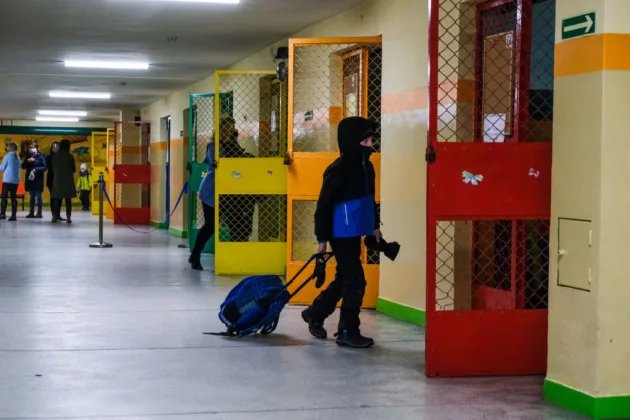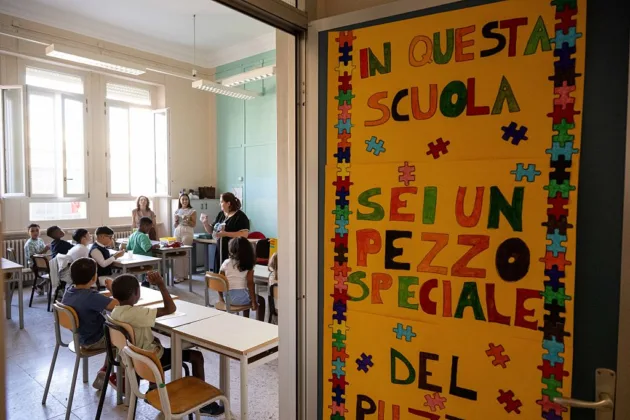






More than half of the pupils in Antwerp’s municipal schools have enrolled in Islamic religion classes, according to figures from the city’s education agency.
In the 2025-2026 school year, 12,501 of the 22,273 pupils attending the 92 primary and secondary schools run by Stedelijk Onderwijs Antwerpen followed Islam lessons. That amounted to 56.1 per cent of the total, Flemish news site V-Nieuws reported.
The share was highest in primary education, where 8,075 of 13,922 children, or 58 per cent, took the subject. In secondary schools, 4,426 of 8,351 pupils, some 53 per cent, did the same.
Under Belgian law, publicly run schools must offer pupils a choice between classes in one of the officially recognised religions and non-confessional ethics. Islam was added to that list in 1974 and enrolment in the subject is widely used as a measure of the number of Muslim pupils.
The latest data continued a steady rise. Figures obtained in previous years by the right-wing Vlaams Belang party showed 45.6 per cent of pupils in the city’s municipal primary schools took Islam classes in 2014, rising to 56.7 per cent in 2023.
Over the same period, Islam left other options far behind. In 2023, 23 per cent of municipal primary pupils chose non-confessional ethics and 16.2 per cent Catholic religion, according to the party’s figures.
Antwerp’s numbers are well above the regional picture. Across Flanders’ official education networks, 26 per cent of primary pupils took Islam classes in 2024-2025, according to research published by the Dutch academic journal Religie & Samenleving.
Filip Dewinter, a veteran Vlaams Belang politician who sits in the Flemish Parliament and on Antwerp city council, said on X on November 16 that the data showed “omvolking”, or population replacement, in practice. He added that non-believing Flemish pupils, whom he called “kafirs”, had already become a minority and argued that the demographic Islamic colonisation of the city was almost complete.
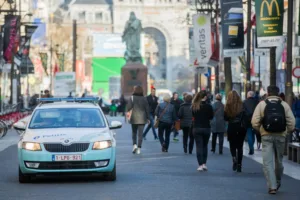
Antwerp, Belgium’s second-largest city, has been reshaped by decades of immigration. Some 42 per cent of its residents have roots outside the EU, with people of Moroccan origin forming the largest group, according to city data cited by public broadcaster VRT in 2024.
When similar figures emerged in 2022, Bart De Wever, then mayor of Antwerp and now Belgian Prime Minister, said residents had the right to the philosophical education of their choice. He added that he had nothing more to say on the matter.
Concern over the influence of Islam in Belgian classrooms has grown in recent years. In December 2024, two authors told an event at the European Parliament that schools in Belgium had become a target for radical Islamists, particularly in Brussels.