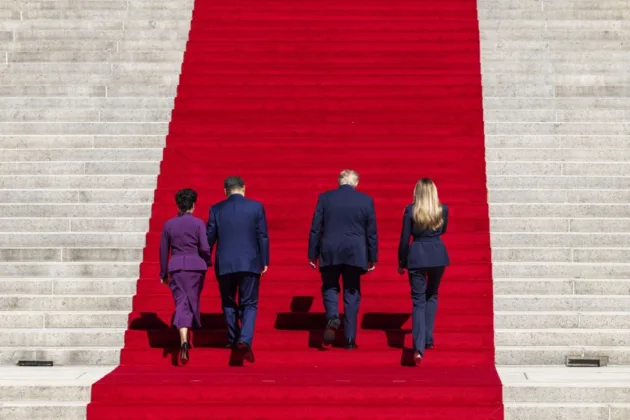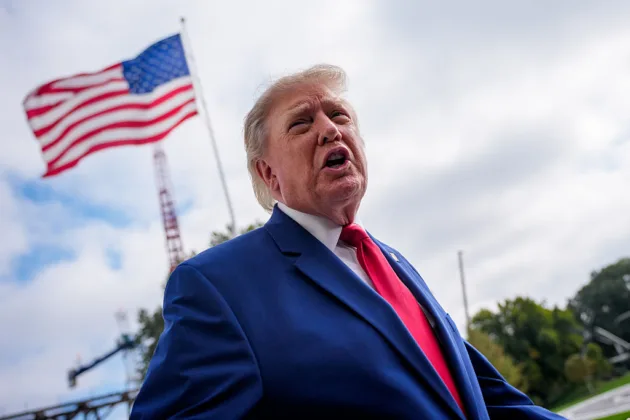





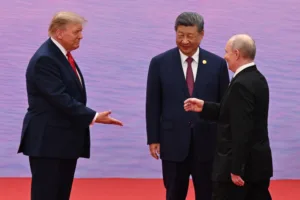


US President Donald Trump has arrived in Shenzhen, southern China, for an Asia-Pacific Economic Cooperation (APEC) summit set to end with the first three-way meeting between the leaders of the US, China and Russia. Chinese President Xi Jinping greeted him with a hug at the airport on November 18, returning a gesture Trump made during Xi’s state visit to Washington in September.
The trilateral with Xi and Russian President Vladimir Putin was scheduled for November 19 on the sidelines of the summit. Beijing said the three would discuss safeguarding world peace and strategic stability between the major powers.
Trump said he intended to raise ending Russia’s full-scale war in Ukraine. On November 17, he said he believed he was “very close to getting it done”.
Washington had earlier signalled that Ukraine would not be addressed, with nuclear arms control and the US war with Iran given priority. The last treaty limiting US and Russian nuclear arsenals expired in February and Beijing has insisted both powers cut their stockpiles before it joins any talks.
The summit came days after European envoys, EU and NATO officials were kept away from the main negotiating table at US-mediated talks between Russia and Ukraine in Abu Dhabi on November 10-11. Kyiv has insisted that no settlement is possible without the European Union.
Xi held talks with Putin in Shenzhen on November 18, their fifth meeting this year. It was Putin’s first in-person appearance at an APEC leaders’ gathering since 2017.
Addressing business leaders, the Russian President condemned what he called instruments of economic dominance, including the sanctions imposed on Moscow after its full-scale invasion of Ukraine in February 2022. He said the Asia-Pacific accounted for more than half of Russia’s trade and that he wanted closer ties with the region.
Xi told executives the region needed more open trade and fairer growth. He pledged that China would cut tariffs, widen market access and reform its rules and standards.
Trump’s “America First” tariffs run counter to APEC’s long-standing goal of a Pacific Rim free trade zone. Although they were meant to curb China’s trade surplus, Beijing was on course to export about a trillion dollars more in goods than it imported for a second year running.
US curbs on Chinese access to advanced American technology, such as Nvidia’s artificial intelligence chips, remained a source of friction. Trump said he did not plan to raise Taiwan, a leading chipmaker, though he expected Xi to do so.
He also floated separate meetings with Putin and North Korean leader Kim Jong-un, neither of which had been confirmed when he landed.