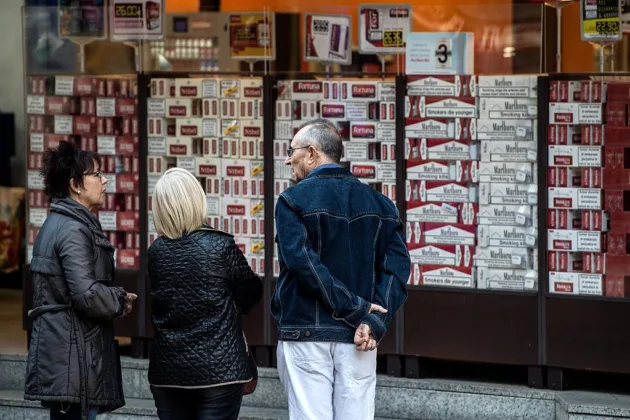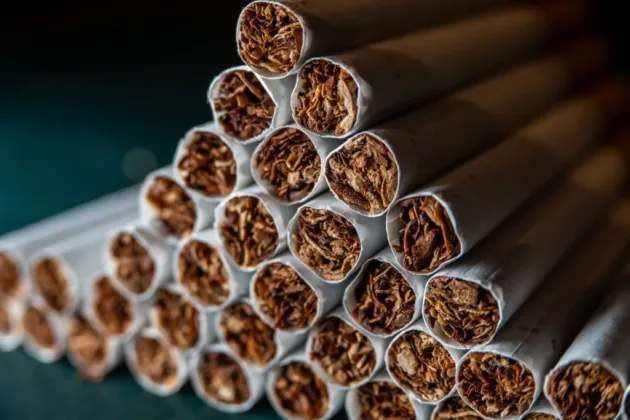




Nearly one in ten cigarettes sold in the European Union is illicit, and the trade costs public budgets an estimated €13 billion a year, according to a new report by the European Court of Auditors.
The Commission and Member States have taken measures, the auditors say, but the response remains fragmented and is not robust enough.
Special report 23/2026 finds that organised crime has shifted production into the Union itself.
Factories have been found in almost every Member State. In one Belgian plant, each machine could produce about a million cigarettes an hour.
In the largest illicit factory dismantled in Spain, three million packets of counterfeit cigarettes were seized.
“The EU cannot afford to let its fight against the scourge of illicit tobacco go up in smoke,” said Petri Sarvamaa, the ECA member responsible for the audit.
“If we are serious about safeguarding citizens’ health, wallets and security, the Commission and member states must up their game to fight criminal activity head-on.”
The Commission’s €13 billion estimate of lost customs duties, VAT and national excise should be treated with caution, the auditors note. It is based on external studies.
The Commission still lacks a reliable, independent EU-wide measure of the illicit market, its structure and its fiscal impact. Official reporting relies largely on seizures and therefore does not show the full picture.
In 2023 the Commission put illicit cigarettes at 8.8 per cent of total consumption.
Excluding cigarettes, the illicit market in other tobacco products is estimated at nearly 21,000 tonnes.
Newer products, including heated tobacco and e-cigarette liquids, account for about 13 per cent of the market value of tobacco sold in the EU and attract younger consumers.
Overall legal consumption has continued to fall; illicit volumes have risen.
That rise has coincided with tighter tobacco-control rules and successive excise increases intended to cut smoking.
Higher legal prices widen the gap between duty-paid packets and counterfeit or smuggled ones, which makes illicit supply more profitable for organised crime and cheaper for consumers.
The auditors warn that cheaper illegal products undercut public-health aims as well as tax collection, because they allow consumption to continue outside the regulated market.
The auditors further say EU law is not harmonised and national efforts are uneven.
Raw tobacco, production machinery and new product categories are treated differently from country to country.
Definitions of offences and the severity of penalties also vary, which can push criminal activity towards laxer jurisdictions.
Information-sharing between Member States is inconsistent and responsibility is split among several EU and national bodies, with no single coordinator.
The Court calls on the Commission to take a more active role.
Fieldwork was carried out in Belgium, Spain, Poland and Romania.
Europe’s booming illicit tobacco trade, with nearly half of all cigarettes sold in several countries now coming from illegal sources, is deeply intertwined with other crime and starting to resemble the drug trade. https://t.co/S1zVbi2M49
— Brussels Signal (@brusselssignal) March 26, 2026