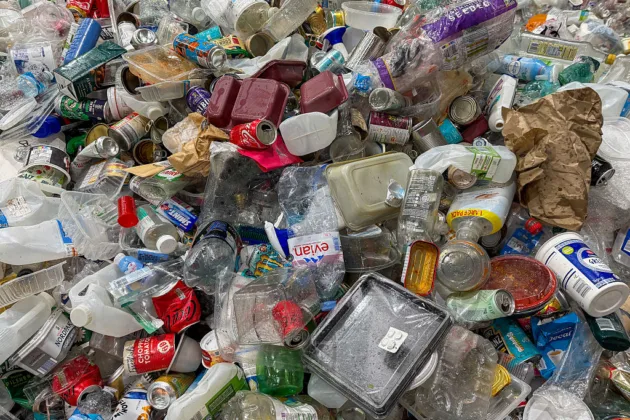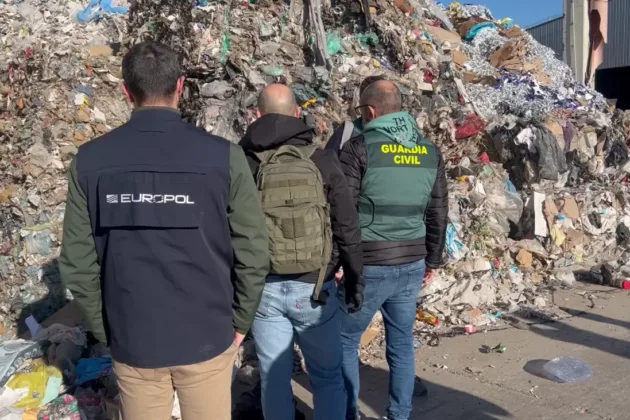







The European Union has left the largest single destination for its plastic waste outside the export ban due to take effect on November 21, 2026, as shipments to Turkey climb to record levels.
The revised Waste Shipments Regulation bars exports of plastic waste to countries outside the Organisation for Economic Co-operation and Development (OECD). Turkey is an OECD member and falls outside the measure.
EU member states sent 503,000 tonnes of plastic waste to Turkey in 2025, a record, according to trade data compiled by the Basel Action Network (BAN). That was an increase of about 19 per cent on the previous year.
Germany alone exported 814,000 tonnes in 2025, more than any other country. Nearly one-fifth of that, some 154,000 tonnes, went to Turkey, more than double the 72,000 tonnes recorded in 2024, BAN figures showed.
The ban has been presented in Brussels as the end of Europe’s habit of shipping its rubbish to countries unable to process it. Campaigners argue it will instead push the trade towards OECD members within easy reach, of which Turkey is the closest and by far the largest.
Turkey became the main outlet for European plastic after China shut its market in 2018. Its Ministry of Environment, Urbanisation and Climate Change counts about 1,263 plants able to handle some 1.1 million tonnes a year, against imports of roughly 1.3 million tonnes on top of the 3.3 million tonnes the country produces itself.
A study published in March in the journal Environmental Monitoring and Assessment found microplastic concentrations up to 132 times higher in irrigation canals downstream of recycling plants in Adana, southern Turkey, than at points upstream. The canals water farmland and drain into the Seyhan river and then the Mediterranean.
Sedat Gündoğdu, a biologist at Çukurova University and one of the authors, told Deutsche Welle’s Turkish service that microplastics escaping the plants could contaminate crops and travel back to Germany in Turkish produce. He said Germany should deal with its own waste rather than export the problem.
The Turkish government says imported plastic supplies raw material to recyclers and creates jobs, a case also made by the Turkish Plastics Industry Association (PAGDER). Greenpeace has documented German and British plastic dumped or burned at roadsides, in fields and in waterways around Adana.
Exporters have had to obtain prior consent from importing countries since May 2026 and are due to fund independent audits of receiving facilities from May 2027. The European Commission said it would monitor shipments to OECD states and could suspend them where rising volumes were found to be causing environmental harm.
No such assessment of Turkey has been published, even as the Commission tightens packaging and recycling rules inside the bloc.