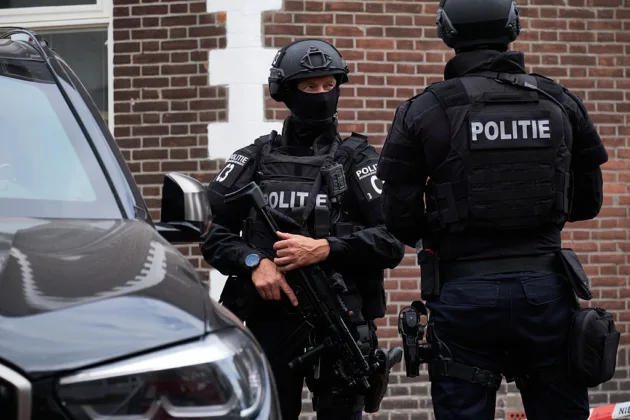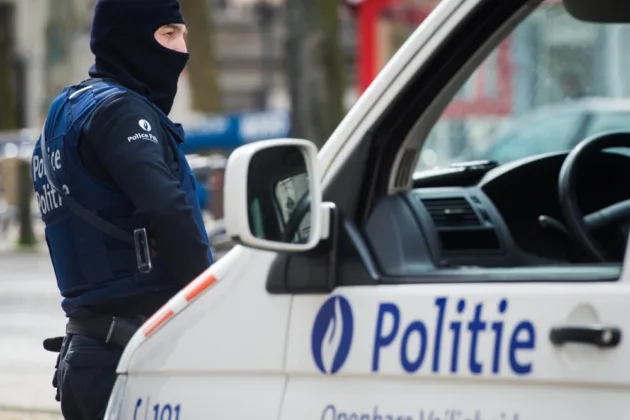



The Netherlands has been shaken by a pre-dawn assault in the Gelderland village of Overasselt, where a large group of masked, heavily armed men left a 51-year-old security guard dead and two police officers wounded.
As a result, 34 people have been taken into custody and more are being hunted down.
Local media have linked the highly violent episode to the network of fugitive cocaine trafficker Jos Leijdekkers, known as Bolle Jos.
At about 4am on September 1, more than 20 men in balaclavas, some wielding machine guns, approached a farmhouse on Ewijkseweg.
Surveillance footage obtained by De Telegraaf shows shots fired at a stationary car; the victim, hired after the same property was attacked in July 2025, died at the scene.
Officers who arrived came under fire. Two suffered serious injuries, with one of the two sustaining life-threatening injuries. Both are now out of danger. Police later fired warning shots as suspects fled into fields and onto motorways.
Residents were told to stay indoors with doors and windows shut. Large parts of the village were sealed. The instruction was withdrawn late on September 1.
'Nederland is een narcostaat'
Het Gelderse dorpje #Overasselt stond volledig op z'n kop. Er werd een bewaker voor de deur van een pand doodgeschoten. De aanslag wordt gelieerd aan drugscrimineel Bolle Jos, Jos Leijdekkers.
Misdaadverslaggever @maaiketimmerman noemt de beelden… pic.twitter.com/D50zY8JSPS
— Nieuws van de Dag (@Nieuwsvandedag_) September 1, 2026
Police officers and the Special Intervention Unit, accompanied by helicopters and dogs, then started hunting down the gang members.
Arrests later followed across Gelderland and Limburg, at Nijmegen station, near Vogelzang, on the A73 and A76, and in a maize field.
Those held include Dutch, Belgian, French and Algerian nationals. Weapons, vehicles and data-storage devices were seized. Some suspects remain at large. They are held on suspicion of murder and manslaughter, attempted murder and preparing a kidnapping.
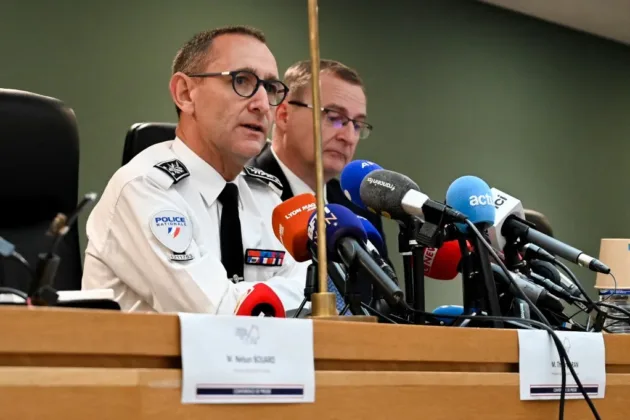
Deputy chief prosecutor Monique Vinkesteijn said the group in detention was “international” and that investigators must still establish each detainee’s link to the crime scenes, which number 10 across the country.
She noted a shooting at the same house in July 2025 tied to a “longstanding conflict” but gave no further detail. Two people have been convicted over that attack, she said.
Leijdekkers’ lawyer, Guy Weski, said he knew nothing of any connection. His legal team later said Leijdekkers “emphatically distances himself” from allegations it called unfounded.
Dutch outlets, citing police and underworld sources, say the raid was a revenge attack over several hundred kilogrammes of cocaine, Het Parool put the figure at 812kg, thought to have been trafficked by Leijdekkers’ organisation. That load was seized on August 29 at the French-Spanish border in a Dutch-registered lorry, the paper reported.
The family at the farmhouse had repeatedly clashed with prosecutors over drug trafficking. A laboratory was found after a fire on the site in 2019. Armed men appeared at the gate in 2024, and in July 2025 a man fired 25 rounds from a Kalashnikov at the entrance gate.
The shooter, then aged 21, confessed and was sentenced to juvenile detention.
This year Jan G. was sentenced to four years in prison; he is appealing and therefore remains at liberty.
Local residents later reported that a horse was shot in the leg during the shootout.
Mayor Joerie Minses of Heumen municipality, which includes Overasselt, called the events “utterly unacceptable” and said they “go beyond all bounds”. He told public broadcaster NOS he was “deeply shocked” and described the night as “un-Dutch”.
Justice and security minister David van Weel also described “appalling violence”: “There is one death to be mourned. I also stand with the wounded officers and the residents who have lived through this. We will not tolerate this violence.”
He told NOS that armed groups of that size opening fire on police were “unprecedented and new” in the Netherlands.
Leijdekkers, 35, from Breda, southern Netherlands, has been on the Dutch and Europol most-wanted lists since 2022. He was convicted in absentia to 24 years in the Netherlands for cocaine trafficking and ordering a murder, and a Belgian court added 14 years in July 2026, taking his combined sentences past 100 years. He is believed to be in Sierra Leone. A €200,000 reward is offered for information leading to his arrest.
Dutch media reported Leijdekkers lives in Sierra Leone under the alias Umar Sheriff, and says he is engaged to a daughter of President Julius Maada Bio, with whom he is alleged to have a child.
The Hague has pressed Freetown for extradition. De Telegraaf reported that police and navy special units prepared an operation to seize him at sea off West Africa, called off at the last moment. His older brother Harry was extradited from Turkey this year on money-laundering suspicions.
Van Weel has taken the case to Brussels, pressing for European Union development funding for Sierra Leone to be suspended. The European Commission has allocated €352 million in grants to the country for 2021-2027, and member states have yet to agree on whether to halt that support.
The scale of the armed group in a quiet village near the German border has unsettled a country already accustomed to port-related cocaine violence.
The Overasselt raid has revived a charge that Dutch politicians usually reject, that the Netherlands has become a “narco-state”.
Rotterdam remains one of Europe’s main gateways for South American cocaine, and Dutch Customs seized 19,332kg in the first half of 2026, up 20 per cent on the same period of 2025, even as traffickers split loads and shift to smaller ports.
Liquidations, torture cells, corrupted dock workers and now this incident have made the label harder to dismiss in public debate, even though ministers insist the state is not captured, only targeted, by an industry that uses Dutch logistics.
“Nederlanders”#NOS #Wijchen pic.twitter.com/RX2pD9jNuy
— Erik (@eriknld2) September 1, 2026