




Spanish news site La Gaceta has reported that Moroccan newspapers carried material pointing to a mass crossing into Ceuta two weeks before it happened, and that the Spanish Government did not act on it.
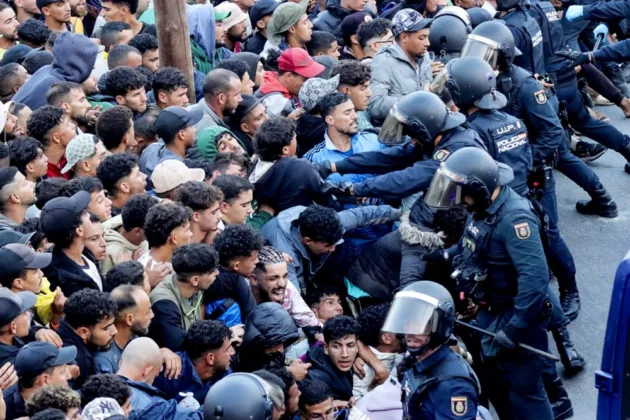
The article, by journalist and analyst Rubén Pulido, adds to a series of claims that Madrid had warning before tens of thousands of people entered the north African enclave on July 30 and 31.
Interior Minister Fernando Grande-Marlaska has said the intelligence services did not alert him to what was coming. That account has been contested from inside the Spanish State.
The Objective reported that the Armed Forces Intelligence Centre (Cifas) sent a note three days beforehand describing a border assault as highly probable, timed to coincide with Morocco’s Throne Day. The same outlet said the National Intelligence Centre (CNI) had earlier written a report on the pull effect expected from a Supreme Court judgment.
That judgment, issued on July 8, held that migrants intercepted at sea while swimming towards Ceuta and Melilla cannot be handed straight back to Moroccan authorities. Police associations warned at the time that the ruling would draw people to the border.
Morocco has given its own version of the run-up. A Moroccan foreign ministry official told international reporters that Rabat raised the likely consequences of the ruling with Madrid around July 22 and 23.
Pressure was already visible on the Spanish side. The Civil Guard association Independientes de la Guardia Civil said on July 24 that officers in Ceuta were overwhelmed by a rise in sea arrivals.
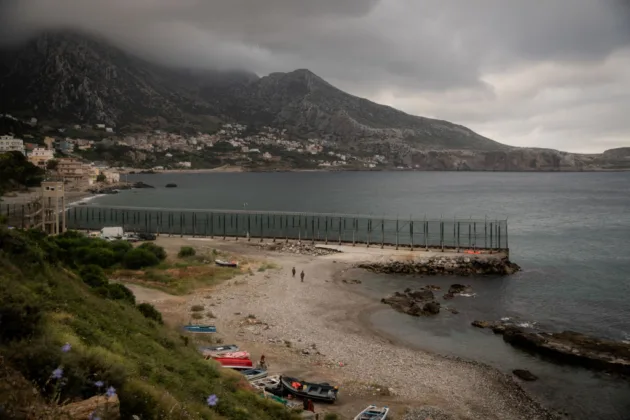
Spain’s Interior Ministry later put the number who entered at about 72,000, with roughly 70,000 returned to Morocco within days. Ceuta and Melilla form the European Union’s only land border with Africa.
The official death toll stands at 72 on the Spanish side of the border and 11 on the Moroccan side.
Defence Minister Margarita Robles has defended the intelligence services and called on Morocco to investigate the crossings. The National Court has opened preliminary proceedings and asked the National Police to establish whether the movement was directed by a criminal organisation.
Attention has now turned to August 15, a date circulating in Moroccan social media groups as the target for a further attempt. The Civil Guard has confirmed the calls exist though it does not expect a repeat on the same scale.