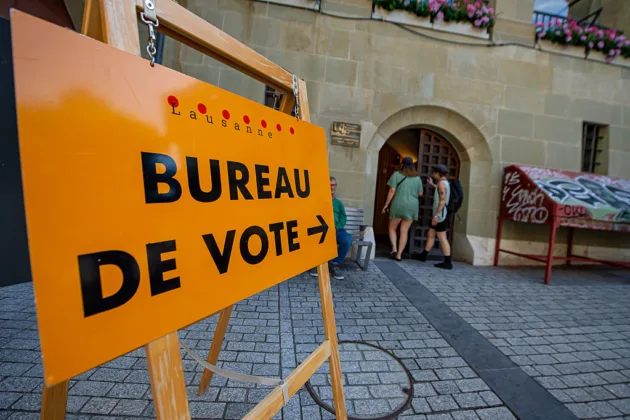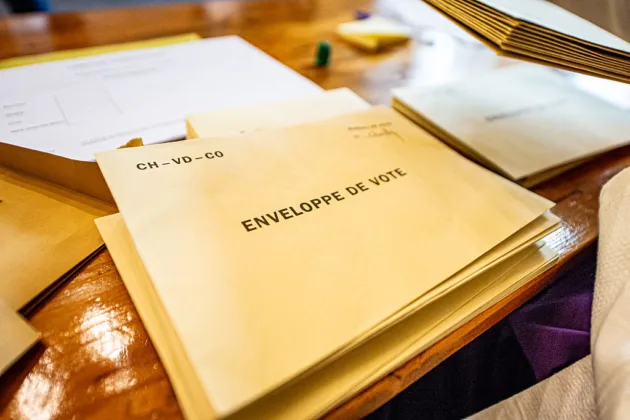





Final opinion polls have shown Swiss voters heading for a clear rejection of a proposal to enshrine a strict definition of neutrality in the country’s constitution. The referendum is due to be held on September 27.
A survey by gfs.bern for the Swiss Broadcasting Corporation (SRG SSR), published on September 16, found 63 per cent of respondents opposed to the Neutrality Initiative, up nine points since August. Support fell by eight points to 34 per cent.
A separate poll by 20 Minuten and Tamedia, released the same day, put opposition at 68 per cent against 31 per cent in favour. Because the text would amend the constitution, it needs a double majority of voters and cantons to pass.
The initiative was launched in November 2022 by the association Pro Switzerland (Pro Schweiz), with backing from the right-wing Swiss People’s Party (SVP) and former federal councillor Christoph Blocher. It was submitted on April 11, 2024 with 129,806 valid signatures.
It would define Swiss neutrality as “perpetual and armed” and bar the country from joining or cooperating with military alliances such as NATO unless it was under attack or facing an imminent one. It would also ban sanctions on warring states, except those decided by the United Nations and measures to prevent their circumvention.
The campaign was sparked by Bern’s decision to adopt European Union sanctions against Russia after Moscow’s full-scale invasion of Ukraine in 2022. Supporters argued that siding with Brussels had damaged Switzerland’s credibility as a neutral mediator.
Former Swiss diplomat Jean-Daniel Ruch told AFP at a pro-initiative event that Switzerland had taken very strong stances against Russia while adopting weak positions on Israel. He said the vote was a chance to restore the credibility of Swiss neutrality.
Moscow, which has accused Bern of abandoning neutrality by joining EU sanctions, praised the initiative. Some opponents branded it “pro-Russian” and Socialist MP Samuel Bendahan warned in a debate that Russian President Vladimir Putin would welcome a Yes vote.
The Federal Council and parliament recommended rejection without offering a counter-proposal, arguing the current flexible practice had served the country well. The National Council voted 128 to 60 against the text.
According to gfs.bern, the SVP was the only major party backing the proposal, with 77 per cent of its voters in favour, down nine points. The pollster found Italian-speaking Switzerland evenly split.
The European Parliament’s Foreign Affairs Committee said on September 10 that it viewed the vote with concern, as approval would stop Bern aligning with EU sanctions, Der Bund reported.
The vote comes three months after Swiss voters rejected another SVP initiative, to cap the population at 10 million, by 54.8 per cent.