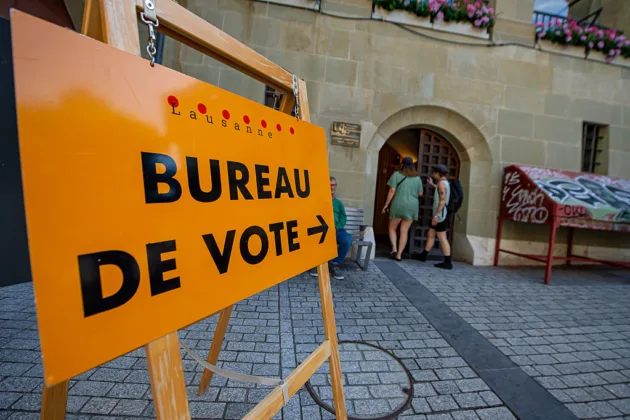


Switzerland has set September 27, 2026 as the date for a referendum on its neutrality, in a vote that could reshape the country’s geopolitical position.
Swiss voters will decide whether the country’s long-standing policy of neutrality, one of the defining principles of the Swiss State and a cornerstone of its democracy and foreign policy, should be defined in detail in the federal constitution.
The initiative comes after years of debate over whether Switzerland has gradually moved away from its traditional interpretation of neutrality, particularly by adopting European Union sanctions against Russia following Moscow’s invasion of Ukraine in 2022.
If approved, the initiative would make it harder for future Swiss governments to align with EU sanctions or deepen security cooperation with Western partners without a UN mandate.
The referendum stems from a signature campaign launched in November 2022 by the association Pro Schweiz (Pro Switzerland), backed by the Swiss People’s Party (SVP), Switzerland’s largest right-wing party and a member of the governing coalition, together with former federal councillor Christoph Blocher.
Blocher does not sit on the initiative committee, which is chaired by former SVP MP Walter Wobmann, though he has led the campaign and said the Russia sanctions turned Switzerland into a party to the war.
Under Switzerland’s system of direct democracy, citizens can trigger a referendum on a constitutional amendment by collecting at least 100,000 valid signatures within 18 months. Once that threshold is reached, the proposal proceeds towards a nationwide vote after review by the Government and parliament.
The initiative was filed with the Federal Chancellery on April 11, 2024 with 129,806 valid signatures. As a constitutional amendment it requires a double majority of voters and of the 26 cantons.
Swiss neutrality has developed over centuries through international agreements, state practice and foreign policy decisions. It has been anchored in the Federal Constitution since 1848, but the current text says only that the Federal Council and parliament are responsible for safeguarding it, without defining how neutrality should be applied in practice.
The initiative seeks to introduce a stricter constitutional interpretation, limiting the government’s room for manoeuvre on sanctions and security cooperation.
If approved, a new article 54a would define Switzerland as permanently neutral and armed. It would prohibit the country from joining or cooperating with military alliances, except in the event of a direct military attack or preparations for one, and restrict coercive sanctions against warring states unless those measures have been approved by the United Nations Security Council or are needed to prevent sanctions being circumvented.
Supporters argue that Switzerland’s neutrality has gradually been eroded, particularly after Bern adopted the EU’s sanctions against Russia following its full-scale invasion of Ukraine in 2022. In their view, aligning with EU sanctions has blurred the distinction between neutrality and closer alignment with Western security structures.
They point also to the loosening of Swiss arms export rules approved by parliament in December 2025, which would allow deliveries to 25 partner states even when those are involved in an armed conflict. That revision faces its own referendum in November 2026.
The vote would not automatically cancel Switzerland’s existing sanctions against Russia, though it could increase pressure to reconsider measures adopted outside a UN framework and limit Bern’s ability to impose similar ones in the future. Because Russia holds a veto on the Security Council, UN sanctions against Moscow would be close to impossible.
Beyond sanctions, supporters present the initiative as a way to restore Switzerland’s traditional role as a neutral diplomatic actor. They argue that a stricter definition would strengthen Bern’s ability to mediate international crises, from Ukraine to tensions involving Iran, by ensuring Switzerland is seen as an impartial platform for negotiations rather than as part of one geopolitical bloc.
The Swiss Government and parliamentary opponents argue that the current framework already protects neutrality while preserving flexibility in responding to international crises. Foreign minister Ignazio Cassis has said the initiative would abandon a flexibility that has served the country well.
Parliament recommended rejection, with the National Council voting 128 to 60 against the text, and dropped a proposed counter-proposal in March 2026, meaning the initiative goes to the ballot on its own.
Support for neutrality itself remains high among the Swiss public, though it is falling. According to the annual Security 2026 study by the Military Academy at ETH Zurich and its Center for Security Studies, 85 per cent of respondents back maintaining neutrality, down from 97 per cent in 2022.
The same survey found 59 per cent believe armed neutrality can no longer be credibly defended by military means. The central dispute is therefore not whether Switzerland should remain neutral, but what neutrality should mean in practice.
Polling on the initiative itself has been mixed. A Leewas survey for Tamedia and 20 Minuten, conducted June 11-14, 2026, found 54 per cent opposed and 34 per cent in favour, while a YouGov Switzerland poll carried out July 15-27, 2026 put the yes camp on 40 per cent against 38 per cent, with 22 per cent undecided.
The outcome could have implications beyond Switzerland, particularly for Europe’s approach towards Russia. A decision to tighten neutrality in the constitution would affect Bern’s role in sanctions regimes and the broader European security debate.