








The European Union has stepped up its warnings over Switzerland’s Neutrality Initiative, an upcoming referendum on a stricter neutrality policy that could make it harder for Bern to continue following the EU’s approach to sanctions on Moscow.
Swiss voters are due to decide on September 27 whether to constitutionally tighten the country’s traditional neutrality, restricting Switzerland’s ability to impose sanctions on countries involved in armed conflicts and limiting its military cooperation with foreign partners.
The clearest warning came on September 10, when the European Parliament’s Foreign Affairs Committee warned about the potential consequences if the referendum were approved, as reported by Der Bund. In an interim report adopted the same day, the committee said it viewed the vote with concern, as approval would stop Bern aligning with EU sanctions against states at war.
The committee issued its warning as it approved the new Bilaterals III package, designed to modernise and deepen Switzerland’s ties with the EU across areas including trade, transport, the single market and security. It backed the package by 53 votes to three, with nine abstentions, sending it to a plenary vote due by the end of the year.
The European Parliament’s standing rapporteur for Switzerland, French MEP Christophe Grudler, separately warned Swiss lawmakers against adding new elements to the negotiated framework, saying the agreements had been negotiated as a package and that the balance between them had to be preserved.
The initiative was launched by the right-wing Swiss People’s Party (SVP) and its allies in the Pro Switzerland movement, with veteran conservative politician Christoph Blocher among its main backers. The Federal Council and both chambers of parliament recommend rejection.
It seeks to enshrine a stricter interpretation of Switzerland’s permanent neutrality in the constitution, requiring the country to remain “perpetually and armed” neutral and sharply limiting its ability to cooperate with military alliances or impose sanctions on states at war, except for sanctions mandated by the United Nations Security Council and measures aimed at preventing sanctions circumvention.
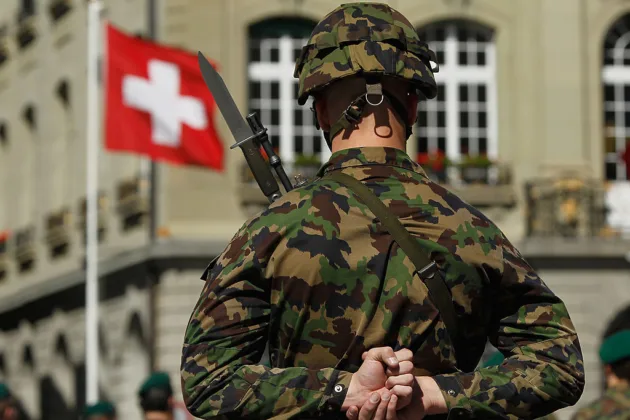
Switzerland has formally maintained permanent neutrality since the 19th century and is neither a member of NATO nor the EU. Yet after Russia attacked Ukraine in 2022, Bern adopted the EU’s sanctions against Moscow.
In December 2025, the Swiss parliament also approved a reform allowing certain partner states to receive Swiss war materiel even when involved in an armed conflict, something that had previously been prohibited, although it does not amount to a general authorisation for Switzerland to supply weapons directly to Ukraine. Opponents have forced a referendum on that reform, filing more than 76,000 signatures on April 17.
In Moscow’s eyes, these moves have brought Switzerland closer to Western support for Ukraine and made Bern less neutral, and therefore less suited to act as a mediator between Russia and the West.
Supporters of the initiative therefore argue that restoring a stricter form of neutrality would strengthen Bern’s role as an independent diplomatic actor able to facilitate dialogue between Russia and the West. In their view, by joining the sanctions regime, Bern effectively took sides in an international conflict and weakened Switzerland’s credibility as an independent mediator.
That position, though, increasingly clashes with the EU’s approach, as Brussels adopts a tougher stance towards Moscow and deepens its political, security and economic support for Ukraine.
If the referendum were approved, the vote would not simply remove those measures overnight, but it would fundamentally change the legal basis for them. Under the initiative, Switzerland would no longer be able to impose sanctions on belligerent states, apart from measures mandated by the UN or aimed at preventing sanctions circumvention.
Existing sanctions against belligerent states would therefore have to be reviewed and, according to the Swiss Government’s interpretation of the proposal, lifted. This would mean Switzerland could no longer maintain its current sanctions regime against Russia.
If approved, the initiative would therefore mark a potential turning point in relations between Bern and Brussels, coming at a time when the two sides are moving closer together. On March 5, Swiss foreign minister Ignazio Cassis and EU foreign policy chief Kaja Kallas signed a joint declaration in Zurich aimed at strengthening cooperation on foreign and security policy. The declaration is not legally binding and introduces an annual political dialogue at ministerial level. A separate agreement has established a framework for Swiss participation in EU crisis-management operations, on a case-by-case basis and while respecting Swiss permanent neutrality.
The Swiss Government is campaigning against the initiative, arguing that neutrality must remain flexible enough to allow Switzerland to respond to changing security threats. Bern has warned that a rigid constitutional definition could reduce the country’s ability to cooperate with international partners before a crisis escalates, precisely the kind of cooperation that has become increasingly important as European security policy hardens in response to Russia.
The latest available SRG SSR poll, conducted by GFS Bern between August 3 and 16 and published on August 21, puts the Neutrality Initiative on course for defeat. Some 54 per cent of respondents said they would reject the proposal, compared with 42 per cent who backed it, giving the opposition a 12-point lead. Backing was strongest among SVP voters, at 86 per cent.
With the vote set for September 27, though, the outcome remains dependent on turnout and mobilisation, with 27 per cent of respondents not yet expressing a firm voting intention. Declared turnout stood at 44 per cent, below the long-term average of 47.4 per cent, and a second SRG SSR trend poll is due on September 16.