

Days before the Polish school year began, a bishop supplied the sentence that explains both countries better than any ministerial document. In Sofia the word “secular” is being used to keep religion out of the compulsory curriculum; in Warsaw, to push it to the edge of the timetable. Neither dispute has been settled by a final legislative vote – and in Sofia the ministry has already begun preparing the curriculum for a subject parliament has yet to pass.
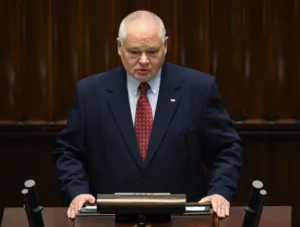
On August 29, preaching in his cathedral in Świdnica, southwest Poland, on the 46th anniversary of Solidarity and days before Polish schools reopened, Bishop Marek Mendyk said this: “The school is not secular; the school is public, and everyone has a right to it.”
He chaired the Polish bishops’ commission on Catholic education for a decade before handing it to his successor, and the sentence is a thesis rather than a piece of devotional rhetoric. “Public” and “secular” are not opposites in law: The first describes a school’s status and accessibility, the second its relation to religion. What Mendyk is contesting is a particular reading of the second – one on which neutrality is achieved by clearing religion out of the institution rather than by accommodating the families who want it. On his account a public school belongs to all the families who send their children there, including those for whom religious formation is not an optional extra.
Set that against what is happening some 650 miles to the south, and the argument acquires a second edge. Bulgaria’s constitution separates religious institutions from the state and names Eastern Orthodoxy the traditional religion; from those provisions the country’s Constitutional Court has derived the secular character of the state. Opponents of the government’s plans invoke that secularity to argue that the budget must not fund confessional teaching inside the compulsory curriculum. Poland’s government invokes state neutrality to justify moving religion classes to the beginning or the end of the school day. The same idea is doing opposite work in the two countries, and in neither is it examined.
Mendyk was equally firm about what the Polish dispute is not. “It is not about hours in school, it is not about posts,” he said. “It is about an integral vision of the human person.” Polish law already assigns schools a formative role alongside a teaching one, so the real question is narrower and harder: How wide that formative role should be, and whether it may include a religious dimension. That is precisely the question Bulgaria is now arguing from the other end.
His account of the process is sharper than anything in the bishops’ formal statements. Attempts are being made, he said, “by every means, including by stealth and by breaking the law, to take religion out of the school and turn the school into a secular institution.” That is a contested characterisation, and ministers reject it: They have altered the organisation of an optional subject and nothing more.
What the record supports is narrower and harder to dismiss. Between November 2024 and July 2025 the Constitutional Tribunal struck down all three of the contested regulations – merged classes, grades excluded from the average and the cut to one hour a week – each time over the same statutory problem: Article 12(2) of the Education System Act requires such regulations to be issued in agreement with the churches, and no agreement was reached. The government did not comply. The education ministry under Barbara Nowacka said the 2024 injunction “produces no legal effects”, invoking the long-running and genuine dispute over the Tribunal’s present composition. Even granting that dispute, the procedural point stands.
Religion is not returning to Bulgarian schools from nothing, and the claim that it is would not survive contact with the record. The subject has been taught there as a freely chosen option since the 1997-98 school year, and since 2018 in three approved programmes – Orthodoxy, Islam and a non-confessional course. In May 2025 some 15,200 pupils in 165 schools were taking it, out of a school population many times larger. What Sofia is attempting is different in kind, and the distinction matters: It is not converting the optional course into a compulsory one. It is building a second, compulsory subject beside it – the existing elective is to continue in parallel – with families choosing between an Orthodox, a Muslim and a non-confessional programme.
In May 2025 the government of Rosen Zhelyazkov proposed exactly that, under the name “Virtues and Religions”: A compulsory hour with elective content, in which a pupil takes Orthodox Christianity, Islam or a secular course in ethics and civic education. Then education minister Krasimir Valchev repeated the formula carefully and often. “This will not be a mandatory hour of religion,” he said, “but a mandatory hour of education in virtues.” He was equally explicit about who would stand at the blackboard: The subject “will not be taught by clergy, even in the confessional programmes, but by teachers who acquired their qualifications at universities”. The Holy Synod welcomed the draft in July 2025 with “sincere satisfaction”, observing that “Orthodoxy is a fundamental element of Bulgaria’s constitutional identity, recognised as a traditional faith.” Desislava Panayotova of the Synod put the pitch to sceptical parents in one line: “The Bulgarian school will educate children about religions without forcing them to follow any religion.”
On October 8, 2025 the National Assembly passed the amendments on first reading by 169 votes to three, with 28 abstentions. Citizens for European Development of Bulgaria (GERB), the Socialists, There Is Such a People, Revival, DPS–New Start and two smaller groups voted in favour; Continue the Change–Democratic Bulgaria abstained, and three of its deputies voted against. Nikolay Denkov, a former prime minister, proposed an alternative subject – “Virtues and Values”, without the religious component. Valchev answered the discrimination objection head-on: “There is no way to force a child who doesn’t believe in Islam to study Islam.”
The opposition case deserves to be stated at its strongest. Teachers questioned whether six- and seven-year-olds can engage with religious and philosophical categories at all. Others warned that sorting a class into Orthodox, Muslim and secular groups would introduce a division into schools that currently have none, in a country whose mixed regions have kept their peace partly by not asking; 110 university lecturers signed an appeal calling on the minister to abandon the subject. Public opinion was friendlier than the protests suggested: A Trend agency survey in March 2025 found 57 per cent of Bulgarians in favour of religion in the regular curriculum against 26 per cent opposed, and 60 per cent believing it helps form moral values. Set those figures beside the fifteen thousand pupils who actually take the existing option. Approving a subject in a survey and enrolling one’s own child in it are different questions.
Eleven months after that vote, not one Bulgarian pupil has attended the lesson.
The bill went to committee for its second reading and stayed there. Votes were scheduled and repeatedly not taken, sometimes because plenary sessions overran, sometimes for lack of a quorum. On December 11, 2025 the Zhelyazkov government resigned amid anti-corruption protests, and the parliamentary clock began to run out.
In February 2026 the Revival party tried to force the pace with its own bill, to take effect from the 2026-27 school year; Daniel Prodanov, deputy chair of the education committee, argued there was still time for both readings before the election. There was not. By early March, Valchev – by then a former minister – acknowledged that “there is no longer technical time for adoption”, and that the decision would fall to “the next compositions of the National Assembly”. A bill that had carried its first reading by 169 votes to three never reached a second, and lapsed with the parliament.
The election of April 19, 2026 produced Bulgaria’s first absolute parliamentary majority since 1997: Progressive Bulgaria took 131 of 240 seats, and Rumen Radev, the former president who had stepped down as head of state in January to enter party politics, became Prime Minister on May 8. His education minister, Georgi Valchev, previously rector of Sofia University, has not abandoned the file. On July 23 the chair of the education committee, Dimitar Zdravkov, and a group of deputies tabled a fresh bill reviving the subject in substantially the same shape. Revival tabled a rival bill of its own on September 3, and by mid-September the committee had six proposals from four parties before it. Zdravkov’s version is compulsory, ungraded, with three tracks: Orthodoxy, Islam or non-confessional virtues, ethics and civic education, with parents choosing. Confessional tracks are to be available to denominations above a census threshold; the earlier draft set it at 10 per cent, the current one at 8. Zdravkov defended the design in terms that have nothing to do with piety: Better, he argued, that the state should supervise the teaching of these faiths than that it should happen beyond its reach. On the start date the government is not speaking with one voice. The bill sets 2028-29, first grade first, extending by one year group annually; but on July 3 the Prime Minister told parliament that the “Virtues” component could begin a year earlier, in 2027-28, and on August 22 the education minister told Nova TV that the subject would not make Bulgarian education less secular, that “every parent and every family will be able to choose what their child studies”, and that launch was a matter of one to two years.
On September 9 the ministry convened a working group to prepare the curriculum: Theologians from Sofia and Veliko Tarnovo, religion teachers, philosophers, civic-education specialists and representatives of the Muslim community. According to reports of its first meeting, programmes for grades one to four are to be ready by early December so that textbook work can start in the new year. The ministry is already discussing an allocation of teaching time: 16 periods a year in the first two grades and 18 in the next two – roughly half an hour a week – carved out of the time currently given to the form tutor’s hour, so that nothing is added to a pupil’s total load.
On September 17 the education committee finally opened first-reading consideration, taking all six bills together. It spent three hours hearing deputies on both sides – Krasimir Valchev, now a GERB deputy, called the proposal “a democratic, pluralist approach found in almost all European countries”; Nikolay Denkov warned that religious teaching in school “can be abused” – and adjourned without a vote. The vote was put off until September 23. For the second time in this story, the date of a committee sitting has become a political actor.
So the current parliament has still not voted on the bill once, while the ministry has begun preparing the curriculum for it. That is not a scandal; ministries routinely prepare for legislation they expect to pass. It is, though, a precise picture of where the decisions are being made. Nor is the Church’s support unconditional any longer. In September the Holy Synod reaffirmed its backing for a compulsory subject but asked for amendments: Confessional programmes and teachers to be agreed with the relevant faith, teachers to carry a recommendation from diocesan authorities, and the subject to be graded like any other – assessing, the Synod says, knowledge rather than belief. The proposal has a lapsed first-reading vote of 169 behind it, the Church’s qualified endorsement, a place in the government programme with a June 2027 deadline, a working group and a proposed allocation of teaching time – and still not one pupil.
The most instructive detail in the Bulgarian draft is a number. In the 2021 census 638,708 people declared themselves Muslim: About 9.8 per cent of the total population, but 10.8 per cent of the 5.9 million who answered the religion question at all – a denominator that also holds those who declared no religion, could not say or declined to answer. Depending on which figure a drafter reaches for, Islam clears a 10 per cent threshold or falls below it. Asked about the earlier wording, the Education Ministry said Islam “traditionally has been included in confessional religious instruction and this opportunity will continue to exist”, and that “if necessary, texts will be refined”. The July draft sets the threshold at 8 per cent, which puts the question beyond doubt.
No debate about religious liberty settled that. Whether a Bulgarian Muslim child may study his own faith inside the compulsory timetable turned on the choice of a denominator and the drafting of a percentage. It is a decision of the same order as a Polish regulation permitting pupils of different year groups to be merged into one religion class: Technical in form, dispositive in effect.
Poland is running a comparable mechanism with the sign reversed. In June 2025 a citizens’ initiative called “Yes to Religion and Ethics in School”, carrying more than half a million signatures, was submitted to the Sejm by the Association of Lay Catechists, with a text drafted by the Ordo Iuris legal institute. Its principle resembles Bulgaria’s – every pupil chooses between a religious and a non-religious formative subject – though its construction differs sharply: Two compulsory hours a week, graded and counting toward the average, against a Bulgarian model that is ungraded and far lighter – 16 to 18 periods a year in the first four grades, on the ministry’s current plan. It passed its first reading on September 26, 2025 and went to two joint committees.
On May 13, 2026 proceedings were suspended. Krystyna Szumilas, a former education minister who chairs the education committee, announced a break until the government delivered its position, citing serious doubts about the bill’s constitutionality – and her substantive objection is not merely a delaying tactic: On her reading of the Tribunal’s case law, religion and ethics are formative subjects, and the only constitutionally sound arrangement is the present one, in which a pupil may choose religion, ethics or neither. The committee’s work programme for the second half of 2026 does not schedule the bill, and the Association of Lay Catechists, which wrote on May 29 asking for a date, has not been given one.
The bill has not been voted down. It is simply not on the calendar – the mirror image of Sofia, where a proposal with 169 votes behind it lapsed because a committee never sat.
Meanwhile the Polish figures move. Ministry data supplied to the human rights ombudsman show the number of religion teachers recorded in the national school information system falling from 27,393 in September 2024 to 22,876 a year later: 4,517 fewer, a drop of 16.5 per cent. The figure measures a contraction, not 4,517 dismissals – the ministry maintains there were no mass layoffs. According to the Institute for Catholic Church Statistics, 75.6 per cent of pupils attended religion classes in 2024-25, 3.8 percentage points fewer than a year earlier. Tomasz Sypniewski, who teaches religion at a Warsaw secondary school and belongs to the Association of Lay Catechists, describes what it omits: Health leave, compensatory benefits and what he calls hidden unemployment – the loss of most of a post, work spread across several schools, waiting three or four hours between lessons. “We increasingly feel like second-class teachers,” he writes. His warning about the institution matches Mendyk’s: A school without formation in values becomes what he calls a factory of grades.
Strip both disputes down and the same procedural grievance appears on each side of the argument. The Polish version has a statutory form – the missing agreement with the churches – and the bishops returned to it on August 24, calling for “genuine dialogue with representatives of religious communities”, an adjective that says what they think the previous consultations were. A week later Bishop Wojciech Osial, Mendyk’s successor at the education commission, told religion teachers that the ministry’s decisions “are harmful”, and that decisions affecting thousands of families had been taken without their voice being heard.
In Bulgaria the complaint came from the other direction and sounded identical. When the ministry designed the subject in 2025, academics, teachers and NGOs objected that consultation had been formal rather than formative, and the national ombudsman intervened to demand transparency. The parliamentary stage is broader: Churches, parents’ organisations, head teachers and NGOs have now filed competing positions with the committee.
The complainants stand on opposite sides. The complaint is the same, because at the decisive moment the procedure was the same: A matter with constitutional weight was worked out in a ministerial draft, and the affected parties were informed rather than consulted.
The symmetry extends to teachers. Poland’s religion-teaching workforce has contracted by more than four and a half thousand in a year, and no parish network can absorb them full time. Bulgaria has to build a comparable workforce from almost nothing – it has fewer than five hundred qualified religion teachers – and Diyan Stamatov, a school director who chairs the Union of Employers in the Public Education System, points out that a large school running three parallel groups in one period may need three or four extra teachers for that hour alone. Textbooks take at least 12 months to write and up to six more to evaluate. That arithmetic, rather than theology, is a large part of why the start date keeps moving.
The Polish case showed that a government need not prohibit a voluntary religious practice in order to reduce its place in public life; it can adjust schedules, grading rules and staffing requirements until the right survives and its exercise does not. Bulgaria supplies the counterpart: A government moving religion the other way, into the compulsory timetable, is at the mercy of the same kind of constraint, and can be stopped by it after winning its vote.
What the two countries share is not the direction of policy, nor even the legal instrument. It is how much turns on procedure and on the conditions of implementation: An executive regulation, the date a committee reconvenes, a statistical threshold written into a draft, a working group convened ahead of the vote, the months a textbook takes to write. Each looks technical. Together they settle the real place of religion in a school, and they do so largely outside the argument the public thinks it is having.
Mendyk’s distinction survives the journey south. A school is not secular; it is public. What is contested in Warsaw and in Sofia is who counts as that public – which families a state institution is obliged to accommodate, and which it may quietly organise around. Poland has a bill with half a million signatures and no hearing date. Bulgaria has a subject that once won 169 votes, still has no pupils, and a ministry preparing its curriculum while the committee postpones its first vote. In both capitals the practical decision is being taken somewhere between the statute book and the timetable.