Mykhailo Fedorov, Ukraine’s former defence minister and one of Kyiv’s most prominent advocates of technology-driven warfare, has agreed to advise Italy’s Defence Ministry on defence innovation.
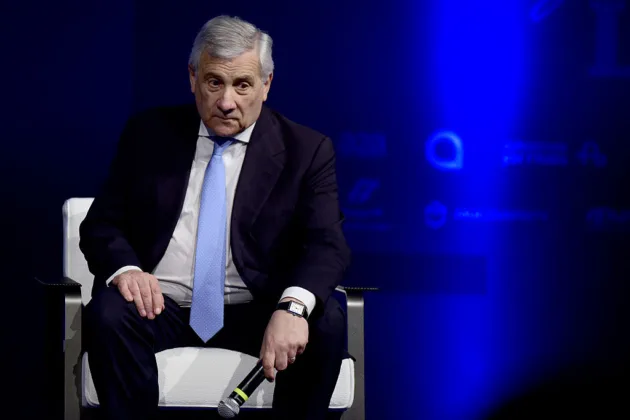
The appointment was announced on August 28 by Italian Defence Minister Guido Crosetto, following a meeting with Fedorov in Rome. Fedorov confirmed the role the same day in a post on X.
In a written statement issued by the Italian Defence Ministry, Crosetto said he was pleased that Fedorov had agreed to serve as his adviser on defence innovation. He argued that knowledge of new technologies alone is “no longer sufficient” and that militaries must be able to turn experimentation rapidly into operational solutions deployable on a large scale.
Fedorov said he would help Italy adopt modern warfare technologies and strengthen its defence sector, describing the Rome meeting as the first stop on an international working trip. Italian defence outlet Analisi Difesa reported that he would not be relocating to Rome.
Fedorov’s remit will centre on technologies that have become decisive on the Ukrainian battlefield, including drones, unmanned systems, air defence and artificial intelligence (AI).
Fedorov, 35, first became internationally known as Ukraine’s first minister of digital transformation, a position he held from August 2019 until January 2026, and as one of President Volodymyr Zelenskyy’s closest political allies.
He was one of the driving forces behind Ukraine’s digitalisation programme and the Diia digital-government platform. Following Russia’s full-scale invasion in February 2022, his responsibilities increasingly overlapped with national security, satellite communications and defence technology.
His political fortunes changed after he became defence minister in January 2026. Fedorov sought to reform procurement and mobilisation while introducing a more technology-driven approach to the armed forces.
His agenda brought him into conflict with parts of Ukraine’s military establishment, particularly then commander-in-chief Oleksandr Syrskyi. Fedorov argued that Ukraine needed to fight Russia asymmetrically through technology rather than rely on traditional military structures.
He accused Syrskyi of blocking his reforms, obstructing innovation and creating divisions inside the country. He also alleged that the general had engineered his removal through an ultimatum issued to Zelenskyy, Al Jazeera reported.
Zelenskyy removed Fedorov on July 15, after six months in office, as part of a cabinet reshuffle that followed the resignation of prime minister Yulia Svyrydenko. The decision triggered protests in Kyiv and in Lviv, Odesa and Dnipro, where demonstrators demanded Fedorov’s return and criticised the president for siding with the military establishment.
The dispute was not simply personal. Fedorov represented a younger, technology-oriented approach to warfare, and the confrontation exposed a broader struggle over how Ukraine should organise its war effort.
Zelenskyy dismissed Syrskyi on July 21 and offered Fedorov a return to government in a different post, which he declined, Il Post reported.
After leaving government, Fedorov called on August 19 for national elections to be held during wartime, a step barred under martial law. He has not formally announced a presidential bid, but the move has turned him into a potential rival to the Ukrainian president.
A Kyiv International Institute of Sociology survey cited by Chatham House found public trust in Fedorov had risen from 38 per cent to 50 per cent over six months, while trust in Zelenskyy held at 61-62 per cent. Zelenskyy has opposed holding elections during the war and has described Fedorov’s involvement in the protests and his calls for a vote as misguided.
Fedorov’s move to Italy had been set in motion soon after his dismissal. Crosetto has said he asked the Ukrainian when he wanted to come to Rome to work with him as an adviser, according to la Repubblica.
He has opted for an external advisory role alongside his independent work on defence technology, advising Crosetto on identifying technologies with military potential and shortening the path from experimentation to procurement and deployment.
Fedorov’s experience offers Rome a direct view of a war in which cheap drones, software and AI have repeatedly altered battlefield dynamics.
The appointment has drawn a response from Moscow. Russian foreign ministry spokeswoman Maria Zakharova mocked the choice, and Crosetto replied that decisions for Italy were taken with Rome in mind, not Moscow, Kyiv or Washington, ANSA reported.
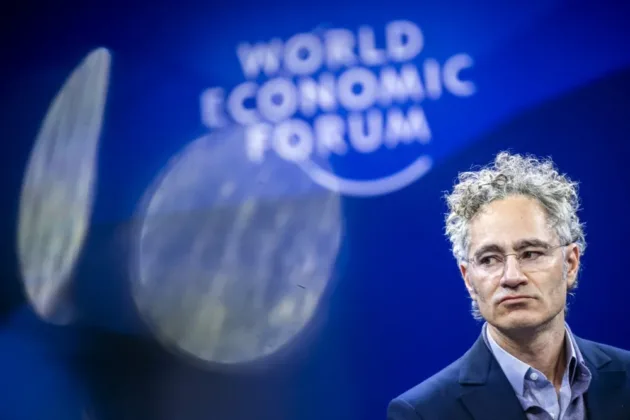
Fedorov and Palantir CEO Alex Karp have worked together for more than five years on the application of AI and data to Ukraine’s war effort, including systems for analysing air attacks and processing battlefield information.
Ukraine and Palantir have also collaborated on the Brave1 Dataroom, designed to give defence-technology developers access to battlefield data used to train AI systems. Launched in January, the platform initially focused on the autonomous detection and interception of drones, with more than 100 companies working on 80 models, according to Ukraine’s defence ministry.
On September 1, days after his appointment as Crosetto’s adviser, Fedorov announced that Karp would become the first major investor in his new defence-technology company. The two met at Palantir’s Washington office on August 31, and the size of the investment has not been disclosed.
Karp is backing the venture in a personal capacity and Palantir has not been named as an investor, Reuters reported. Fedorov is also seeking international investment for a broader defence-technology ecosystem, with a focus on areas including battlefield robotics, interceptor drones and AI-enabled weapons.