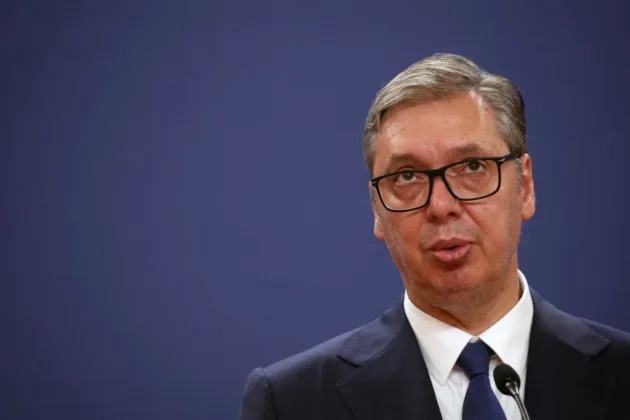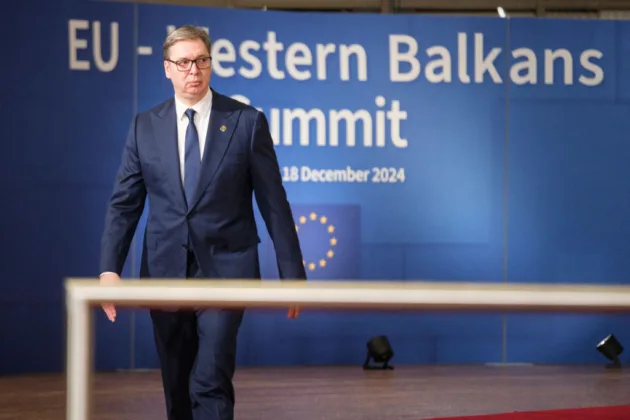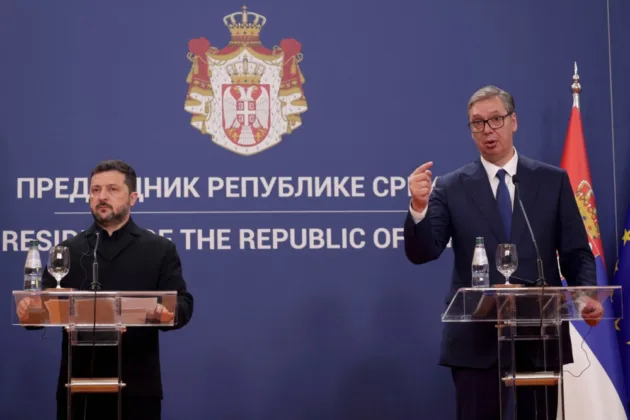


Serbian President Aleksandar Vučić has resigned seven months before the end of his second and final term, opening the way for him to return as prime minister if his party wins the snap parliamentary election on October 25.
He stepped down on September 27 at the Presidency building in Belgrade, where several hundred supporters had gathered. Barred by the constitution from a third presidential term, he had signalled in June that he would go early.
Parliament speaker Ana Brnabić, a close ally, takes over as acting head of State. A presidential election must be completed within 90 days, and Vučić said the first round would be held by the end of December.
Minutes before resigning he used his presidential powers to pardon 49 people, 23 of them over alleged offences committed during the protests that began in November 2024. Those pardoned included students and members of his own party.
Vučić has dominated Serbian politics since 2014, first as prime minister and then as president. In August he had already narrowed the date of the ballot to October 18 or 25, and the National Assembly was dissolved in early September.
His Serbian Progressive Party (SNS) is standing on a list named United Serbia. It faces Students Win, an anti-corruption movement that grew out of the university protests, and European Serbia, an alliance of pro-Western opposition parties.
Neither bloc has yet named a presidential candidate. Vučić told CNN hours before resigning that he would acknowledge an opposition victory and congratulate his opponents the same evening.
The protests began after the collapse of a concrete canopy at the railway station in Novi Sad, northern Serbia, on November 1, 2024, in which 16 people died. Demonstrators blamed corruption and weak oversight of publicly funded construction contracts, accusations the government has denied.
Serbia has been an EU candidate since 2012 and opened accession negotiations in 2014, though no negotiating chapter has been opened since December 2021. Eight member states blocked the opening of Cluster 3 in July, and Enlargement Commissioner Marta Kos has threatened to freeze €1.5 billion in pre-accession funds over stalled judicial reform.
Brussels has nonetheless kept Belgrade inside the enlargement process, with European Council President António Costa restating the EU’s commitment to Serbian accession on a visit to Belgrade in May 2025. Washington has taken a harder line, with a bill introduced in August seeking sanctions on Serbian officials over Belgrade’s ties to Russia, China and Iran.
Whoever forms the next government will inherit an accession file that has barely moved in five years.