

The term “shadow fleet”, sometimes also “dark fleet” or “grey fleet”, appears regularly in EU statements on Russia.
It is not a legal category. It is a working label for tankers that move oil from sanctioned producers outside Western shipping, insurance and financial systems, according to the policy glossary Model Diplomat.
Similar networks have long served Iran and Venezuela. The Russian version dates from December 2022.
That month, the EU banned seaborne imports of Russian crude, followed by a ban on refined products in February 2023. At the same time, the G7 and the EU introduced a price cap on Russian oil sold to third countries.
The cap did not seek to stop Russian oil reaching the market. It barred Western companies from shipping, insuring or financing cargoes sold above the set price, while buyers such as India and China could keep receiving barrels.
Maria Shagina, a sanctions expert at the International Institute for Strategic Studies, has described it as a deliberate trade-off: Lower Russian revenues without a global price spike.
The cap only applies where Western services are used. As a result, the sanctions led to the rise of a fleet that did not depend on them.
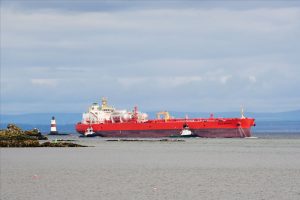
The tankers involved are typically 15 years old or more and were often bought second-hand as the cap came into force, Model Diplomat said. Ownership tends to sit in single-ship companies registered in places such as the UAE, Hong Kong or the Marshall Islands.
Western governments say the vessels frequently change flags and registries and carry insurance of uncertain quality. Most lack cover from the International Group of P&I Clubs, the mutual insurers that cover the bulk of the world’s ocean-going fleet.
In January, AFP reported that tankers linked to Russian and Chinese trade had been registering in the Cook Islands for as little as a few thousand dollars.
At the end of August, 45 “shadow” vessels carrying Russian fuel were sailing under false flags, according to the Centre for Research on Energy and Clean Air (CREA), a Finland-based think tank.
Estimates of the fleet’s size vary because analysts count different things. The EU has sanctioned about 600 ships, while an internal EU document cited by Keystone-SDA in October 2025 put the wider network at up to 1,400 tankers.
Its share of Russian trade is easier to measure. CREA found that sanctioned “shadow” tankers carried 52 per cent of Russia’s seaborne oil in August.
A further 42 per cent moved on tankers owned or insured in G7 and allied countries, which may carry Russian oil legally if it is sold below the cap. The remainder travelled on non-sanctioned “shadow” vessels.
Most of the crude goes east. India took 37 per cent of Russia’s seaborne crude exports and China 27 per cent in July, according to the Kyiv School of Economics Institute.
The EU gives three reasons for acting against the fleet. The first is revenue for Russia’s war in Ukraine.
The second is safety. Shipping and insurance industry sources told Reuters that ageing tankers without top-tier insurance raise the risk of spills and mechanical failures.
The third is critical infrastructure. On December 25, 2024, the Cook Islands-flagged tanker Eagle S dragged its anchor about 90km across the Gulf of Finland, damaging a power cable and four telecoms lines between Finland and Estonia.
Prosecutors charged three officers with negligence. In October 2025, a Helsinki court attributed the damage to a faulty anchor mechanism and ruled it lacked jurisdiction. An appeal court reopened the case in September.
EU enforcement has several layers. Successive sanctions packages have listed vessels by name, barring them from EU ports and services.
The bloc has also pressed flag states to withdraw registration. Kallas has said hundreds of ships have been deflagged as a result.
At sea, Operation Irini, the EU naval mission created in 2020 to enforce the UN arms embargo on Libya, now boards suspect tankers under Article 110 of the UN Convention on the Law of the Sea. That provision allows warships to verify vessels whose nationality is in doubt.
The legal position is contested. The EU and G7 measures are not UN sanctions and bind only companies and individuals under those jurisdictions. Buyers such as India and China are not party to them.
Article 110 allows a flag check, not the seizure of cargo, and tankers sailing under a valid flag on the high seas fall outside it.
Moscow rejects the interceptions outright. Russian President Vladimir Putin has called them “piracy” and said Russia would reciprocate.
Assessments of the effect of enforcement differ. The European Commission told Follow the Money in 2025 that deliveries by sanctioned vessels had fallen 76 per cent after listing, though the outlet said no supporting data was provided.
CREA’s monthly figures show the sanctioned fleet’s share of Russian seaborne oil broadly stable at 53 per cent in July and 52 per cent in August.
Russian income also depends on world prices. CREA estimated that the energy crisis around the Strait of Hormuz added €31 billion to Russia’s seaborne oil and gas export revenues in the six months after the US-Israeli strikes on Iran.