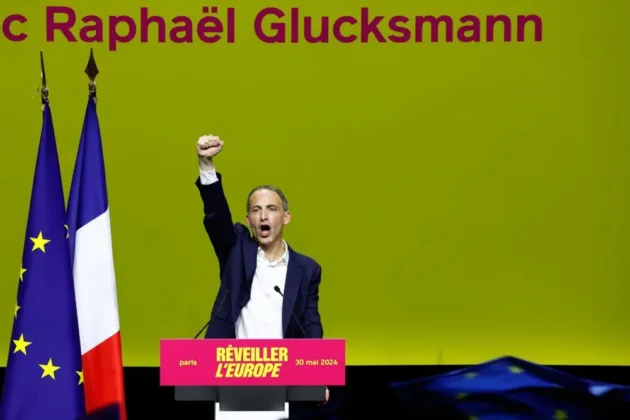


Raphaël Glucksmann has won the social-democratic primary organised by the Socialist Party (PS), Place Publique and the Gauche républicaine et socialiste (GRS), securing the centre-left nomination for the 2027 presidential election in the first round.
The Place Publique MEP took 66.13 per cent of the vote (79,613 ballots) on October 11.
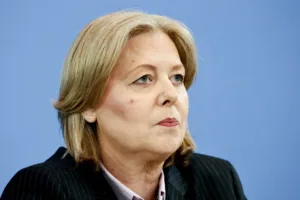
PS first secretary Olivier Faure finished a distant second on 14.48 per cent, followed by Ségolène Royal (7.62 per cent), Emmanuel Maurel (5.92 per cent) and Jérôme Guedj (5.83 per cent).
Of the 134,456 people registered to take part, 120,787 cast a ballot. Only members and registered supporters of the three organising parties could vote and non-members had to pay €15 to sign up, a charge Faure had opposed.
That was far short of the Socialist primaries of 2011 and 2017, which drew between 1.6 million and 2.8 million voters.
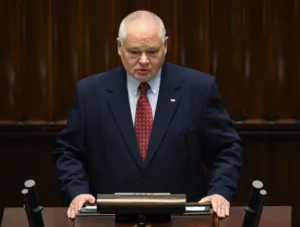
In his victory speech, Glucksmann presented himself as the candidate of a break with Macronism and with what he called Jean-Luc Mélenchon’s hegemony over the French left.
“I am the candidate who can defeat our long-standing enemy, the far right,” he said, adding that Marine Le Pen would not be in the Élysée in 2027.
He returned to that theme repeatedly and called for a democratic left that could speak of justice, ecology and the Republic without renunciation.
He has ruled out any alliance with La France Insoumise (LFI), Mélenchon’s movement, at both the presidential and parliamentary elections.
🗳️Results of the first round of the Socialist primary :
R. Glucksmann (PP) : 66.13%
O. Faure (PS) : 14.48%
S. Royal (PS) : 7.62%
E. Maurel (GRS) : 5.92%
J. Guedj (PS) : 5.83% pic.twitter.com/fpCj0IlaLP— France Elects 🇫🇷 (@FRElects) October 11, 2026
The result is a clear rejection of Faure’s more open approach to the broader left.
Faure accepted the outcome, stating that a “very clear majority” had emerged and that Glucksmann was now the candidate of the three participating parties.
Royal expressed disappointment but said she would help build a left-wing gathering.
Guedj, who had also ruled out any deal with LFI, welcomed the decisive nature of the win. Faure, Royal and Maurel had all left the door open to working with Mélenchon’s party at parliamentary elections.
Outside the primary, reactions were more mixed: Some PS figures and Greens regretted the rejection of wider unity, while others on the moderate left saw it as a necessary clarification.
Glucksmann struck a cautious note on X, writing that coming first gave him no entitlement and that nothing had been won.
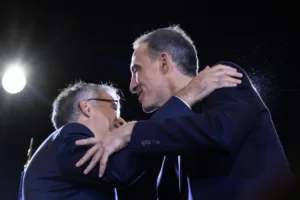
Shortly after the result, Glucksmann was filmed with supporters singing La Marseillaise outside the Paris venue where he celebrated. The performance, captured by BFMTV and widely shared, drew mockery online.
As he left La Cantine de Belleville, in the 20th arrondissement of Paris, he was also hit with a bag of flour as he left the gathering; the person responsible shouted that he would not exceed 2 per cent in the election. Rice had been thrown at him earlier in the evening as he arrived. He was not hurt and left by taxi.
National Rally (RN) president Jordan Bardella condemned the attack on X, writing that violence had no place in politics and that no act of aggression was too small to matter.
Glucksmann, grandson of a Communist spy, now faces the harder task of widening his support beyond the 120,787 primary voters.
He was elected to the European Parliament in 2024 at the head of a PS-Place Publique list that took close to 14 per cent of the French vote, second behind the RN.
Polls place him well behind both Mélenchon and Le Pen. An Elabe survey carried out on August 26-28 put Le Pen on 34 per cent in a first round, ahead of Édouard Philippe on 17 per cent, Mélenchon on 14 per cent and Glucksmann on 11.5 per cent. Philippe served as prime minister under President Emmanuel Macron.
Le Pen is standing for the RN after a Paris appeal court on July 7 upheld her conviction over the misuse of European Parliament funds but cut her period of ineligibility, leaving her free to run.
The primary itself was disrupted by a cyber-attack that slowed voting from Friday October 9 onwards, and organisers extended the ballot until Sunday evening.
The PS, for the first time in its history, will not field a candidate drawn from its own ranks.