





Spain’s Supreme Court has upheld the suspension of the right to vote of people who obtained Spanish nationality under the 2022 Democratic Memory Law, confirming that they will not take part in the general election on November 29.
The court’s administrative chamber set out its position in two orders issued on October 12, rejecting the appeal brought by the Spanish Government’s legal service against the precautionary measure agreed on September 10. One of the six judges sitting in the section dissented.
The timing is decisive. The electoral roll to be used in the vote closed the same day.
The orders instruct the National Statistics Institute, which runs the Electoral Census Office, not to register voters who acquired Spanish nationality of origin through the exile route in the law’s eighth additional provision. Where such voters are already on the register of absent residents abroad, known in Spain as the CERA, the electoral effects of their entry stay suspended for the contest called by royal decree on October 5.
Nobody loses their nationality and pending applications continue to be processed. The judges have frozen only the electoral effect of the registration while the substantive appeal is decided.
The case turns on an instruction signed days after the law came into force, which presumed exile for every Spaniard who left the country between July 18, 1936 and December 31, 1955 instead of requiring documentary proof. Descendants who can certify an ancestor’s exile are not affected.
The register of voters abroad stood at 2,736,522 on July 1, against 2,328,260 at the 2023 general election, a rise of 408,262, while the foreign ministry has put applications under the law at more than 1.2 million, of which 571,761 were approved.
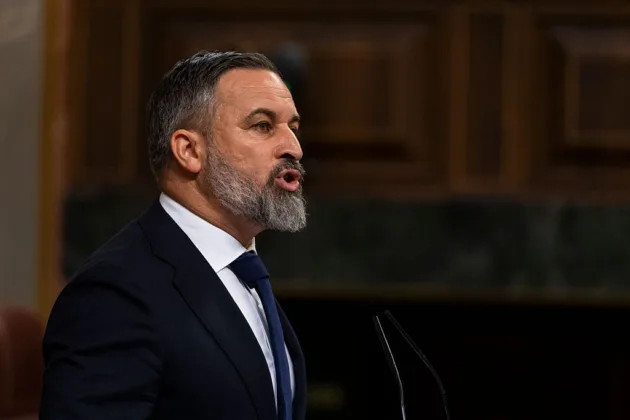
The appeal was brought by Vox, whose leader Santiago Abascal has told supporters to distrust the polls and vote in person, and by Iustitia Europa, a party outside parliament that litigates regularly against the Socialist administration.
The Spanish Government’s lawyers had argued that it was materially impossible to separate, before polling day, those naturalised under the law from Spaniards who acquired nationality by other routes. Public prosecutors also backed lifting the measure, which ministers have called a temporary restriction on a fundamental right.
The ruling lands on an election that Prime Minister Pedro Sánchez called nine months early after two housing decrees fell in the Congress of Deputies. Spanish nationality also carries European Union citizenship and the right to live and work across member states, and most applications under the law were filed in Latin America, led by Argentina and Cuba.
A ruling on the substance is still pending, and the government has asked for it before the 2027 regional and municipal elections.