









Thousands of Danish volunteers have begun the Home Guard’s biggest exercise since the Cold War, a four-day call-out built around sabotage and hybrid attack rather than conventional defence.
Up to 6,500 volunteers from the Army Home Guard are taking part alongside members of the naval and air branches, according to the broadcaster DR. Exercise Blåtand, named after the tenth-century Danish king Harald Bluetooth, runs October 1-4 at more than 70 locations across Jutland and Funen.
For the first time the force is training inside towns rather than on military ranges, with armed soldiers and military vehicles appearing in more than 40 built-up areas. The Home Guard said it wanted its troops working in places that would be affected in a real crisis.
Major General Gunner Arpe Nielsen, head of the Home Guard, said the current geopolitical picture made the exercise more important still. Its tasks were becoming more demanding, he said, and the force needed to improve its training.
The exercise follows a sharp hardening of Denmark’s threat assessment. On September 24 the Danish Defence Intelligence Service published an unclassified report concluding that Russia would intensify its hybrid war against the West and NATO, with attacks carrying “greater consequences for the countries targeted than in the past”.
The service identified a low but growing risk of a limited Russian military attack on a NATO country bordering Russia, though it found no sign of preparations for an outright invasion. It called the September 14 incident off Gedser, when a Russian frigate fired flares at a Danish military helicopter, the most serious its forces had faced.
The Danish Security and Intelligence Service warned the same day that Russia was planning sabotage on Danish soil against defence companies. The Danish Resilience Agency separately raised its threat level for destructive cyberattacks.
Esben Salling Larsen, a military analyst at the Danish Defence Academy, said the Home Guard’s role had changed markedly over the past 20 years. Its ability to mobilise large numbers of personnel quickly was particularly useful against the present threat picture, he said.
Denmark has roughly 51,000 Home Guard volunteers and has raised defence spending to about 3.5 per cent of GDP this year. The last exercise of comparable size was held in 2016.
The call-out is a national answer to a problem the European Union has so far addressed largely through procurement. Brussels has spent the past year debating a “drone wall” and counter-drone funding while member states put volunteers and soldiers on their own streets.
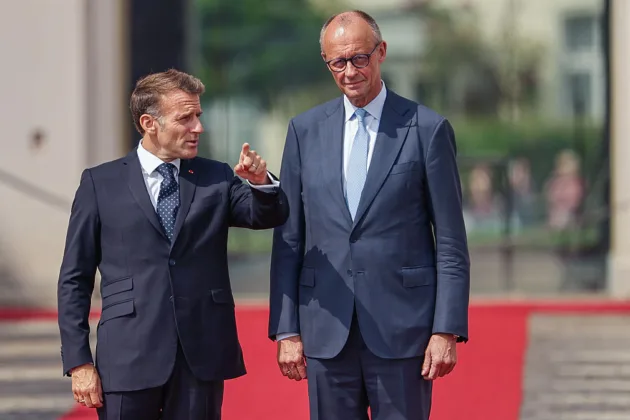
France has taken a similar route, with President Emmanuel Macron ordering a protective shield for critical infrastructure and defence industry sites in September.