





Volodymyr Zelensky has asked Ukraine’s parliament to dismiss Prosecutor General Ruslan Kravchenko without delay, after the outgoing official signed a notice of suspicion against the head of the country’s main anti-corruption bureau.
“There is only one path for this Prosecutor General: removal from office. That is what I told him,” Zelensky wrote on Telegram and X.
“Ukraine has seen all the reasons. If he considers this political pressure, let him call it that. I ask lawmakers to support this dismissal without delay.”
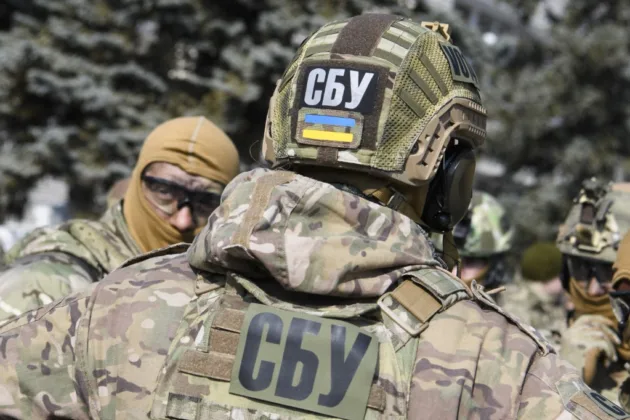
Kravchenko tendered his resignation on September 7 after the National Anti-Corruption Bureau of Ukraine (NABU) and the Specialised Anti-Corruption Prosecutor’s Office (SAPO) said Operation Carthage had uncovered a criminal group inside the Prosecutor General’s Office.
Investigators allege prosecutors took bribes to protect fraudulent call centres that defrauded Ukrainians and foreigners, then laundered the proceeds.
The two agencies said five people had been identified in the case, which is being pursued as the running of a criminal organisation and money laundering. More than 20 million hryvnia (€387,000) was laundered through purchases of property and other valuables, they said, and a further 10 million hryvnia (€194,000) was placed in accounts held by people close to the suspects and declared as business income.
Kravchenko has not been charged or named as a suspect. Investigators name Serhiy Kropyva, deputy head of the Prosecutor General’s Office department for international legal cooperation, as the organiser of the scheme. He was detained on September 4 and remanded in custody two days later.
Kravchenko has denied wrongdoing and said he did not want the office used as “a tool in political confrontation”. His first deputy, Maria Vdovychenko, left the prosecution service on September 8 and two regional prosecutors followed a day later.
Under Ukrainian law he remains in post until the Verkhovna Rada accepts the resignation. Zelensky must submit a formal motion. A draft resolution for this was registered on September 14.
Parliamentary speaker Ruslan Stefanchuk confirmed the president’s submission had reached the chamber and the Rada’s law enforcement committee backed it unanimously the same day. Servant of the People faction leader Davyd Arakhamia said a vote was expected on September 15.
Hours before Zelensky’s appeal, Kravchenko said he had signed a notice of suspicion against NABU director Semen Kryvonos and entered it in the pre-trial register.
He accused Kryvonos of forging official documents to obtain “an unlawful benefit on an exceptionally large scale” and of a “fictitious adoption” to evade court liability. The 28-page document, which Kravchenko published in full, refers to a 2009 conviction for vote-buying on behalf of the Yulia Tymoshenko Bloc.
He also advised Kryvonos and SAPO head Oleksandr Klymenko to resign the same day rather than drag their agencies into a personal fight.
NABU and SAPO called the move another step in a “systematic attack on independent anti-corruption bodies”, denied the claims and said Kryvonos had not been formally charged. They added that accusations against a prosecutor who had already resigned were public, not procedural.
Ukrainian media reported that Kravchenko left the country overnight on what he described as an official trip. Ukrainska Pravda, citing law-enforcement sources, said he crossed into Poland at the Shehyni checkpoint in an official car in the early hours of September 14, on a five-day trip he had authorised himself. His wife was said to have crossed into Moldova on September 12.
Kravchenko has held the job since June 17, 2025, when parliament confirmed him by 273 votes. He previously ran the state tax service and Kyiv regional administration.
Opponents say he backed the July 2025 attempt to put NABU and SAPO under the prosecutor general, a law Zelensky signed and then had to unwind after street protests and pressure from Western donors. He denies that charge. Ukrainian media reported that Danylo Hetmantsev, chairman of parliament’s finance committee and a critic of both agencies, is among those under consideration to replace him.
The episode unfolds as Ukraine is hoping to convince Brussels it is moving in the right direction to join the EU. Anti-corruption is seen as pivotal for membership for the country long plagued by fraud, graft and bribery scandals.
Europe has demanded that Ukraine change the selection and dismissal processes of the prosecutor general, restore competitions for other prosecutorial appointments and continue international participation in judicial selection. Those steps form part of a package of 10 priority commitments agreed with Brussels in December 2025 and due to be met by the end of 2026.
The European Commission said on September 14 that it was following events and repeated that the Prosecutor General’s Office had to be reformed, including through a competitive procedure for choosing the country’s top prosecutor. The European Commission’s 2025 report on Ukraine found that the prosecutor general’s position was politicised and called for a more transparent, merit-based appointment process.
COMMENT: Ukraine must show that it has the political maturity to govern itself, and not just produce a rotation of kleptocrats in rigged elections, writes @ConradMBlack. https://t.co/lmfF8n7UC2
— Brussels Signal (@brusselssignal) November 19, 2025