


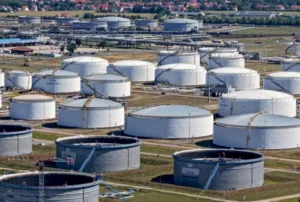

On April 8, the head of France’s strategic oil-stockholding company told parliament that selling emergency fuel at its original purchase price would be a management mistake. Six months later, the French Government authorised just such a sale.
François Boussagol, chief executive of the Société Anonyme de Gestion de Stocks de Sécurité (SAGESS), was explaining normal stock-management practice, not criticising a programme that had yet to be proposed. He said the company usually lends fuel to distributors in an emergency, requiring them to return the same amount, generally within a month. A decree issued on October 23 instead permits the outright sale of up to 10 million barrels of diesel at its average acquisition cost, roughly a fifth of France’s strategic diesel stock, with sales running from November 1 to January 31, 2027. Buyers need not return it.
France is not acting alone. On October 2, the G7 agreed to accelerate the release of 100 million barrels of oil and fuel from earlier commitments over four months. Across Europe, the immediate question is how to ease fuel prices. The next should be how to restore the protection once those stocks have been used.
The French Government expects its scheme to cut diesel prices by 12 to 18 cents a litre for three months. That is meaningful relief for households, farmers and transport companies. The arithmetic is also revealing. The fuel was acquired at around 28 cents a litre, against a market reference of €1.10 when the plan was announced, according to figures from the Prime Minister’s office cited by AFP. On 10 million barrels, that difference represents roughly €1.3 billion in economic value. Spread across the 54 million barrels France expects to consume over three months, it implies savings of about 15 cents a litre, close to the official forecast.
The €1.3 billion is not a confirmed taxpayer loss or a forecast of the eventual replacement bill. The stocks are financed through industry arrangements, and repurchase prices could fall. SAGESS told the same April hearing that it holds about €4.5 billion of stock at historical cost, financed mainly by its own bond issues without a State guarantee, with the costs passed on to distributors. The decree requires companies to pass the discount to consumers and report the benefits. It does not require a comparable public assessment of what replenishment will cost, who will ultimately bear that cost or how long rebuilding may take.
Paris says reserves will be rebuilt gradually after the crisis, depending on market conditions. Officials have floated rebuilding over a year rather than the customary month, according to AFP. Waiting may be sensible: Buying diesel during a price spike could make matters worse. But postponing a purchase is not the same as assessing the risks of delay. Replacing the full 10 million barrels over six months would require purchases averaging around 55,000 barrels a day. Spreading them over a year would halve that rate but prolong the period of reduced protection. Neither is an announced timetable.
America offers a useful warning. Washington sold 180 million barrels from its Strategic Petroleum Reserve in 2022 at an average of about $95 (€85) a barrel. By November 2024, the US Department of Energy had contracted direct purchases of 59 million barrels at an average below $76 (€68), with some deliveries scheduled for later. Buying back cheaper than it sold was a favourable financial outcome.
Yet the direct purchases amounted to only about a third of the emergency-sale volume at that point. Congress cancelled another 140 million barrels of planned future sales, preserving oil that would otherwise have left the reserve rather than putting sold barrels back. When a new emergency arrived in March 2026, Washington authorised a further release of 172 million barrels, part of a record 400 million-barrel drawdown coordinated by the International Energy Agency (IEA). By late October, its stockpile held about 283 million barrels, the lowest since 1982, according to the US Energy Information Administration. The latest decline cannot be blamed solely on 2022. The lesson is that a good buying price does not guarantee a completed refill before the next crisis.
The US has also used exchanges: Its first contracts this year released 45.2 million barrels of crude against roughly 55 million contracted for return. Those promises carry risks, and crude exchanges are not the same as discounted diesel sales. But the obligation to return fuel is agreed when it leaves the reserve.
France’s customary loans work on a similar principle. They cannot necessarily deliver October’s discount: Distributors obliged to replace borrowed diesel would still need someone to fund the difference. An outright sale may be justified. The resulting responsibility for replenishment should still be explained.
The IEA expects diesel markets to stay tight into 2027. The US supplied around 32 per cent of diesel imported into the EU from outside the bloc this year, up from 17 per cent in 2025, according to Kpler figures reported by Euronews. France itself sourced about 36 per cent of its diesel imports from the US, according to the same data. At the end of September, Washington threatened restrictions on diesel exports while pressing European governments to release reserves. The G7 reached its release agreement on October 2, and US President Donald Trump subsequently ruled out the ban.
That episode exposed a risk for Europe: Governments trying to rebuild emergency stocks could end up competing with ordinary fuel importers for the same scarce cargoes. Diesel available somewhere in the world may not be available where and when it is needed.
The G7 has already asked the IEA for recommendations on replenishment. The European Commission, now revisiting the Oil Stocks Directive after expert workshops in July, with amendments expected later this year, should turn that concern into a public test for substantial discounted releases: Who bears the replacement cost, how quickly fuel could realistically be delivered and what emergency cover would remain if another disruption arrived first. Urgent releases need not wait for paperwork. The assessment could follow promptly.
Reserves are meant to be used, and France may be right to use them now. But buying back cheaply is a financial achievement. Rebuilding protection before the next emergency is an energy-security achievement. Europe should not confuse the two.