




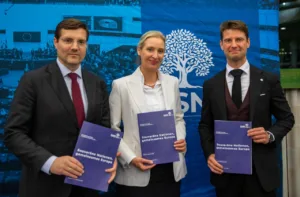


The German taxpayers’ federation, the Bund der Steuerzahler (BdSt), has published the 54th edition of its Schwarzbuch, or black book, on October 1, 100 cases in which it says the federal government, the Länder, Germany’s 16 states, and the municipalities have spent public money carelessly.
The black book is not an official audit but still offers a telling insight into the choices Berlin made.
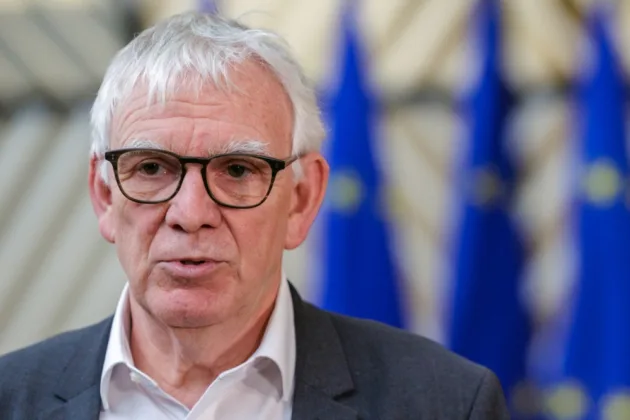
BdSt president Reiner Holznagel said grant pots and deadlines were deciding what got built, rather than need, and that money was sometimes spent because it would otherwise expire.
He asked the federation and the Länder to time-limit their programmes, check them, and scrap those that do not work. “Have the courage to rethink structures,” he told them.
Grants explain several of the overruns. This edition carries a chapter on them, titled Vergiftete Geschenke, or poisoned gifts, covering the thousands of support schemes run at federal, state and EU level.
Its central finding is that the larger the share of outside money in a project, the weaker the incentive to watch the last euro.
Some of Germany’s largest items are in Berlin.
The association puts the planned government airport at BER at up to €2.5 billion, against a 2019 estimate of €344 million, with completion not before 2038.
The site is to grow from 30 to nearly 60 hectares, with hangars, an underground fuelling plant and 26 parking stands for the flight-readiness unit.
Renovation of Schloss Bellevue and the presidential office is costed at up to €860 million over eight years, including a geothermal plant, solar roofs and an underground technical centre.
A new security fence of about 1,300 metres is put at €23.9 million, or €18,400 a metre.
The president’s temporary quarters during the works were already costed at €205 million.
The single biggest case is in Cologne, where the renovation of the opera house, first put at €253 million over three years, has taken 14 and reached €798 million in building costs alone. With interim venues and finance, it puts the project at about €1.5 billion.
In Neu-Anspach, Hesse, four elms and a lime were planted for €100,000, of which €80,000 came from Berlin. The association calculates that 50 conventionally planted trees could have been bought for the money.
A toilet block for a fairground in Hadamar used on six days a year cost €355,700, almost all of it from the state of Hesse. The municipality itself put up €30,700.
In the Böblingen district, 370 metres of cycle path, with a slope reduced, cost €1 million.
A wooden bridge of 50 metres in Mannheim, first estimated at €5.9 million, is now at €9.2 million, paid in full by the federation. That is €184,000 a metre for what the city calls the world’s longest integral timber bridge, built without bearings or joints.
Landshut bought 362 mobile air filters for €1.22 million during the Covid pandemic. It left 300 units to be scrapped, at a disposal cost of €13,397, after more than €325,000 in maintenance. Of 318 devices put up for sale, 12 found a buyer, raising €808.
Saarland spent €2.2 million replacing cycle-path signs, €400,000 of it on a consultancy.
Lübeck-Travemünde’s car park for 300 vehicles, built for €8.1 million, was 12 per cent full in 2025. It is expected to lose some €410,000 a year over its first decade.
In Einbeck a town square first priced at €2.3 million in 2014 reached nearly €7 million after 12 years.
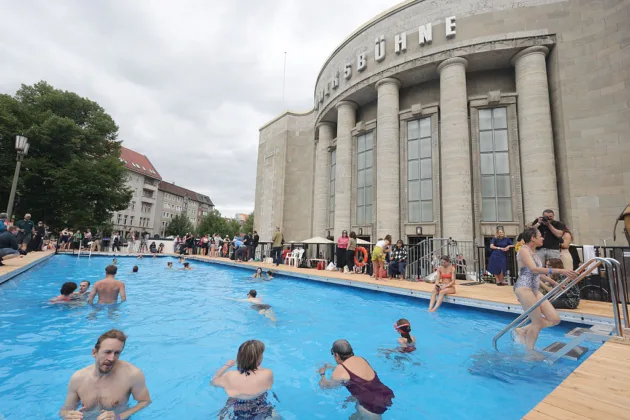
A lido in Bad Gandersheim rose from €2 million to €6 million and now runs a deficit of about €200,000 a year. It drew 20,000 visitors over two seasons, against the 40,000 a year forecast.
Großefehn, a municipality of 14,000, had a riding centre which cost €9.1 million in public money, starting from an initial €4.7 million; the council had expected an annual loss of at most €37,800. It closed in 2025.
A spa in Wangerland cost €23 million against €8.8 million and pushed the municipal tourism company into insolvency. Wangerland Touristik, with 180 staff in the resort of Horumersiel, filed in June 2025.
In Stolberg, Saxony-Anhalt, a nature conservation foundation bought nearly 1,000 hectares of beech forest for €31.8 million, all of it from the federal environment ministry and €4.66 million or 17.2 per cent above the value determined by the expert, with no local contribution.
Mecklenburg-Western Pomerania ordered 52 hydrogen buses and two filling stations for €46 million. The federal environment agency puts the efficiency of a battery-electric vehicle at about 70 per cent, against 25 to 35 per cent for a fuel-cell one.
The association also criticises a €100 billion special fund for Länder and municipalities that, it says, has no requirement that the money be additional to existing spending.
Lower Saxony is listed for €800 million on pupil tablets, the Saarland for €113 million on swimming pools, and Berlin for nearly €1 billion on 600,000 street trees.
The association wants binding checks on results, fewer overlapping grants and simpler applications.
Until those exist, it says, each municipality has to spot the cost risk itself.
The 100 cases are its argument that funding rules and local plans have to be reviewed together, for transparency and for what the projects actually cost.