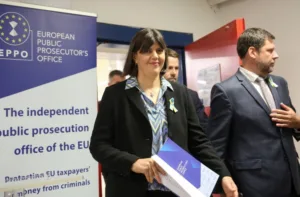

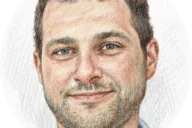
Laura Codruța Kövesi, the outgoing European Chief Prosecutor, has accused Greece of mounting the most serious attempt to intimidate the European Public Prosecutor’s Office (EPPO) during her seven-year term, which ends on October 31.
She singled out a dispute over the renewal of the mandates of three Greek European Delegated Prosecutors as the clearest example of pressure on the independent body.
“The most blatant attempt to intimidate EPPO happened in Greece, where we had this issue with the renewal of the European delegated prosecutors,” Kövesi said.
In May, Greece’s Supreme Judicial Council limited the terms of the three prosecutors to two years rather than the five years already approved by the EPPO College.
The EPPO challenged the ruling before Greece’s Supreme Court of Cassation, the Areios Pagos, which on June 24 dismissed the appeal as inadmissible by 72 votes to 10, finding that the office had no standing to act on the prosecutors’ behalf.
The office has previously notified the European Commission that the decision undermined its independence and raised questions about Greece’s compliance with the principle of sincere cooperation. Kövesi told Politico the dispute could lead to cuts in EU funding for Greece under Article 16 of the EPPO Regulation.
The dispute is linked to EPPO investigations into alleged large-scale fraud involving EU agricultural subsidies paid under the Common Agricultural Policy (CAP) and administered through the Greek payments agency OPEKEPE. The affair led in 2025 to the resignation of ministers and deputy ministers in Prime Minister Kyriakos Mitsotakis’ New Democracy Government.
Kövesi rejected claims that the office’s work was timed around elections or driven by political motives.
“All the noise was created to blame EPPO that we play politics instead of discussing what happened in reality,” she said.
“You have politicians who want to cover the discussion, try to undermine the credibility of EPPO.”
She added that the office’s role was to establish whether EU funds reached honest farmers, noting that money had instead gone to people who “pretended they are farmers and used the money to go in fancy trips and have luxurious cars.”
On April 24, the Greek parliament lifted the immunity of 11 MPs named in the OPEKEPE case file at the European Chief Prosecutor’s request.
Four were ultimately referred to court.
Kövesi defended the request, stating that lifting immunity “is not about the guilt. It’s just a condition to allow the prosecutors to make the investigation and to gather evidences.”
On July 16, EPPO announced indictments against 22 defendants, including four serving MPs from the governing New Democracy party, while dismissing allegations against seven others for insufficient evidence. The charges, all misdemeanours under Greek law, concern acts allegedly committed in 2021 and carry up to five years’ imprisonment. Those charged remain presumed innocent and the four MPs have pleaded not guilty.
On suggestions that Greece could withdraw from the EPPO, Kövesi said such a step was “almost impossible.”
She described comments of that kind as further evidence of attempts to weaken the office “because we do our job.”
She also warned more broadly that the EPPO risks being “killed softly” through underfunding, delays in revising its regulation and bureaucratic obstacles.
On paper the office should have 230 European Delegated Prosecutors, she noted, but funding covers only 180. Poland, she said, had agreed it needed 24 delegated prosecutors but has 15, while Hungary, which joined the EPPO in August, was allocated half the budget the office had requested.
Her successor, German prosecutor Andrés Ritter, is due to take office on November 1; Kövesi said his principal challenge would be to preserve the institution’s independence and credibility. Ritter, Deputy European Chief Prosecutor since November 2020, was confirmed by the Council of the European Union and the European Parliament in March.
Kövesi, a former Romanian anti-corruption chief, became the EPPO’s first European Chief Prosecutor in 2019. The office began operations on June 1, 2021.
The Luxembourg-based office investigates and prosecutes crimes affecting the EU’s financial interests, including fraud involving EU funds, corruption and cross-border VAT fraud.
The interview also touched on other cases, including the “Pfizergate” investigation involving European Commission President Ursula von der Leyen over her text message exchanges with Pfizer chief executive Albert Bourla during the Covid-19 vaccine negotiations, though Kövesi declined to comment on specific ongoing probes.
Former Greek prime minister George Papandreou of the socialist PASOK party responded to the interview on October 29 by accusing the current government of obstructing accountability and attempting to discredit investigators.
“Attempts to divert attention from the substance of the investigations amount to attempts at a cover-up,” he said. “Laura Kövesi did her job.”
Mitsotakis said on July 16 that the EPPO appeared to have become involved in Greece’s domestic political scene, noting that nine of the 13 New Democracy ministers and MPs initially investigated had been cleared. The Greek Government has previously criticised the EPPO’s handling of the farm subsidy cases and defended national procedures for the appointment of prosecutors.
European prosecutors today demanded that Greece lift the parliamentary immunity of 11 lawmakers suspected of involvement in a scam that syphoned off millions of euros in EU farm subsidies for years. https://t.co/1dQ5NL5bxd
— Brussels Signal (@brusselssignal) April 1, 2026