
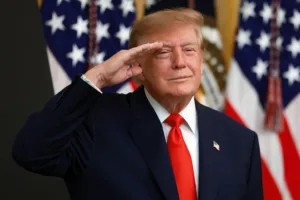

US President Donald Trump has called for Ukraine to replace Volodymyr Zelensky, arguing the country needs a leader capable of agreeing terms to end the war with Russia.
“I suggest they get a new leader who can make a deal,” Trump told reporters at the White House on October 10. He said Zelensky could have settled the fighting several times over and had chosen not to.
He went further, claiming the war would never have started had he been in office in 2022. It is a line he has used repeatedly since returning to the White House.
Ukrainian foreign minister Andrii Sybiha said only the Ukrainian people had the right to decide who leads them. Writing on social media, he said Zelensky retained that support and that criticism from abroad showed the president was doing his job properly.
Kirill Dmitriev, Putin’s special envoy for investment and economic cooperation, welcomed the intervention. He called Trump’s words “iconic and historic” in a post on X.
The status of Zelensky’s mandate has been a Russian talking point throughout the invasion. Vladimir Putin has repeatedly described him as illegitimate and questioned who Moscow is supposed to negotiate with.
Zelensky’s five-year term was due to expire in 2024. Elections cannot be held under the martial law in force since February 2022, a restriction set out in Ukrainian law rather than chosen by the president.
He has said he is ready to face voters once a ceasefire makes polling safe and has asked parliament to examine how a wartime election could be run. No date has been set.
Trump first called him a dictator without elections in February 2025. European governments pushed back at the time, with several insisting that suspending elections during a war was standard practice.
Those same governments have spent four years treating Zelensky as Ukraine’s legitimate wartime leader and as the counterpart for any settlement. A US president calling for his removal leaves Brussels and Washington on opposite sides of that question at the very moment terms are being discussed.
The remarks followed Trump’s decision to let Russian diesel back onto world markets, which he defended by blaming Ukrainian strikes on Russian refineries for high American fuel prices. He has since declared an energy ceasefire that neither Moscow nor Kyiv has confirmed.
Russian missiles and glide bombs struck Ukrainian cities on the day Trump spoke, killing at least 20 people, among them three children.