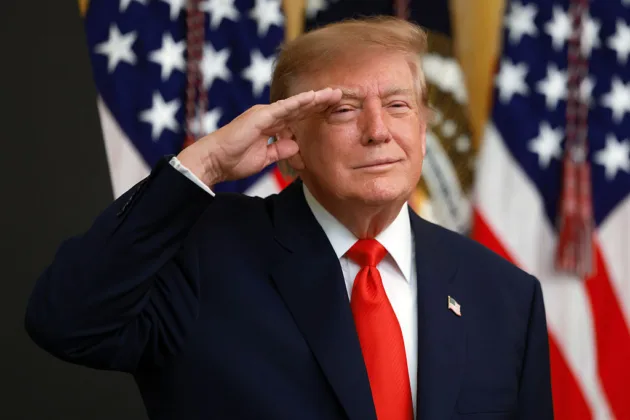

US President Donald Trump has said Russian President Vladimir Putin is more willing than Ukrainian President Volodymyr Zelensky to reach a deal ending the Ukraine War. The remarks came a day after he declared an “energy ceasefire” that Kyiv says Moscow has already broken.
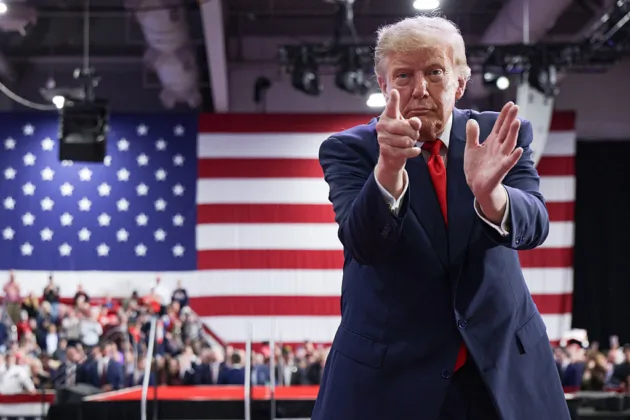
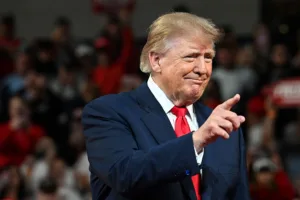
“I think actually Putin wants to make a deal more than Zelensky,” Trump told reporters outside the White House on October 12. He was leaving for a campaign rally in Ohio ahead of the November 3 midterm elections.
Trump said the two leaders had to meet and end a war he described as ridiculous. He claimed 32,000 people, most of them young soldiers, had been killed in the past month.
Asked whether Russia had violated the truce, he said he was not sure and would look into it, adding that there had been breaches on both sides. He insisted both governments backed the arrangement.
Trump announced the energy ceasefire on his Truth Social platform on October 11, saying both sides had agreed to it. The Kremlin has not publicly confirmed any such deal.
Zelensky told the Warsaw Security Forum by video link on October 12 that a Russian jet-powered Shahed drone had struck a gas production facility at midnight. Several more drones had hit a petrol station, he said, while Ukraine had left Russian refineries untouched overnight.
He described the attacks as “Putin’s answer to Trump”. Ukraine would halt its long-range strikes on Russian refineries and oil exports only if Russia stopped hitting Ukraine’s energy system and critical infrastructure, he added.
Writing on X later that day, Zelensky said there was no indication that Russia was complying with the terms set out by the US President.
The row follows Washington’s decision on October 9 to suspend its own sanctions and allow up to 4.8 million tonnes of Russian diesel on to world markets. Trump has since called for Ukraine to replace Zelensky, blaming Ukrainian strikes on Russian refineries for high fuel prices.
The European Union moved in the opposite direction on October 12. The Council of the European Union, meeting as foreign ministers in Luxembourg, added 1,569 Russian defence companies and their chief executives to the bloc’s sanctions list.
EU foreign policy chief Kaja Kallas called it the “single largest expansion of our sanctions list” since the war began. More than half of the listings are linked to ballistic missile production and the total now stands at close to 4,600.
Zelensky welcomed the new listings as a necessary signal. Trump defended his diesel deal the same day, arguing that European governments had kept buying Russian energy while criticising Washington.