








Poland has been chosen to host a major servicing centre for the highly sought-after US-made Patriot air defence missiles, defeating rival bids from Germany, the Netherlands and Scandinavia, officials revealed on October 27.
Confirming the news in a statement, the Pentagon said the new facility would be “underpinned by robust, transatlantic industrial cooperation, with critical supply chain integration led by Germany, the Netherlands, and Sweden.”
Under Secretary of War for Acquisition and Sustainment Michael P. Duffey added that the choice of a country on NATO’s eastern front “sends a clear message that the Alliance is united, serious about deterrence, and ready to back our words with action”. The decision was unveiled as NATO’s Conference of National Armaments Directors met.
The new centre, the first of its kind to be located outside the US itself, will “dramatically shorten turnaround times and further secure critical supply lines”, said the US Department of War on announcing the decision.
According to the Pentagon statement the service centre will also help European NATO countries to “undertake primary responsibility for their own conventional defence”.
Polish Prime Minister Donald Tusk, who leads the country’s centrist coalition government, said that Poland had worked hard to bring “these capabilities and infrastructure” to the country, competing against “several ambitious rivals”.
Deputy Prime Minister and defence minister Władysław Kosiniak-Kamysz said that the decision showed “Poland is a trusted ally and holds an extremely important place on the map of global security”.
Deputy defence minister Magdalena Sobkowiak-Czarnecka, who had been responsible for negotiating the details of the agreement, said that Poland was chosen ahead of rival bids from Germany, the Netherlands and Norway to host the facility. US ambassador to Poland Thomas Rose, though, indicated that Sweden, not Norway, was the fourth candidate.
Sobkowiak-Czarnecka described the decision as “historic” in an X post, adding that the hub will be the only one outside the United States. She said the Polish bid had been rated the highest from the application stage onwards.
She later told reporters that the facility would cost around €227 million, about 1 billion zloty, and that it would take around a year to make the centre operational.
Kosiniak-Kamysz and Sobkowiak-Czarnecka both pointed to the role President Karol Nawrocki had played in securing the deal. On many issues, the government is in conflict with the opposition-aligned president, but the two sides worked together on the Patriot bid.
Nawrocki, who is backed by the opposition Law and Justice (PiS) party, is a close ally of his US counterpart, Donald Trump. His national security advisor, Bartosz Grodecki, claimed that it was “thanks to a conversation between” the two presidents that the new Patriot servicing centre was being established in Poland.
The head of Nawrocki’s foreign policy office, Marcin Przydacz, meanwhile, thanked Washington for choosing Poland to host the new centre.
“The Polish-American alliance and the good atmosphere in relations once again yield results,” he declared. “We can see what positive effects the President’s activity brings for Poland.”
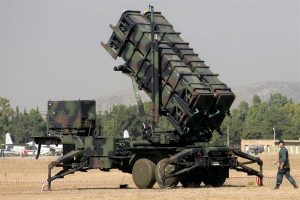
Poland is one of a number of European countries that operate Patriot air defence systems. Others include Germany, Greece, the Netherlands, Romania, Sweden and Ukraine.
The new centre will service the PAC-3 missiles used in Patriot batteries, both the MSE and CRI variants. The competition to host the facility was announced in July, with the selection made by the US government in conjunction with American defence giant Lockheed Martin, the producer of missiles.
Amid Moscow’s war in Ukraine, Patriot missiles are a crucial element of the country’s air defences due to their ability to destroy incoming Russian ballistic missiles. The US-made weapons are in short supply, though, and Ukraine’s supply of them has virtually been exhausted.
The missiles are currently sent to the United States for servicing, prompting the US to seek a location for a European maintenance facility that would reduce turnaround times. Certification in the US can take more than a year, a wait the European centre is expected to cut to a few weeks.
Warsaw also hopes that hosting a European service hub will pave the way for Poland to become a manufacturer of Patriot missiles in the future.
Poland has long sought to host a hub to service PAC-3 MSE missiles, the latest, most advanced interceptors used by the Patriot system and among the world’s most sought-after air-defence munitions.
An electronics factory near Warsaw has been tipped as a likely location for the centre after Sobkowiak-Czarnecka toured the facility with a senior US official on September 10.
US Under Secretary of State for Arms Control and International Security Thomas DiNanno visited the WZE plant in Zielonka, a town around 15km northeast of the capital, “to see firsthand the importance of US-Polish defence industrial cooperation on critical sub-components of the Patriot and PAC-3 enterprise,” the US embassy in Warsaw said in an X post at the time.
A 2019 agreement with Lockheed Martin covered the production and servicing of critical PAC-3 MSE components at the plant.
Discussions have also been held with Kyiv about Poland and Ukraine partnering in a joint initiative to produce PAC missiles.
Initial suggestions by US President Donald Trump that Ukraine could be granted a production licence now appear less certain amid strained diplomatic relations between Washington and Kyiv.
Demand for the Patriot system has surged due to its ability to shoot down ballistic missiles used by Russia and Iran. The US fired about 1,500 interceptors in its war with Iran, roughly 65 per cent of a stockpile of some 2,330, according to the Center for Strategic and International Studies.
Global stocks have been heavily depleted by the conflict in the Middle East, while in Europe, supplying the interceptors to Ukraine remains critical to help protect the country’s energy infrastructure against Russian strikes this winter.
Manufacturer Lockheed Martin delivered 620 PAC-3 MSE missiles in 2025, a company record, and plans to lift annual output to about 2,000 under a seven-year agreement with the Department of War. Production limits are already causing delays in supplies.
The decision taken by Washington cements Poland’s position as one of the US’s most important security partners in Europe.
War secretary Pete Hegseth has called Poland a “model ally”, noting that it has for years met NATO’s defence spending targets, unlike many other member states.
Poland has also been a significant customer for US defence firms. Between 2021 and 2025, Poland was NATO’s largest arms importer with 44 per cent of the equipment purchased coming from US suppliers, according to the Stockholm International Peace Research Institute (SIPRI).
In April 2025, Poland signed a $2 billion (€1.8 billion) deal for the US to provide logistical support and training for Patriot systems and in July it was announced that Polish state defence group PGZ would become the first European producer of the American Barracuda-500M cruise missile, developed by Anduril Industries.
Warsaw is currently seeking a new permanent US military base to be established in the country, even though it already hosts around 10,000 rotational US troops.
In September President Nawrocki claimed that the proposed base, which he said would be called “Fort Trump”, was “confirmed” but Washington has not publicly announced any final decision despite dropping heavy hints that it was likely to be positive.
The Tusk government says it is negotiating the location for the base with the US administration but Nawrocki allies have claimed that these discussions were first obstructed by the finance ministry raising doubts over Polish financing.
There is nervousness in Warsaw over rumours that Russia is insisting that the withdrawal of NATO troops from Poland and the rest of Central Europe would be a precondition of a negotiated peace to bring the end of the war in Ukraine.
The Trump administration is keen to bring the war in Ukraine to an end but views Poland as a close ally and a potential counterweight to Franco-German dominance in Europe.