





The European Union has signalled that Britain must pay into its cohesion funds in exchange for access to the bloc’s internal electricity market, as member states struggle to agree the next EU budget.
Sandro Gozi, an Italian-born MEP elected in France for the liberal Renew Europe group, told the news site Rapporteur that any deal on British participation in the power market had to come with a UK contribution to cohesion policy. Gozi heads the European Parliament’s delegation for relations with the UK.
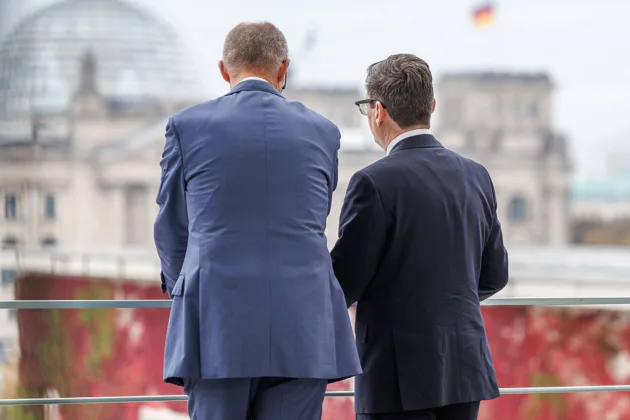
He said MEPs would formally put forward the demand today, November 17, three days before British Prime Minister Andy Burnham was due in Brussels for the second EU-UK summit since Brexit.
Burnham, in office since July, has made reconnecting with Europe a central plank of his premiership. He hoped market access would help cut household electricity bills, which Rapporteur reported were the highest in the G7 at about 5p (€0.06) per kilowatt-hour above the median.
London wants to rejoin the EU electricity market by 2028, according to the outlet, giving British consumers access to cheaper French nuclear power.
The pressure from MEPs followed a letter dated November 6 from the leaders of the Netherlands, Germany, Denmark, Luxembourg and Belgium. They wrote that London should make an “appropriate financial contribution” in return for joining the market.
The Council of the European Union had already authorised the European Commission on March 30 to negotiate both the electricity deal and a permanent British payment towards narrowing economic gaps between EU regions.
The model is Norway, which is outside the bloc but has access to its energy market and pays about €391 million a year in cohesion grants, according to Reuters.
The timing suits Brussels. The 27 member states are deadlocked over the Commission’s proposed €2 trillion budget for 2028-2034, with net contributors led by Germany pushing for cuts.
Italy and other recipients are fighting to protect cohesion funding for the poorest regions. That spending amounts to €392 billion, roughly a third of the current seven-year budget.
In May, Brussels Signal reported that EU negotiators had made annual British payments a condition of deeper single market access. Critics have noted that London would have no say over how the money was spent.
The UK Treasury has acknowledged the EU’s aim. In a parliamentary answer on April 15, minister Lucy Rigby said Brussels was seeking a “mechanism for a UK financial contribution”, adding that any payment would be subject to negotiation.
EU Trade Commissioner Maroš Šefčovič told MEPs in October that talks on electricity and the British contribution would continue after the summit. The November 20 meeting was expected to focus on food standards, carbon markets and a youth mobility scheme.