
The European Commission has called on member states to teach children how to react to emergencies from early childhood, as part of a fresh push to make Europeans self-sufficient during the first 72 hours of a crisis.
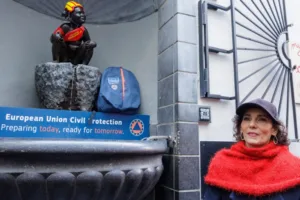
European Commissioner for Equality, Preparedness and Crisis Management Hadja Lahbib presented the plans on November 3 at the opening of the ninth European Civil Protection Forum in Brussels.
The package consists of four Population Preparedness Guidelines, each accompanied by a guidance document collecting examples of good practice from EU countries and beyond. According to the Commission, the guidance is not binding and may be revised in light of feedback.
“When disaster strikes, the first hours can make all the difference,” Lahbib said. “Every European should know what to do, how to protect their family, and how to help others.”
The first guideline revisits advice Brussels issued in March 2025 under its Preparedness Union Strategy. Households should be able to cover their basic needs for three days while emergency services mobilise.
That means stocks of drinking water, food and medicines, along with a grab bag ready for rapid evacuation. The Commission also recommended that families draw up emergency plans and learn practical skills such as first aid or cooking without electricity.
The second guideline asks national authorities to build preparedness into early childhood and primary school curricula and to train teachers accordingly.
The Commission said this should be done through age-appropriate activities within existing lessons rather than a new subject, and “without creating fear or anxiety”.
“Learning what to do when the siren sounds should be as natural as learning to swim,” Lahbib said.
Education remains a national competence under the EU treaties, which give Brussels only a supporting and coordinating role. The same applies to civil protection.
The third guideline covers people with disabilities. It calls for accessible alert systems, adapted evacuation procedures, shelters and transport, as well as individual emergency plans that account for medication or assistive devices.
The fourth deals with risk communication. Authorities are urged to give citizens timely, accessible and reliable information before, during and after an emergency through several channels, and to counter disinformation that could hamper the public response.
The guidelines build on a recently adopted Commission recommendation on operational continuity and stress-testing. It is intended to keep national civil protection contact points running around the clock, even during major disruption.
Lahbib framed the guidance against a widening range of security threats, from extreme weather to cyberattacks, sabotage and the possibility of armed conflict.
“We are not at war, but we are not at peace either,” she said. She described Europe as living in a “dangerous grey zone” that could turn red “in the blink of an eye”, and said the EU must be ready for the worst, “including an armed conflict in Europe”.
She cited the blackout that hit Spain and Portugal on April 28, 2025, forcing hospitals onto generators, as an example of how one crisis can trigger another across sectors.
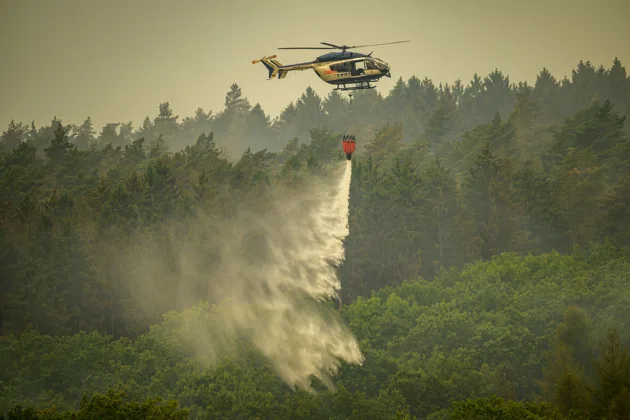
According to Lahbib, the EU Civil Protection Mechanism was activated more than 60 times over the past year, ten times as often as in its early years. Belgium was among the countries to draw on it, calling in EU firefighting aircraft in August to tackle a record wildfire.
She also pressed for solid funding for civil protection in the next long-term EU budget, due to run from 2028.
The 72-hour concept draws on Nordic models. Several countries in the region, such as Norway, have stepped up civil defence planning since Russia’s full-scale invasion of Ukraine.
The Commission also proposed an annual EU Preparedness Day on October 23, starting in 2027. The date marks the founding of the Civil Protection Mechanism on October 23, 2001.
Lahbib said she would put the idea to the Council of the European Union and the European Parliament. The Commission said it would also seek a joint declaration with the European Economic and Social Committee and the European Committee of the Regions.
The proposal stems from a European Citizens’ Panel on Preparedness, which gathered 150 citizens from March to May this year and recommended a full EU Preparedness Week.
The 72-hour message has not always travelled well. When Brussels first issued it in 2025, several member states pushed back.
In Ireland, the Department of Defence’s Office of Emergency Planning dropped the 72-hour concept from its Be Emergency Ready booklet, delivered to some 2.2 million homes from September 21.
Officials changed tack after market research suggested the framing could leave people anxious about why the government was issuing the advice in the first place.
Lahbib insisted the aim was the opposite. “We want to be alert, not alarmed; prepared, not scared,” she said.
She closed by picturing a Europe in which, within 25 years, an emergency bag by the front door would be as ordinary as a first-aid kit in the car.