

A prominent member of Europe’s ruling centre-right establishment has launched a broadside against Brussels, warning that the European Union has mutated into an ideological project that now threatens its own foundational principles.
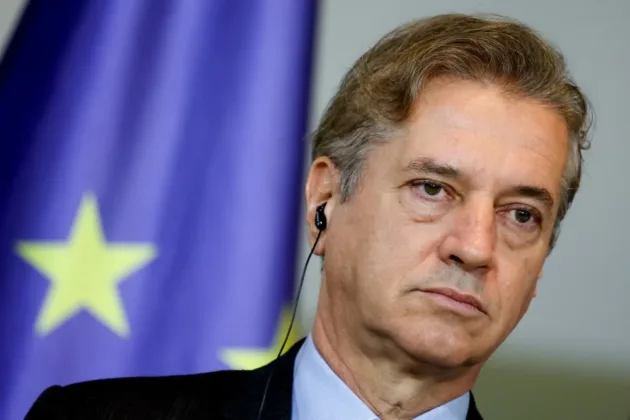
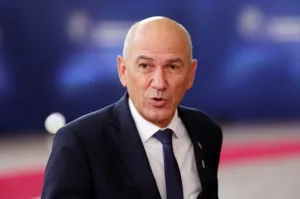
Janez Janša, Prime Minister of Slovenia and long-standing leader of the Slovenian Democratic Party (SDS) — a full member of the European People’s Party (EPP) — delivered the critique in a widely shared post on X on October 31.
The message had drawn some 2.4 million views by midday on November 2, according to Slovenian daily Slovenske novice.
Reflecting on the bloc’s trajectory since Central and Eastern European nations joined in 2004, Janša argued that member states entered a community founded on the rule of law and economic prosperity, only to find an institution that enables institutional overreach, suppresses dissent and accelerates industrial decline.
“When we were deciding to join the EU, no one imagined that in any of its member states or in the Union as a whole it would be possible without consequences,” Janša wrote, before listing 10 examples ranging from annulled elections to police at a constitutional court.
He concluded: “An EU has emerged that must save itself from itself.”
Janša’s critique set out an extensive catalogue of systemic failures across the bloc, accusing Brussels institutions of political hypocrisy and selective enforcement of European values.
Among the grievances raised was the growing tolerance of institutional interference when carried out by pro-Brussels administrations.
Janša pointed to the political turmoil in Poland, highlighting instances where police forces were deployed to the Constitutional Tribunal and public broadcasters were taken over to replace management under the banner of restoring democratic standards.
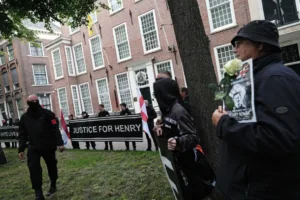
His post came a day after riot police were deployed outside the Tribunal in Warsaw on October 30, as its president Bogdan Święczkowski was suspended, according to Euronews. President Karol Nawrocki cut short a visit to Senegal and returned to Poland overnight.
The overhaul of public broadcaster TVP followed the arrival in office of Prime Minister Donald Tusk’s coalition in December 2023.
He also cited the annulment of presidential elections in Romania, ordered by the country’s Constitutional Court in December 2024, and the suspension of news broadcasts on Hungary’s public media in July.
He further pointed to the mass regularisation of illegal migrants in Spain, which he described as granting “almost a million citizenships” by fast-track procedure.
Spain’s extraordinary regularisation grants residence and work permits rather than citizenship. Madrid said it had received 1,174,978 applications when the window closed at the end of June.
Janša also denounced the political weaponisation of the judiciary in Slovenia itself, where opposition figures have faced prosecution on the eve of parliamentary elections.
He was himself jailed in June 2014, three weeks before a general election, in the Patria corruption case. Slovenia’s Constitutional Court annulled the conviction in 2015.
Janša also took aim at the bloc’s flagship climate and industrial agendas.
Singling out Germany’s energy policy, he condemned the decommissioning of domestic nuclear power stations alongside the historical construction of Russian gas pipelines.
Germany switched off its last three reactors on April 15, 2023, while the Nord Stream pipelines had tied it directly to Russian gas.
He argued that heavy carbon taxation, combined with the shutdown of zero-carbon baseload energy, has triggered aggressive deindustrialisation, driving manufacturing and emissions to jurisdictions with lower environmental standards while citizens bear the financial cost.
Ko smo se odločali za vstop v EU, si ni nihče predstavljal, da bo v kaki njeni članici in uniji nasploh mogoče brez posledic:
1. Razveljaviti predsedniške volitve (Romunija);
2. Ukiniti informativni program na nacionalni RTV (Madžarska);
3. Poslati policijo na Ustavno sodišče… pic.twitter.com/Qyn9Nfe65g— Janez Janša (@JJansaSDS) October 31, 2026
The intervention carries particular political weight because Janša is not a fringe Eurosceptic from the right-wing or sovereigntist factions, but a veteran stalwart of the EPP, the dominant political family of European Commission President Ursula von der Leyen and European Parliament President Roberta Metsola.
While the SDS has often pursued robust conservative policies that put it at odds with Brussels’ liberal mainstream, it remains a core member of Europe’s Christian democratic establishment.
Janša returned to office for a fourth term on June 4, 2026, at the head of a coalition that includes New Slovenia (NSi), another EPP member.
Janša’s willingness to publicly question the legitimacy and direction of EU governance exposes the deepening fault line within the EPP.
For years, centrist party managers in Brussels have sought to maintain a fragile coalition between conservative and more green or liberal groups within the party.
Western European Christian Democrats who largely back the European Green Deal and centralised integration have been drifting away from Central Europeans, who tend to be more conservative and increasingly alarmed by federalist drift, cultural progressivism and bureaucratic intrusion into national sovereignty.
With economic stagnation gripping major economies and public pushback mounting against green transition costs and migration management, the critique from within the EPP’s own ranks underscores that disenchantment with the EU is no longer confined to the political fringes.
The European Commission has backed the Polish parliament’s right to fill seats on the country’s Constitutional Tribunal, as a fight for control of the court spilled on to the streets of Warsaw. https://t.co/GXssfphgVi
— Brussels Signal (@brusselssignal) November 2, 2026