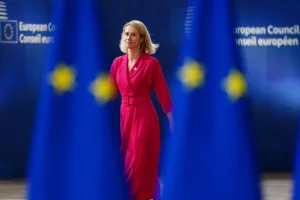


Italian Prime Minister Giorgia Meloni publicly distanced herself from German Chancellor Friedrich Merz over his criticism of the US MAGA movement and his framing of a widening transatlantic divide.
The comments expose a strategic rift just days after Rome and Berlin had presented themselves as Europe’s emerging power duo.
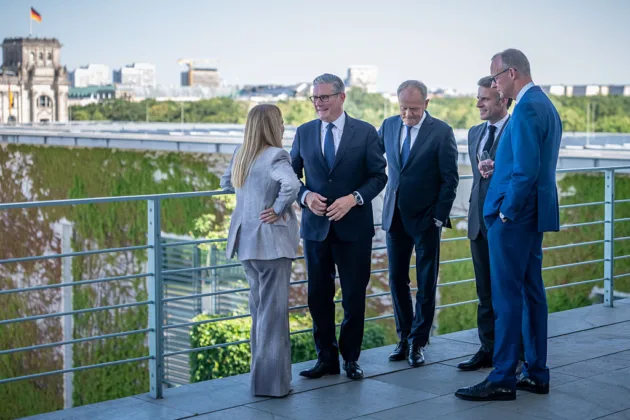
The disagreement comes at a delicate moment. On January 23, Meloni and Merz met in Rome for an intergovernmental summit that many observers described as the embryo of a new “Rome–Berlin axis”.
It was an effort to forge a leadership tandem capable of steering the European Union through mounting geopolitical turbulence and strained transatlantic ties.
The summit was portrayed as more than symbolic unity. The two leaders signed a strategic cooperation package to deepen co-ordination on defence, security, and economic competitiveness.
The agreement included a reinforced bilateral Action Plan, a non-binding security and defence framework and commitments to closer industrial and technological collaboration. Rome and Berlin pledged to strengthen the European pillar of NATO, boost EU defense readiness and co-ordinate responses to emerging geopolitical threats.
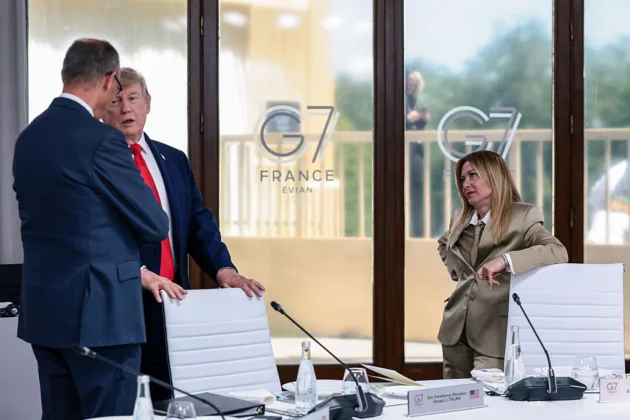
The broader objective was clear: Position Italy and Germany as joint agenda-setters within the bloc, shaping Europe’s posture as questions about US reliability and European autonomy intensify.
But that carefully choreographed unity has now revealed diverging visions of transatlantic relations.
Speaking on February 13 at the Munich Security Conference, Merz struck a sharply critical tone toward US domestic politics, linking the MAGA movement to what he described as a widening divide between Europe and the United States.
He asserted that “a rift … has opened between Europe and the United States” and stressed that “the battles of the MAGA culture are not ours”. His remarks suggested that Europe must prepare for potential political divergence with Washington and accelerate efforts toward greater strategic sovereignty.
Meloni chose a different path. On February 14, speaking at the African Union Summit in Addis Ababa, Ethiopia, she explicitly declined to endorse Merz’s critique.
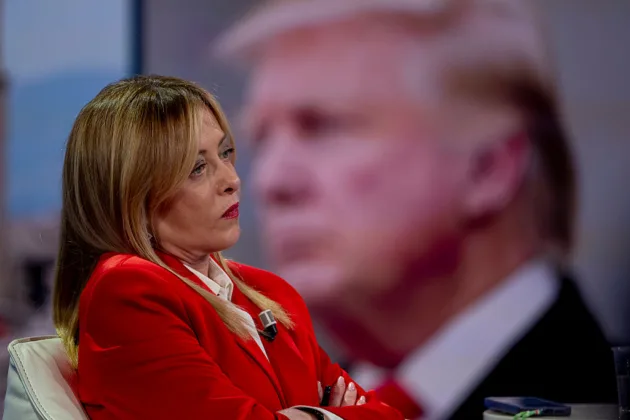
“I do not share Merz’s criticisms of the MAGA culture. These are political evaluations, each leader makes them as they see fit,” she said.
She instead emphasised unity, arguing that “working toward greater integration between Europe and the United States, valuing what unites us more than what can divide us, is fundamental”.
While both leaders reaffirm the centrality of the transatlantic bond, they envision Europe’s relationship with Washington differently.
Merz stresses the EU’s need for greater political and military responsibility, arguing that a stronger, more autonomous Europe would make the partnership with the United States more balanced.
Meloni, by contrast, navigates a deliberate oscillation between pro-European positions — such as her stances on Greenland and support for Ukraine — and closer alignment with the MAGA wing of American politics.
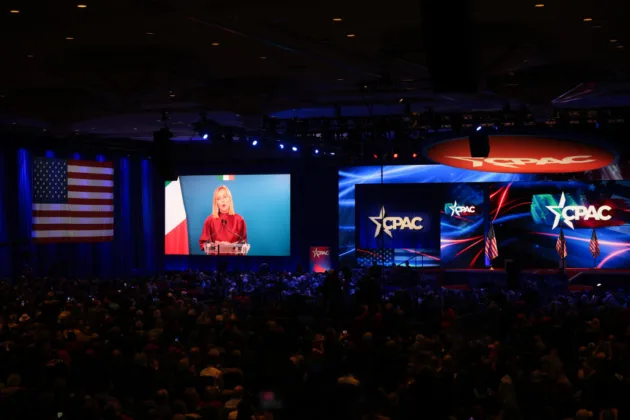
Her ideological affinity with the MAGA ethos provides her with a privileged channel to the US administration, unmatched by any other western European leader. This access helps explain why she actively defends MAGA-linked figures, positioning herself as Europe’s principal interlocutor with Washington while continuing to be fully integrated in the European Union.
The latest episode underscores the fragility of the Rome-Berlin project.
Despite both governments agreeing on strengthening Europe’s defence and competitiveness, their differing approaches and strategic priorities toward the US reveal how difficult it may be to build a cohesive leadership axis within the EU at a moment of geopolitical recalibration.
Former Italian ambassador to Berlin, Piero Benassi, offered a cautious perspective, noting that “this is not a strong and structured alliance as it is sometimes portrayed by the media”.
He added that, for now, there is primarily “a convergence on specific issues and coinciding short-term interests” rather than the creation of a lasting geopolitical bond.
Benassi’s observations underscore the limits of media enthusiasm, highlighting that while co-operation exists, it should not be overstated.