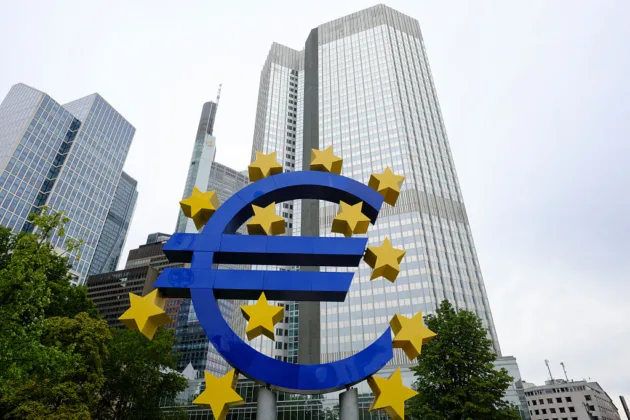








Jean Monnet famously opined that the European project advances by crises. This hopeful sentiment suggests that each crisis engenders a durable advance in the administrative capacity of a federal Europe, surely a welcome reassurance to the EU faithful beset by apparently relentless emergencies. But what if Monnet was wrong? Consider the major crises besetting the European Union this century. The debt crisis that nearly wrecked the eurozone fifteen years ago still lingers without definitive solutions to the fundamental flaws in the architecture of the currency union: The lack of collective debt, EU taxing authority or “countercyclical stabilisers” like joint unemployment benefits and bank deposit insurance. Contrary to Monnet’s happy implication, the euro crisis did not end with wealthy members putting their credit behind the structure of the eurozone. It was paused by (illegal) bailouts and massive interventions by the ECB, not a fiscal union of the sort that made the US dollar the world’s reserve currency.
Common debt got an unexpected trial run with the pandemic relief fund, which offered the EU a good chance to demonstrate its virtues to its frugal members. Given this stellar opportunity, you may think that the Commission would be ferocious in monitoring the use of the billions in euros dispensed to member states. Yet after the approval of each member state’s plan for “Resilience and Recovery” and the release of the money, Brussels has shown little desire to monitor the actual use of the funds. Italian authorities discovered an international scheme that pilfered €600 million in pandemic relief, and are still investigating 179 cases of suspected corruption. Spain’s national auditor found Madrid using pandemic relief to top up pensions. France has simply blocked any independent audit of its use of the relief funds. The failure to require the submission of invoices to Brussels prior to the release of funds offered a clear incentive to divert funds to unapproved or even illegal ends. After all, the accumulated debt would be paid out of the common EU budget, and so was free money as far as national authorities were concerned. The lesson drawn by the frugal states is that common debt is a trick on the credit-worthy. The use of common debt as a “solution” to the pandemic has resulted in the demise of any possible consensus on the further issuance of such debt. In this case, crisis forestalled capability.
Mass irregular migration swamped the EU’s Dublin rules a decade ago, but has yet to prompt an EU solution to the millions of arrivals who have no legitimate claim to asylum and little desire to return home. A fraught scheme to redistribute qualified refugees around the Union has yet to achieve a workable consensus, nor has the EU crafted new laws that would speed mass deportations or even limit the benefits that encourage migrants to stay. The EU has failed to link it foreign aid to a requirement that recipient countries accept the return of their citizens. Syria’s new government got a €3.5 billion grant from Brussels, but has refused 11,000 Syrians subject to deportation in Germany. Nor has the EU moved to limit lucrative remittances flowing to Syria, much of which is derived from social welfare payments. A decade of uncontrolled migration threatens the high degree of social trust and fiscal health that underpin Europe’s great social welfare states, yet this crisis has yet to engender a salient advance in the EU’s management of its frontiers or a common immigration policy.
Security is yet another crisis that has yet to advance the EU’s administrative capacities. Putin’s war of conquest and Trump’s threats to abandon Europe have yet to mobilise a collective rearmament or consolidation of European military capabilities. While the Berlaymont will never supplant SHAPE headquarters in Mons, it could serve as the primary funding arm of European NATO. The collective credit rating of the EU is an untapped resource that could provide funds to supplement member states defence spending and rationalise procurement programmes. Yet the Commission has proposed little beyond a new defence commissioner and a promise not to count new defence spending against deficit targets. That 330 million Americans spend more defending Europe than 450 million Europeans are willing to spend defending themselves is now a politically untenable state, a crisis that so far has failed to advance the European project.
Monnet’s comforting prediction benefitted from an impressive lineage that lent it verisimilitude among European elites: Both Hegel and Marx posited a productive synthesis emerging after the status quo is challenged by its antithesis. But a pleasing intellectual construct doesn’t determine reality. European crises are not governed by historical laws ensuring inexorable progress, but by highly fallible leaders more prone to weak compromises than enduring solutions. The European project has not advanced this century through durable syntheses forged in response to crises, but in a series of tortuous policy crabwalks. An intergovernmental process that favours minimally acceptable compromise has enfranchised mediocre leaders reluctant to embrace innovative policy solutions. The long reign of Angela Merkel as the de facto ruler of Europe embedded a preference for short term, incremental solutions to crises with dire long term consequences. One can see the results in real time: Trump, Putin and Xi all treat the EU as a supplicant rather than an equal. Contrary to Monnet, crises have not created the capabilities needed to transform the EU into a great power on the world stage. They have only revealed the limitations of an economic union playing at global politics.