





The Dutch Government has given the green light to setting up so-called “return hubs” outside the European Union for migrants whose asylum applications have been rejected, joining four other member states in a coalition pushing the controversial scheme.
Minister of Asylum and Migration Bart van den Brink has confirmed the move in Brussels after meeting his European counterparts, identifying a frontrunner group made up of the Netherlands, Austria, Germany, Greece and Denmark.
“We aren’t making any announcements on that just yet, but we are certainly ambitious in that regard,” Van den Brink said, referring to which non-EU countries might host the centres.
He told reporters the coalition would “coordinate who has the best entries or contacts abroad”, describing the search for host nations as “a collective task”.
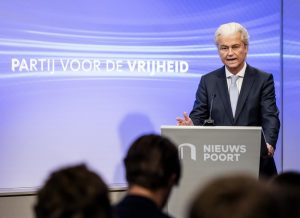
The Jetten cabinet, which took office on February 23, 2026, has dropped its predecessor’s plan to set up a unilateral Dutch return hub in Uganda. That earlier proposal had been signed off by then-justice and security minister David van Weel in September 2025, following an initiative from the previous Party for Freedom (PVV) cabinet.
Van den Brink, of the Christian Democratic Appeal (CDA), said the new approach was a coalition effort rather than a solo bid. He stressed the human rights of migrants must be safeguarded and confirmed that the International Organisation for Migration (IOM) and the UN refugee agency, the UNHCR, would be involved in establishing the hubs.
Greek migration minister Thanos Plevris said the talks were no longer hypothetical. “We are not speaking theoretically any more, we are speaking practically,” Plevris told state broadcaster ERT, adding that technical teams would meet shortly to prepare the scheme.
According to Plevris, the sites were likely to be located in Africa.
The five-country push builds on a regulation agreed by EU member states in December 2025 that allows governments to deport rejected asylum seekers to third countries with which they have no prior connection. Only unaccompanied minors and families with children would be exempt.
The European Parliament approved the legislation by 389 votes to 206 in March, paving the way for the new EU migration pact to take effect on June 12, 2026.
The plan has divided the bloc. France and Spain have questioned the effectiveness of return centres, while the International Rescue Committee (IRC), an NGO, has warned that the hubs could become “legal black holes” beyond EU jurisdiction.
The Clingendael Institute, a Dutch think-tank, has said in a recent report that establishing return hubs would be “not easy”, warning that only a limited number of third countries were likely to be willing to host them and could demand significant compensation.
The Netherlands is also pressing ahead at national level. Van den Brink is drafting separate legislation to criminalise illegal residence, after an earlier asylum bill containing the measure failed in the Senate by one vote.