

The European Commission has drawn up plans for a “more assertive and effective trade defence policy” towards China and is betting that Germany’s deepening industrial crisis will push Chancellor Friedrich Merz to back the harder line.
The EC has accelerated work on what it has called an “overcapacity instrument”, a tool designed to curb the volume of State-subsidised goods flooding the European market.
The proposal is set to be debated by senior officials on May 29. European Commission chief spokesperson Paula Pinho told Politico the conversation was not aimed at any single member state but reflected a “necessary discussion” amid mounting geopolitical and geoeconomic challenges.
The push has come as Berlin’s long-standing reluctance to confront Beijing has appeared to soften. Merz and his predecessors had been wary of provoking the Chinese leadership for fear of harming Germany’s car industry, clean technology and chemicals sectors, all heavily reliant on Chinese supply chains for critical raw materials.
Domestic pressure has mounted, though. Germany lost around 124,100 industrial jobs in 2025, according to an analysis by consultancy EY. Since 2019, one in 20 industrial jobs has disappeared, the firm’s research has found.
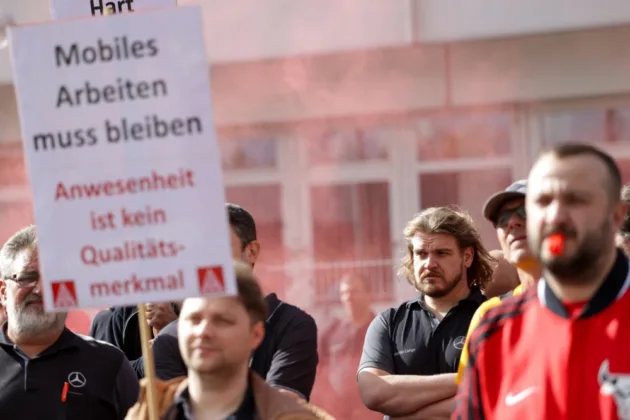
Only 15 per cent of Germans were satisfied with Merz’s centrist coalition in a poll carried out earlier this month. Last week the Chancellor was booed onstage at a trade union congress as he set out his economic reform plans.
One European diplomat from a country supportive of the Commission’s push has questioned how Berlin could “plead for the status quo” given the scale of factory closures and job losses in Germany. The diplomat was granted anonymity by Politico because discussions between capitals and the EU remained confidential.
Paris has long been at the forefront of the effort. The French Government in February published a bleak economic assessment warning that “the Chinese steamroller” could crush key parts of the European economy.
Germany’s manufacturing and chemicals sectors have been hammered by high energy prices linked to the war in Iran, as well as by fierce competition from the United States and China. Merz, who leads a fragile coalition, has called on the EU to help rescue the continent’s industries.
His recent visit to Beijing has underlined the dilemma. Berlin was for years the driving force behind closer EU ties with China, but that strategy has been described by Politico as a historic policy miscalculation, comparable in scale to Germany’s earlier dependence on Russian energy.
China overtook the US as Germany’s main trading partner in 2025, even as Chinese industrial output has continued to flood European markets and Beijing’s dominance over raw-materials supply chains has handed it significant leverage over German factories.
European Commission President Ursula von der Leyen’s de-risking agenda has aligned closely with the new tone in Berlin. Whether that translates into German votes for tougher anti-dumping measures and a fully-fledged overcapacity instrument is set to be tested on May 29, when senior officials gather to thrash out the next steps.