


Germany has signed a strategic partnership declaration with Azerbaijan as Chancellor Friedrich Merz looks to widen the country’s energy supply and reduce what remains of its exposure to Russia.
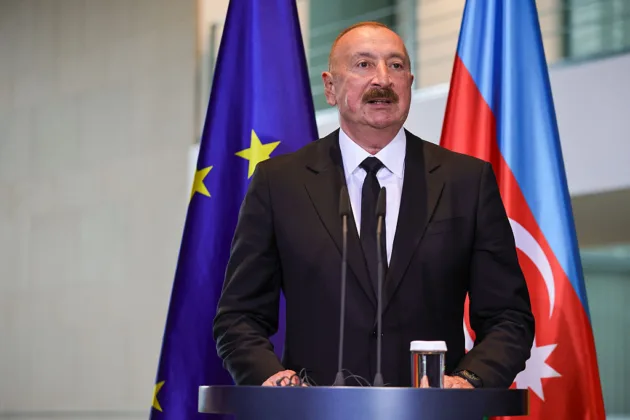
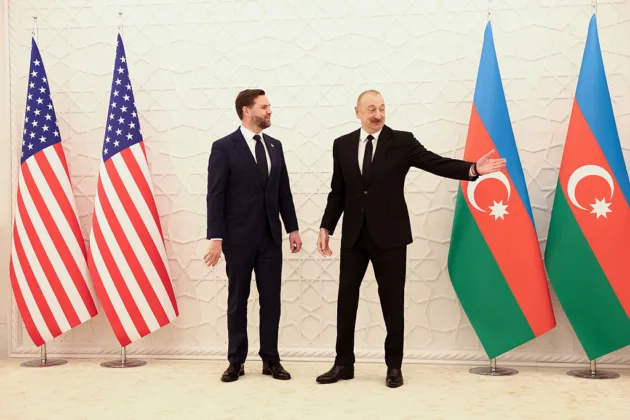
Merz and Azerbaijani President Ilham Aliyev signed the Joint Declaration on the Strategic Agenda for Bilateral Partnership in Berlin on July 21, alongside a separate document creating a joint business council. Germany became the second European country after Italy to conclude such an agreement with Baku.
Aliyev said Azerbaijani gas had begun reaching Germany this year under a 10-year contract with German companies covering 1.5 billion cubic metres annually. He said that volume could be increased but pointed to obstacles outside Baku’s control.
“European banks have stopped providing financial support for oil and gas projects,” he said, blaming the green agenda and calling on lenders to reconsider. He added that expanding deliveries would also require new pipeline capacity, and that Azerbaijan could supply the oil volumes Germany needed either from domestic production or through the trading arm of state energy company SOCAR.
Merz said Azerbaijan was one of the few countries in the region producing more energy than it consumed, which made it “an attractive partner” in securing German supply. He singled out southern Germany, where the infrastructure to move the gas was already built or could be extended.
Berlin has spent four years trying to end its reliance on Russian pipeline gas following Moscow’s full-scale invasion of Ukraine in 2022. Azerbaijani gas now reaches 10 EU member states through the Southern Gas Corridor.
The visit came as European buyers absorbed the effects of the war between the United States and Iran, which has disrupted regional energy flows and raised the value of overland and Caspian routes as alternatives to the Strait of Hormuz. Aliyev said Baku had held a balanced position throughout the conflict and was ready to back diplomatic efforts to restore stability.
Baku’s standing in Brussels has been uneven. Azerbaijan cut off contact with the European Parliament in May after MEPs adopted a resolution on Nagorno-Karabakh and Armenia, though engagement with the European Commission has continued.
Aliyev, in power since 2003, has previously warned the EU that he could direct gas to buyers to the east and south without firm long-term commitments from European customers.
Merz also praised the Armenia-Azerbaijan peace process and urged both governments to finalise a settlement.