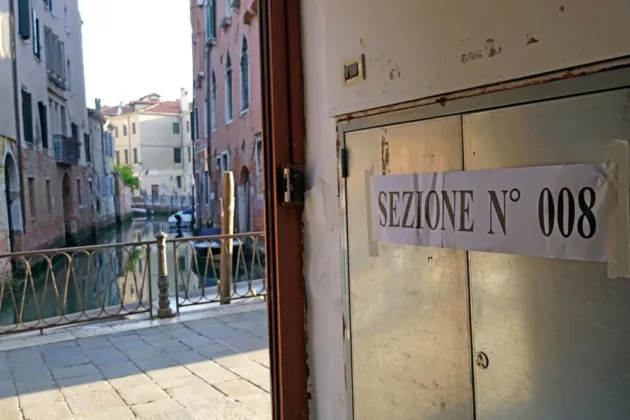






More than six million Italians have headed to the polls in local elections widely seen as the final electoral test for Prime Minister Giorgia Meloni’s right-wing coalition before the 2027 general election.
Polling stations reopened on May 25 following the first day of voting on May 24 across some 749 Italian municipalities, according to Euronews. The vote covers 700 municipalities, including the regional capital Venice and 15 provincial capitals.
Turnout on the first day stood at around 46.5 per cent, down from 50.1 per cent recorded at the previous election, local reports said.
Run-offs in municipalities with more than 15,000 inhabitants have been scheduled for June 7-8. Voting is also under way in Sardinia, where 149 municipalities are concerned and the run-off has been set for June 21-22.
The provincial capitals going to the polls include Andria, Agrigento, Arezzo, Avellino, Chieti, Crotone, Enna, Fermo, Lecco, Macerata, Mantua, Messina, Pistoia, Prato, Reggio Calabria, Salerno and Trani.
The ballot is being closely watched as a barometer of support for Meloni’s Brothers of Italy (FdI) party and its coalition partners, Forza Italia and the Lega. It comes after the Italian Government suffered a heavy defeat in March’s referendum on judicial reform, a setback that, according to Euronews, shattered Meloni’s reputation for political invincibility.
The outcome could either reassure the centre-right majority that its bond with voters remains intact or sound a fresh alarm bell ahead of next year’s parliamentary contest, the outlet reported.
At the same time, the result will gauge the strength of Italy’s progressive “broad camp”, which is seeking to determine whether a unified alternative for 2027 is feasible. The opposition coalitions look fragmented from one region to another, with the Azione party allied to the centre-right in some key cities though the centre-left remains divided elsewhere.
The main battle is being fought in 118 municipalities with more than 15,000 inhabitants, where the two blocs are vying for strongholds previously held by the opposite side.
In Venice, the centre-left is trying to win back the city after a decade of centre-right rule under Luigi Brugnaro. In Reggio Calabria, southern Italy, the picture is reversed, with the centre-right seeking a breakthrough following the terms served by Democrat Giuseppe Falcomatà.
Equally complex are the scenarios in Crotone and Salerno, where the civic candidacy of former regional governor Vincenzo De Luca stands out against the backdrop of a divided progressive camp.
It is precisely the outcome of these local races that is likely to tip the balance and determine which coalition emerges as the winner ahead of the 2027 vote.