




Bulgaria has been warned it faces European Union disciplinary action over its budget deficit, only months after the country joined the eurozone.
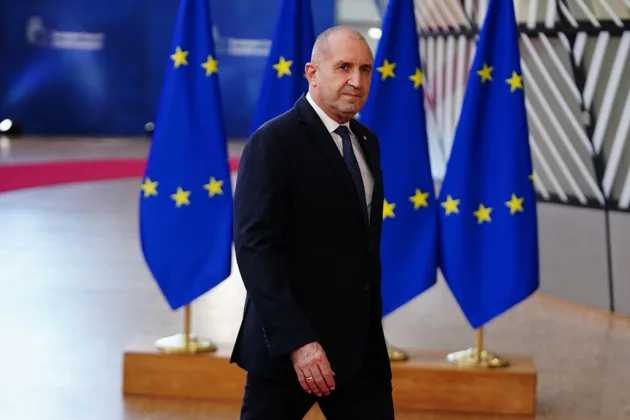
Bulgarian Prime Minister Rumen Radev said the European Commission would publish a formal report on June 3, launching the so-called excessive deficit procedure against Sofia.
The move would place the country under closer fiscal scrutiny as Brussels sought to enforce the bloc’s budgetary rules. It would also set Radev’s new government on a collision course with the Commission, only weeks after he took office.
Bulgaria adopted the euro at the start of this year, replacing the lev at a fixed rate of 1.95583 leva to the euro.
Radev, who is widely regarded as an EU sceptic, blamed the previous pro-EU government. He said it had massaged economic figures to meet the threshold for eurozone entry.
“They [the previous government] lied to push Bulgaria into the euro,” he told a cabinet meeting in Sofia, adding that “the bubble has burst”.
The country’s deficit reached 3.5 per cent of gross domestic product (GDP) last year, above the 3 per cent ceiling set for euro members.
The European Commission forecasts the deficit would climb to 4.1 per cent of GDP this year and 4.3 per cent in 2027.
Under the procedure, the Bulgarian Government would have to bring spending back below the 3 per cent limit through a binding cap on the deficit.
Bulgaria has not been alone in its difficulties. The Financial Times reported that 10 other member states were also expected to face procedures over breaches of the bloc’s fiscal rules, among them Italy, Romania and Finland.
The opposition has rejected Radev’s account. Former finance minister Temenuzhka Petkova, of the GERB party, accused the Prime Minister of lying.
She argued the procedure related to 2026 projections rather than final figures for last year. Petkova added that a derogation for higher military spending reduced the reported deficit.
She also said all data used for eurozone entry had been verified by Eurostat and the National Statistical Institute.
Asen Vasilev, of the Produlzhavame Promyanata (PP) party, said the ruling majority had the power to cut the 2026 deficit below 3 per cent of GDP and avoid the procedure altogether.
The Bulgarian finance ministry has been expected to hold a briefing on the matter.