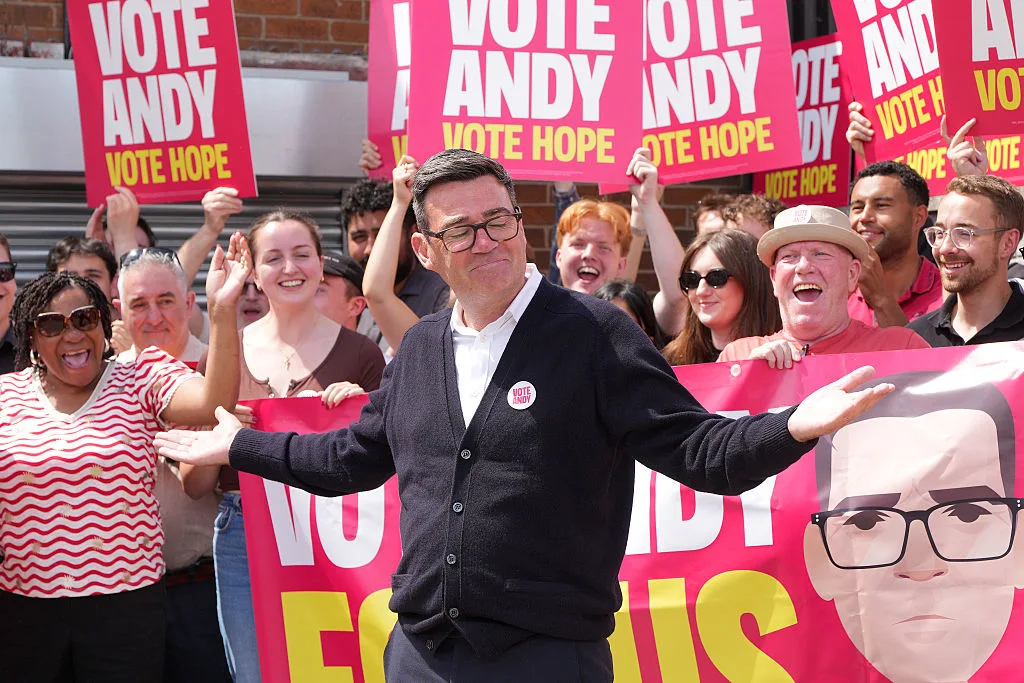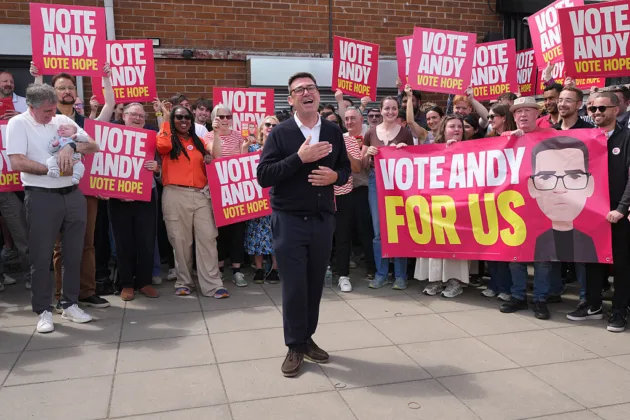









The impending coronation of Andrew Burnham as leader of Britain’s Labour Party, and hence as Prime Minister, will do more than reset British politics. If he is successful at reversing his party’s low standing in the polls, Burnham could show Europe’s beleaguered social democrats a way back from their malaise and seemingly terminal decline.
The Labour Party under Sir Keir Starmer’s leadership has had a poor electoral record. It won a massive 412 seats in the 2024 parliamentary election, but that’s mainly because the conservative opposition was divided between the ruling Conservative Party and Nigel Farage’s Reform Party. Labour won its huge majority with only 33.7 per cent of the vote, a record low for a majority government. Moreover, turnout declined significantly from the 2019 contest, demonstrating that millions of Britons were depressed by all the alternatives on offer.
Starmer’s Labour went into a political tailspin almost immediately upon assuming office. His favourability rating plummeted to a mere 27 per cent by October 2024 and has remained stuck around there since. The party’s standing has plummeted also, dropping from 39 per cent in the afterglow of its 2024 win to a mere 19 per cent in the most recent YouGov poll. It suffered massive defeats in the 2025 and 2026 English local elections and fell to a humiliating third place in the Welsh regional election, the first time ever that Labour had failed to take first place.
Labour’s collapse has occurred for much the same reasons that social democratic parties have collapsed across the continent. Working class voters have grown angry as living standards stagnate or decline while record number of immigrants flock to the country. Leftist voters gravitate to more radical options, the Green Party or the Scottish and Welsh separatist parties in Britain’s case. Under attack from the Left and the Right, Labour’s centre has been unable to hold.
Burnham’s triumph comes on the heels of his smashing re-entry into parliament just over a week ago in the Makerfield by-election. He won over 54 per cent of the vote in a constituency that had given Reform half of its votes in the May local election. Turnout was also higher in the by-election than it was in the 2024 general election, a clear sign that Burnham gave the disaffected voter a reason to cast a ballot. It was as a clear a sign as possible that working class voters who had given up on Starmer’s Labour were willing to take another, perhaps last, look at the party under different leadership.
Burnham will ascend so rapidly to the top job because Labour’s political situation is so dire. He has offered no clear programme as to how he will lead the party or the nation, instead relying on his successful tenure as the Mayor of Greater Manchester as a model for what he can do. But he will find that it’s easier to reform bus services than it is to handle mass migration, economic malaise, and fund the defence spending hikes all parties agree are necessary.
Those are massive challenges that have now sunk four Prime Ministers of both major parties. Neither the Tories nor Starmer’s Labour have been able to handle them, and British voters are growing convinced that neither of the traditional parties can handle them. Burnham, then, likely represents the last chance for the old guard to show it can solve problems and thus regain dominance.
He will have to make a lot of difficult decisions and see down opposition within his own MPs to even make a start on that agenda. Starmer was frequently forced to backtrack on a number of actions because of internal opposition, most tellingly when he had to reverse planned cuts to welfare. Labour’s Left simply opposes cost-cutting measures like that, and those MPs also know that the Greens will actively campaign against a Labour Party that back a more centrist economic agenda.
The Greens did extremely well in Labour’s urban leftist heartlands in the May local elections, and defeated Labour in the Gorton and Denton by-election earlier this year. While their leader, Zack Polanksi, has recently come under some unwelcome scrutiny, a development which has helped stanch the Greens’ steady rise in national polling, the upstart leftist party remains historically strong and poised to strike if Burnham turns to far to the economic centre.
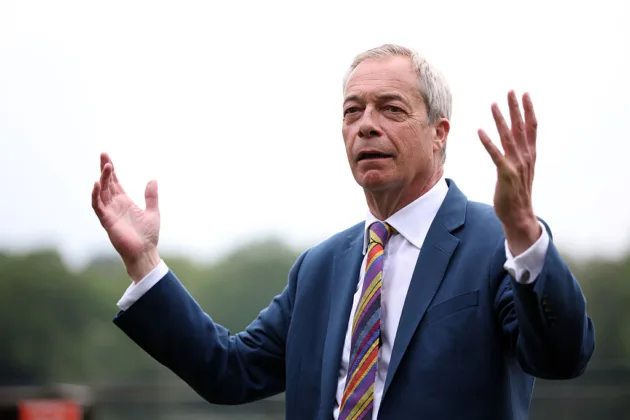
Reform is poised to strike if Burnham turns too far to the Left, especially on migration. The working-class voters who have sent Burnham to Parliament do not want leftism; they want a government that can get ordinary things to work again and which has their backs. Any hint that Burnham is going native in Westminster to appease the urban Left will likely send them back to Farage’s Reform as the only way to get genuine change.
The incoming PM’s best chance lay in charting his own clear course while avoiding the temptations to steer Right or Left. His Manchester achievements were technocratic in nature; he should draw on them to fix some of Britain’s declining services. Nationalising some of the most underperforming private utilities or transport companies would probably go down well with his party’s activists and working-class voters.
He could also steer both Right and Left on key issues. Steer Right on migration by keeping Home Secretary Shabana Mahmoud and intensifying her drive to reduce net migration. Steer Left by raising tax on the wealthy, despite the howls that will instigate from the Tories and the financial class, to fund defence. Steer Right on energy by increasing oil and gas exploration and production despite the party’s desire to reduce greenhouse gas emissions. Steer Left on matters like the assisted dying act and other cultural totems important to the party’s Left.
That combination may not work. But what’s clear is that following old patterns have not worked, nor has Starmer’s uninspirational leadership. Britain and Labour want bold, personal leadership, and the party’s dire political straits probably mean Burnham can get away with some things that Starmer could not because of the bleak alternative.
Labour knows that Burnham is its last chance. If he fails, the party will get annihilated at the next general election, and with that fall into the near irrelevance so many social democratic parties possess on the continent.
If he succeeds, however, social democrats everywhere will want to copy his approach. Such has been the centre-left’s decline that it is desperately looking for a saviour. Burnham may not be the Messiah, but his self-assurance and determination could make him a model for the global moderate Left if he can marry substance and programme to match his personal charisma.