











The European Parliament will replace Google with the French search engine Qwant as the default search tool on its internal computers from June 4, marking another step in Europe’s effort to reduce its dependence on foreign technology providers.
In an email to lawmakers, parliamentary officials said the move reflects the institution’s commitment to strengthening digital sovereignty.
European policymakers are increasingly questioning the continent’s reliance on American technology giants.
The change comes amid a broader debate in Brussels about Europe’s digital future with concerns that critical infrastructure, cloud services and government data remain dependent on companies outside the European Union.
Last year, a cross-party group of Members of the European Parliament urged parliamentary authorities to phase out Microsoft 365 and replace it with European alternatives.
In a letter to the Parliament, the lawmakers argued that public institutions should reduce their reliance on foreign software providers and invest in homegrown solutions wherever possible.
Cloud computing in Europe remains overwhelmingly dominated by American firms.
Microsoft Azure, Amazon Web Services and Google Cloud together account for around 70 per cent of the European cloud market.
According to a 2025 report by French consultancy Asterès, European organisations spend an estimated €264 billion annually on American cloud software and services.
Some EU MEPs argues that reliance on foreign providers creates strategic vulnerabilities at a time of increasing geopolitical uncertainty.
Belgian Green MEP Sarah Matthieu has warned today against what she describes as a false sense of security created by “European” versions of American digital services.
“Some American tech companies offer a so-called European version of their services, but the US government still has access to that data through its own legislation,” she said.
“Microsoft itself recently acknowledged that it cannot fully guarantee European data sovereignty. A European label on an American product therefore solves nothing.”
Matthieu argued that Europe remains exposed as long as foreign governments retain potential access to sensitive public-sector information and critical infrastructure.
These concerns are increasingly reflected in the European Commission’s own thinking.
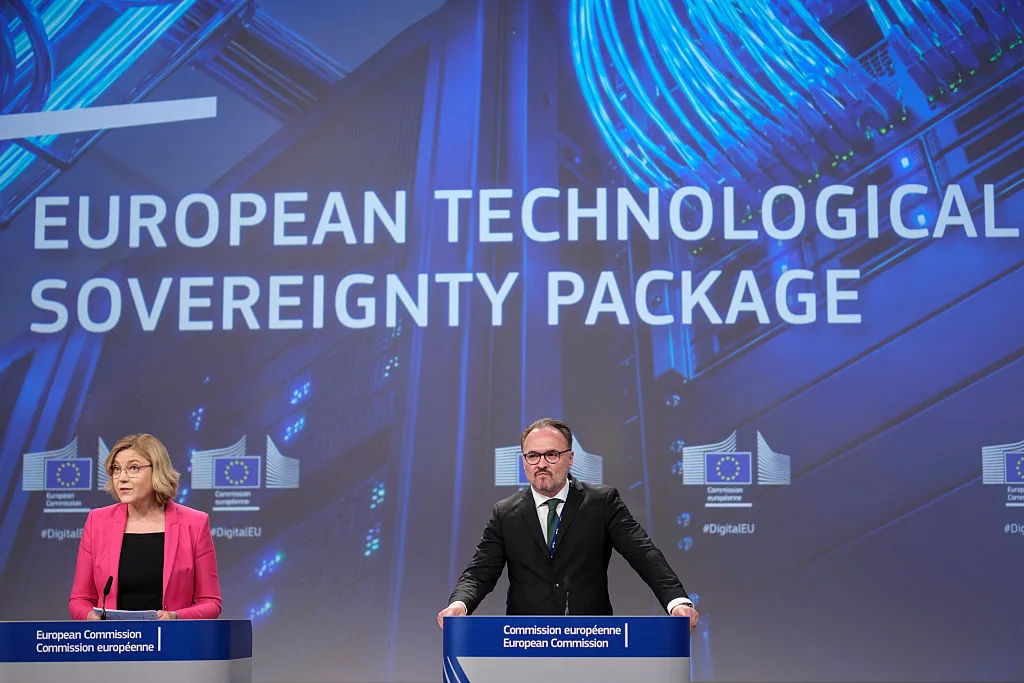
Brussels is preparing a new digital strategy to be published today, designed to reduce the EU dependencies in the tech sector.
Today, the EU is dependent on foreign providers for more than 80 per cent of its digital products, services, infrastructure and intellectual property.
According to draft documents, Brussels is preparing stricter criteria for cloud-computing services used in highly sensitive public-sector procurement.
The proposed rules could effectively exclude major American providers such as Amazon Web Services, Microsoft Azure and Google Cloud from a range of critical government contracts unless they meet new sovereignty and security requirements.
The European Parliament’s decision to adopt Qwant will not by itself transform Europe’s digital landscape. Yet it illustrates a broader shift underway in Brussels and across several EU member states.
Many EU countries are switching to European alternatives to US software and cloud services amid concerns over data access.
The Dutch Government is adopting STACKIT, a German cloud provider, to reduce its reliance on US technology firms. https://t.co/4uwSNoSo5y
— Brussels Signal (@brusselssignal) April 24, 2026