











The European Commission is preparing tough new criteria for cloud computing services in highly critical state tenders that could effectively bar US tech giants such as Amazon, Microsoft and Google from many sensitive government contracts, according to draft documents.
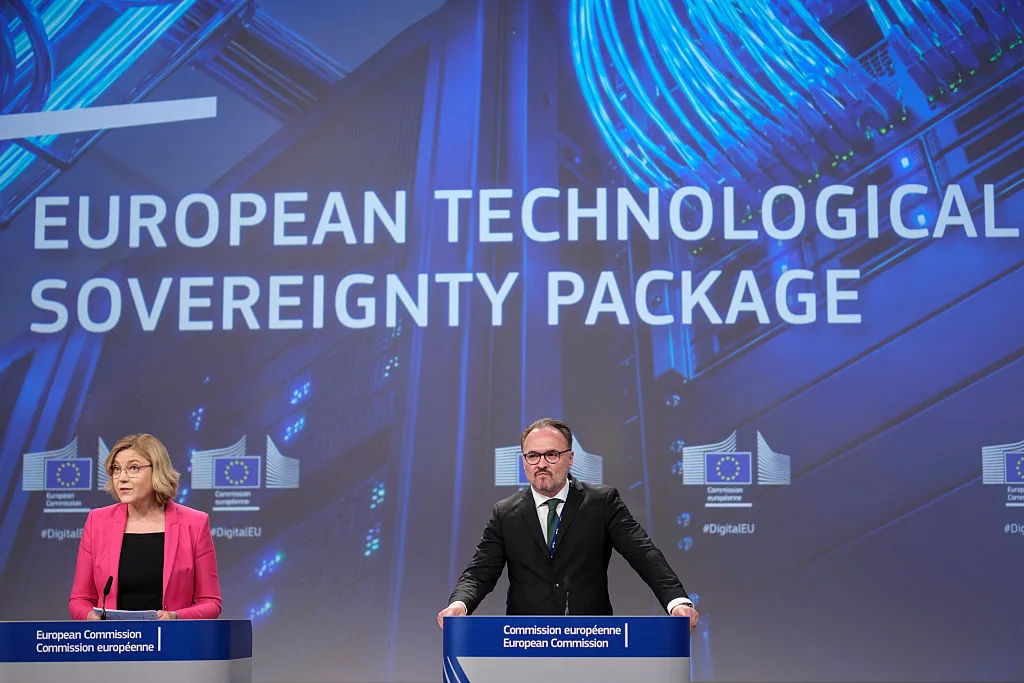
The measures form a central part of the forthcoming Cloud and AI Development Act, which EU Commissioner for Tech Sovereignty Henna Virkkunen is scheduled to unveil on Wednesday.
The proposal aims to reduce Europe’s heavy reliance on American providers and boost EU-based cloud capacity.
It has been seen by Reuters, who reported first on the issue.
Dirk Auer, Director of Competition Policy the International Center for Law & Economics (ICLE) was very critical about Brussels’ plans.
In a reaction to Brussels Signal he said that the core proposal would let governments award cloud contracts to domestic firms even when a foreign competitor is cheaper or more capable.
“Allowing ‘non-price’ criteria and mandating EU-made software and hardware is protectionism in everything but name, and the cost is ultimately borne by European taxpayers and consumers in the form of pricier, lower-quality digital infrastructure.
“Worse, it is likely to be self-defeating. Insulating European providers from their most capable competitors is the surest way to keep them behind the technological frontier rather than push them towards it. And the proposed central purchasing body, by depressing the returns on data centres, risks shrinking the very infrastructure Europe agrees it urgently needs.
“To be clear, not everything in the package is misguided—the supply-side measures to fast-track data centres and lower the barriers to building infrastructure are sensible and overdue. But the demand-side provisions are the problem, and they come with one further risk: Handing Washington a fresh grievance over digital protectionism at a moment when transatlantic trade relations can ill afford one.”
The draft introduces mandatory “non-price” award criteria for public procurement in sensitive sectors, including requirements that software and hardware be developed within the EU.
These rules would disadvantage US hyperscalers, which currently dominate the global cloud market with a combined share of around 63 per cent.
The initiative builds on the EU’s existing Cloud Sovereignty Framework, which already scored providers on eight objectives covering legal jurisdiction, data residency, supply-chain transparency and operational control.
Earlier this year the Commission awarded a €180 million sovereign cloud contract exclusively to European providers.
A senior EU official told Reuters the goal is “strategic autonomy in critical infrastructure”, ensuring that highly sensitive data in areas such as defence, health and justice is not exposed to extraterritorial laws like the US CLOUD Act.
The proposal still requires approval from member states and the European Parliament and could face last-minute changes.
Industry groups have warned that overly restrictive rules could raise costs and slow digital transformation.
The Commission argues the package will help triple EU data centre capacity within five to seven years and support the emergence of competitive European hyperscalers.
The draft is part of a wider “Tech Sovereignty Package” designed to close the €1 trillion investment gap with the United States in digital infrastructure.
The Dutch Government is adopting STACKIT, a German cloud provider, to reduce its reliance on US technology firms. https://t.co/4uwSNoSo5y
— Brussels Signal (@brusselssignal) April 24, 2026