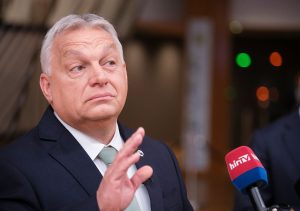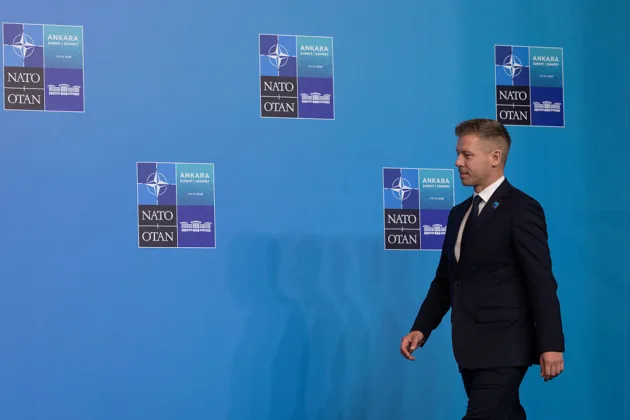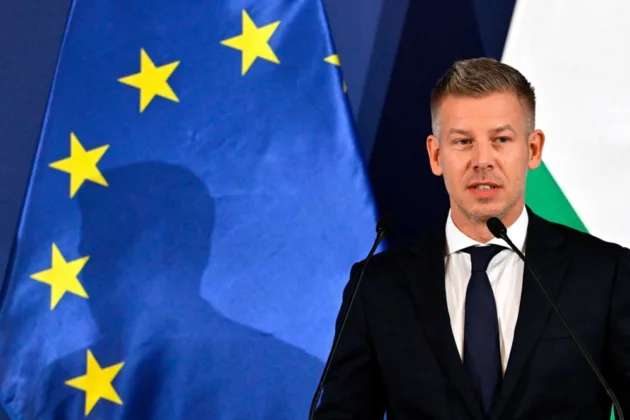


The recent agreement between Hungarian Prime Minister Péter Magyar and Kiev on expanding the rights of the Hungarian minority in Transcarpathia reveals more about the EU’s accession process than any official statement from Brussels.
After years of blocking Ukraine’s progress, Hungary secured concrete concessions: Broader use of the Hungarian language in education, public institutions and local administration. Kiev made these changes not because it suddenly discovered a passion for minority rights, but because Budapest held veto power over the opening of negotiation clusters. The message is clear: If you have leverage, Brussels will listen. If you do not, your concerns can wait.
This transactional approach stands in stark contrast to the treatment of other national minorities in Ukraine. The Polish minority, particularly in the Lviv and Volhynia regions, faced similar restrictions under the 2017 education reforms. However, unlike in the Hungarian case, no comparable legislative package restoring broader language and education rights has been delivered. Polish organisations have repeatedly raised concerns about limited access to mother-tongue schooling and the slow resolution of historical issues. These demands have received significantly less attention in Brussels than the Hungarian dossier.
The difference is straightforward. Hungary had a practical tool of pressure: The ability to block Ukraine’s EU path. Poland did not apply equivalent leverage. As a result, one minority obtained concrete concessions, while the other continues to operate under more restrictive rules introduced after 2017.
This pattern of selectivity becomes even clearer when one looks at how the EU has handled other candidate countries over the past decade and a half. Montenegro has been negotiating since 2012 and has opened all negotiating chapters, yet the process has remained largely stalled for years. Serbia opened accession talks in 2014 and continues to face long delays on key political chapters. North Macedonia waited for years even after resolving its long-standing name dispute with Greece. Albania has also spent well over a decade in the process despite implementing multiple rounds of reforms. Bosnia and Herzegovina remains far from opening substantive accession negotiations.
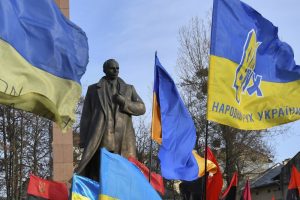
Yet Ukraine received candidate status in June 2022 and saw accession negotiations formally opened in December 2023. The argument most often heard in Brussels is that Ukraine’s case is exceptional because of the ongoing war. However, the formal criteria for membership – functioning democratic institutions, the rule of law, protection of minorities, and the fight against corruption – remain on the table. European Commission reports continue to highlight serious shortcomings in these areas. At the same time, Ukrainian state institutions continue to promote historical narratives centred on the Organisation of Ukrainian Nationalists (OUN) and the Ukrainian Insurgent Army (UPA), formations responsible for the mass killings of Polish civilians during the Second World War.
For years, the EU presented enlargement as a rules-based process in which progress depends on meeting clearly defined criteria. Candidate countries were repeatedly told that membership is not a geopolitical gift, but the result of sustained reforms and alignment with European standards. The accelerated treatment of Ukraine sits uncomfortably with that narrative. While geopolitical circumstances are undoubtedly important, they are now being used to justify a pace of integration that other candidates, which have invested years in meeting the same formal requirements, have never been granted.
While Brussels is quick to criticise nationalist tendencies inside the EU, it has shown little willingness to address this aspect of Ukrainian politics. The contrast with the treatment of other candidates is difficult to ignore. Countries that have invested years in meeting EU standards are effectively told that political timing and geopolitical considerations matter more than consistent application of the rules.
The Hungarian minority deal only underlines the point. Rights that were restricted can be partially restored when a member state has the means to obstruct the process. For other groups without such leverage, the same flexibility has not been applied. This is not enlargement based on uniform criteria. It is enlargement shaped by the ability of individual capitals to extract concessions and by shifting political priorities in Brussels.
If the EU wishes to maintain credibility in its enlargement policy, it cannot continue applying one set of standards to some candidates and another to others.