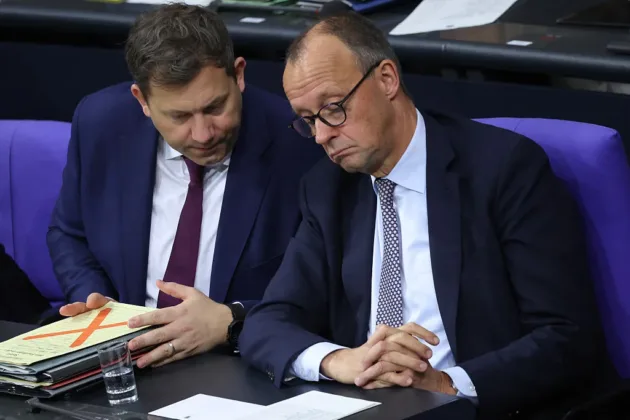






German Chancellor Friedrich Merz has thrown his weight behind a sweeping pension reform that would tie the retirement age to life expectancy and set up a Swedish-style investment fund, warning that the current system cannot survive untouched.
The package, drawn up by a government-appointed commission of experts, was presented in Berlin on June 23. Merz called for its full and rapid adoption, arguing that the measures form a single concept that works only as a whole.
“Doing nothing is not an option,” he said at a press conference alongside labour minister Bärbel Bas, a Social Democrat in his coalition government. Without reform, he said, pension levels would inevitably fall while contributions rose.
At the heart of the plan is a new mandatory capital-funded pillar, due to begin in 2031. Workers and employers would each pay an extra 2 per cent of gross wages into a centrally managed fund that would invest in the markets, on the Swedish model.
Merz said the scheme would lift overall pension levels in the 2040s and 2050s, even through financial crises, delivering higher benefits with lower contributions over the medium term. “The Scandinavians have managed it, and we can too,” he said.
The reform would also link the statutory retirement age to life expectancy from 2031. Federal statistics office figures suggest this would raise the legal age by about six months, from 67 to 67.5, between 2031 and 2041, leaving the door open to reaching 70 by 2092.
The popular option of retiring at 63 on a full pension after 45 years of contributions would be scrapped. The minimum age for early retirement with deductions would rise from 63 to 64.
A “sustainability factor” would also return from 2031, allowing pensions to keep rising but more slowly than wages, in order to spread the demographic burden across generations.
Merz insisted there would be no cuts, saying pensions would not be reduced and that the change would ease the load on younger Germans. Bas echoed that the package was a single whole that could not be cherry-picked.
The German Government aims to put the plan before parliament for debate and approval before the summer recess begins on July 10. The coalition holds only a slim majority, and the proposals have already drawn criticism from labour unions and within the governing parties.