


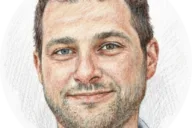
The head of the Netherlands’ military intelligence service has maintained a public Strava account for years, making his home address and other personal details easily identifiable.
Vice Admiral Peter Reesink, director of the Military Intelligence and Security Service (MIVD) since February 2024, kept a publicly visible profile on the fitness-tracking app until Dutch journalists asked him about it shortly before their report appeared on August 7, 2026.
Reporting by de Volkskrant revealed that dozens of his cycling and running activities from 2018 to 2025 were openly accessible.
These included repeated rides from the Frederik Barracks in The Hague (headquarters of the MIVD) to his private residence, allowing his home address to be readily traced. The activities were visible under his full name.
The data also indicated where he stored a camper and the timing and locations of his holidays.
Use of a public Strava account breaches Defence Ministry guidelines.
Reesink told the newspaper he was unaware the account remained active. He had linked a bike computer to it years earlier, later deleted the app, but overlooked deleting the account itself and did not set the profile to private.
Following questions from de Volkskrant, the account was set to private and the activities are no longer visible. He has requested its permanent deletion.
A Defence Ministry spokesperson said Reesink regrets the episode: “With the knowledge of now, he knows better.”
The disclosure sits awkwardly with the MIVD director’s own warnings. Presenting the service’s annual report in 2025, he pointed to Russia’s growing boldness and criticised complacency inside large organisations.
“If I give a presentation somewhere and I ask people to leave their phone outside, they still ask if that’s really necessary,” he told de Volkskrant at the time. “The level of awareness could be greater.”
The risks posed by fitness apps to military personnel have been recognised for years.
In January 2018, Strava’s global heatmap exposed the outlines of US and allied bases in Iraq, Syria and Afghanistan. That same year De Correspondent showed that the Polar app allowed Dutch service members at sites such as Volkel air base, and on deployment in Iraq, to be identified.
The response in The Hague was a ban. Then defence minister Ank Bijleveld barred sports apps for military personnel, including on private phones brought into work. Reesink was deputy director of operational readiness at the time.
Previous investigations, including by Omroep Gelderland in March 2025, identified hundreds of Dutch service members whose details were exposed via Strava near bases. The broadcaster traced about 900 names in Gelderland alone and, with Omroep Brabant, some 2,000 across three provinces, in many cases with profile photographs and place of residence attached.
More than 100 personnel deleted or restricted their accounts afterwards. Omroep Gelderland reported that a well-placed source said such data had already been used by Russia to approach Dutch troops stationed in Lithuania.
The ministry has previously restricted such apps and offers its own alternative for tracking workouts. Answering parliamentary questions, then state secretary for defence Gijs Tuinman said Strava remained barred from work telephones but that the ministry had no authority over private devices.
It was not the first time Dutch military personnel shared such sensitive information and there have been several similar cases in France involving Strava and military or security personnel.
In March 2026, newspaper Le Monde reported that a French Navy officer logged a run on the deck of the aircraft carrier Charles de Gaulle using a public Strava account.
This inadvertently revealed the ship’s precise real-time location in the Mediterranean (near Cyprus) as the vessel headed towards the Middle East.
The 35-minute run took place on March 13, 2026, and the newspaper matched the position, northwest of Cyprus and about 100km from the Turkish coast, against satellite imagery. The French armed forces general staff said the upload did not comply with standing digital security directives and that the command would take appropriate measures.
This formed part of Le Monde‘s wider “StravaLeaks” series. The newspaper identified around 18,600 public Strava profiles linked to French military bases (in France and abroad) and tracked their activities over more than two years.
It put the precise figure at 18,599 accounts spread across about 100 sites and reported that, despite earlier revelations, only 7 per cent of those on its list had switched to a private profile.
Earlier instalments identified bodyguards of Emmanuel Macron, Donald Trump and Vladimir Putin and, in January 2025, set out patrol patterns of French ballistic-missile submarines based at Île Longue near Brest, western France.