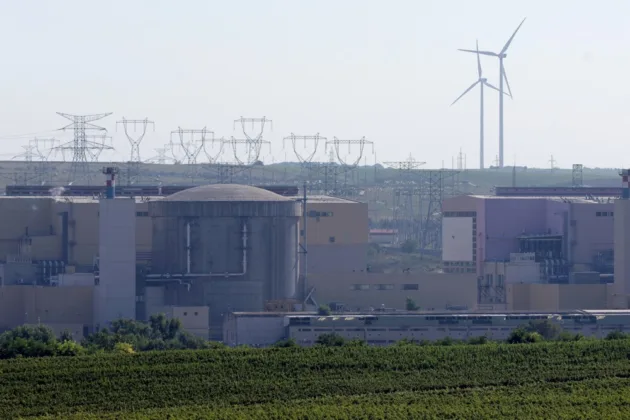






Romania has won at least nine more days of generation from the last working reactor at its only nuclear plant after the army blasted a rock formation out of the Danube and sank four barges loaded with the debris.
Radu Miruță, the defence minister who also holds the transport brief on an interim basis, said the first measurement taken after the operation showed the water level at Cernavodă had risen 4cm in 24 hours. Forecasters had predicted a fall of the same size, leaving a net gain of 8cm.
Plant director Romeo Urjan had put the surviving reactor’s remaining margin at four to five days before the works, according to Romania Insider.
Cernavodă lost its first unit on July 28, when state operator Nuclearelectrica disconnected it from the grid as the Danube fell to its lowest recorded level. The two reactors normally supply about a fifth of Romania’s electricity, and the survivor alone delivers 680MW, roughly a tenth of peak national demand.
The rescue operation began on August 3, when more than 100 soldiers detonated 180kg of explosives on a submerged rock formation known as Parjoaia in the river’s Bala arm. Crews then dredged sandbanks before sinking the barges in two groups.
The scuttled vessels sit diagonally against the current, forming artificial sills that cut the volume drawn off by the Bala branch and push more water down the old Danube channel feeding the plant. Strong currents forced engineers to postpone the sinkings several times.
Ionel Scrioşteanu, who coordinated the work, said the danger had not passed because the current could still shift the barges out of position.
A shutdown of the second unit would allow grid operator Transelectrica to start cutting off industrial users under an emergency mechanism the Romanian Government approved last week. Prime Minister Ilie Bolojan declared a state of alert in the energy sector on July 31 and has repeatedly asked households to curb evening consumption.
The Danube’s flow has fallen to about 1,400 cubic metres per second, close to a third of the August average of 3,900, according to the Romanian Waters National Administration.
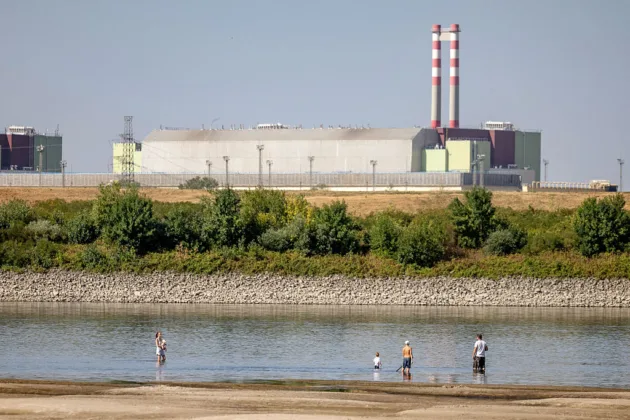
Hungary’s Paks plant, which supplies almost half that country’s electricity, stopped generating altogether this month for the first time in 44 years, prompting the European Commission to offer emergency electricity talks.
Romania itself has been run by a caretaker administration since Bolojan’s government fell to a no-confidence vote on May 5, leaving several ministries, transport among them, in interim hands.