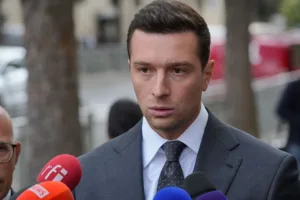
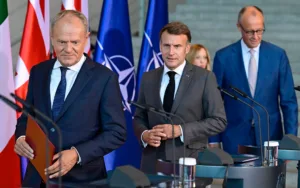
Two new heads of government have joined the European Council’s top table for the first time, as the European Union’s leaders gather in Brussels today for a two-day summit running June 18-19.
Hungary’s Prime Minister Péter Magyar and Bulgaria’s Prime Minister Rumen Radev have each taken office since leaders last met, and both are attending their first European Council at a moment when the bloc is wrestling with its next seven-year budget, migration and the war in Ukraine.
Politico has profiled the newcomers, joining a club whose membership turns over every couple of months.
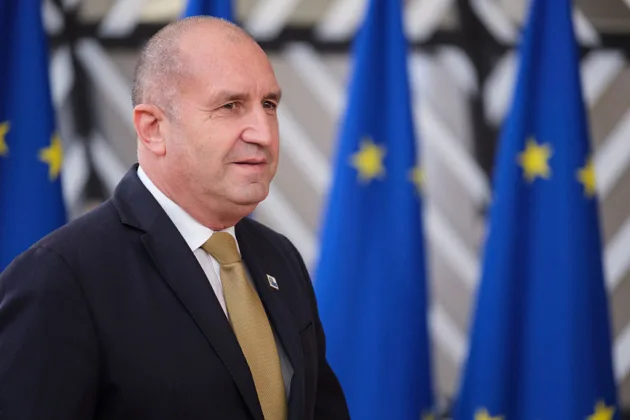
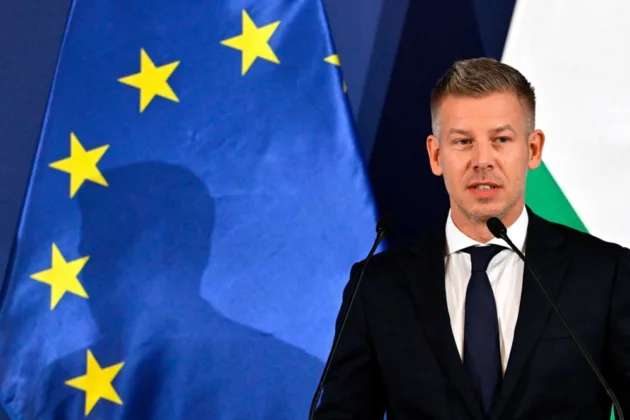
The two have arrived from opposite directions. Magyar, a 45-year-old lawyer leading the Tisza party, has ended Viktor Orbán’s 16-year rule, the leader Brussels regarded as its most awkward. Radev, a former air force commander and two-term Bulgarian president, has won an outright majority on a platform Eurosceptic at home and warmer towards Moscow than most of his peers.
BRUSSELS GETS THE MAN IT WANTED
Magyar’s Tisza sits inside the centre-right European People’s Party (EPP), and his win was welcomed in Brussels almost before the result was confirmed. European Commission President Ursula von der Leyen declared that “Hungary has chosen Europe” within roughly 17 minutes of the count, as Brussels Signal reported at the time. He arrived as the figure Brussels had hoped for, and worked towards, well before Hungarians voted, his central pledge that only a pro-EU leader could prise loose the money the bloc was withholding.
Yet little is known about him. As an MEP, Magyar recorded the lowest roll-call attendance of the term, while parliamentary immunity shielded him from legal proceedings at home. Voters were offered a conservative without the corruption, a claim the absence of any voting record left hard to test.
Nor is he the pro-European blank slate his backers suggest. Magyar has said the EU needs strong external borders and opposes the redistribution of asylum seekers across member states, positions closer to his predecessor’s than the celebrations in Brussels implied.
What has changed is the veto. Orbán’s Hungary cast 21 of the 48 national vetoes recorded in recent years, using it to delay a €90 billion loan for Ukraine. Officials assume Magyar will not block decisions in the same way, removing one of the last reliable brakes on the European Commission’s agenda. Within days of the handover, von der Leyen revived a plan to strip member states of their foreign-policy veto, the very tool Budapest had wielded more than any other capital.
The reward has been financial, at least on paper. Around €20 billion had been frozen over rule-of-law concerns, with roughly €10 billion of post-Covid money due to lapse without a deal by late August. Von der Leyen and Magyar have since announced the partial unlocking of €16.4 billion. Yet the sum was always Hungary’s, much of the earlier cohesion money is already lost for good under the bloc’s spending deadlines, and what remains is tied to conditions on Ukraine, migration and identity legislation that Brussels could withdraw if Budapest fails to comply.
A NEW SCEPTIC AT THE TABLE
If Magyar removes an obstacle from the room, Radev may add one. His Progressive Bulgaria party took around 45 per cent of the vote on April 19, the first outright majority in the Bulgarian parliament since 1997.
Radev has said Bulgaria would stay on its “European path”, though he has also criticised the bloc’s reliance on renewable energy, attacked the Green Deal and called for the resumption of Russian oil and gas supplies. He opposed military aid to Kyiv during his presidency and has argued for “practical relations with Russia”.
Analysts distinguish him from Orbán. Bulgaria is far more dependent on European funds and its institutions weaker, which limits how far Radev can push. The European Council on Foreign Relations has argued he is likely to sound like Orbán while acting more like Slovakia’s Prime Minister Robert Fico, disagreeing at home but stopping short of blocking decisions.
As Brussels Signal has examined before, voters in Bulgaria, like those in Hungary, abandoned traditional parties that had failed them.
THE BALANCE OF THE ROOM
For the leaders gathered today, the arithmetic matters. The summit is meant to advance the 2028-2034 Multiannual Financial Framework, the EU’s next long-term budget, alongside defence, migration and the opening of accession talks with Ukraine and Moldova.
On spending, the two pull in different directions. Magyar owes his room for manoeuvre to Brussels and has every incentive to keep the Commission onside, an unlikely brake on the budget the executive wants. Radev, reliant on European funds yet sceptical of how the bloc raises and spends them, is likely to drive a harder bargain, particularly on energy and new own resources.
On migration, the picture is less clear-cut. Magyar’s pro-EU label masks a hard line on borders, and Bulgaria, on the bloc’s southeastern flank, has long pressed for tighter control. Neither leader is an obvious ally for those seeking a looser asylum regime.
European Parliament President Roberta Metsola has opened the meeting. What follows will test whether the loss of the EU’s loudest sceptic, and the arrival of a quieter one, leaves the European Council easier or harder to steer.