
When the European Union moved to unblock €6.6 billion from the European Peace Facility in June 2026, one might have expected Poland to be among the principal beneficiaries. Since the escalation of the conflict in early 2022, few countries have contributed more to Ukraine‘s war effort. Poland supplied large quantities of military equipment from its own stocks, became the primary logistical hub for Western assistance, hosted well over a million Ukrainian refugees, and increased defence spending at a pace unmatched by most European partners.
Yet when the discussion turned to reimbursement, Warsaw appeared remarkably modest in its expectations.
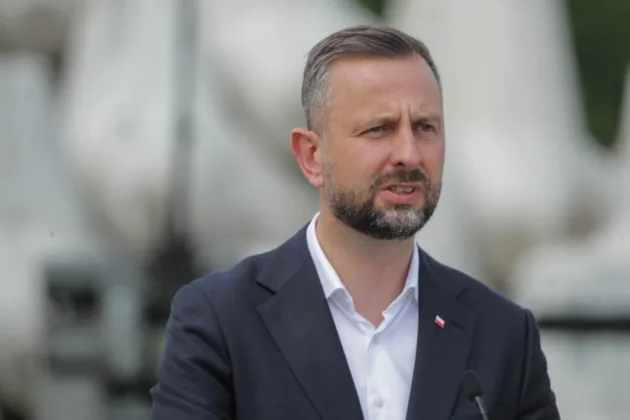
Deputy Defence Minister Paweł Zalewski stated in May that Poland expected to receive around €300 million from the newly unblocked funds. Considering the scale of Polish support over the past four years, the figure was strikingly low. More importantly, it raised a broader question: Has Poland’s enormous contribution translated into either proportional compensation or greater political influence within the European Union?
The answer appears increasingly uncertain.
The European Peace Facility was originally designed to help reimburse member states for military assistance provided to partners such as Ukraine. The mechanism became effectively frozen after Hungary blocked a tranche worth more than €6 billion in 2024. With Budapest’s veto now expected to be lifted following the change of government in Hungary, member states are preparing to recover at least a portion of their previous expenditures.
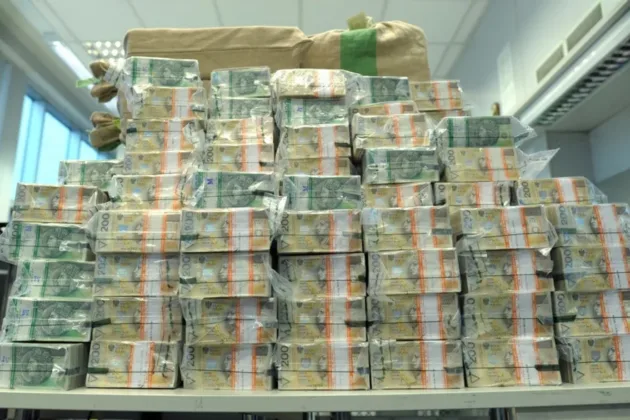
The problem is that reimbursement requests reportedly reach as high as €43 billion, while the available funding amounts to only €6.6 billion. In other words, every capital is competing for a relatively small pool of money. Against this backdrop, Poland‘s own expectation of receiving approximately €300 million appears less like a negotiating position and more like an acceptance of limited returns.
This matters because Poland’s role in supporting Ukraine has never been symbolic. Warsaw transferred tanks, armoured vehicles, ammunition and other military equipment from its own inventories at a time when many larger European states were still debating the extent of their commitments. It absorbed significant economic and social costs associated with hosting refugees. It accepted increased security risks resulting from its position as the primary transit corridor for military assistance entering Ukraine.
These decisions were presented as investments in European security. They may well have been. Yet investments are usually expected to generate some form of return. In Poland‘s case, that return remains difficult to identify.
The issue extends beyond reimbursement mechanisms. It also concerns influence.
Despite its central role in the conflict, Poland has often found itself on the margins of key diplomatic discussions. In late 2025, reports emerged that Warsaw had been largely side lined from important discussions concerning possible pathways toward ending the conflict. More broadly, Poland’s representation within the European Union’s diplomatic structures remains surprisingly limited when compared to both its population size and its geopolitical importance.
The contrast becomes particularly visible when compared with Estonia. Kaja Kallas, the former Estonian Prime Minister who now serves as the EU‘s High Representative for Foreign Affairs and Security Policy, has played a central role in shaping the bloc’s policy toward Ukraine. Estonia‘s material contribution has been significantly smaller than Poland’s, yet through consistent strategic messaging and strong institutional presence, Tallinn has achieved a level of influence that Warsaw has struggled to match despite its much greater investment.
According to the current list of EU ambassadors, Poland holds only five positions. This is fewer than Portugal, despite Poland having nearly four times its population and bearing one of the heaviest burdens in supporting Ukraine. Larger member states such as France and Germany maintain over twenty ambassadors each. The contrast is difficult to ignore.
This disconnect carries domestic consequences.
The initial wave of solidarity with Ukraine that characterised much of Polish society in 2022 has gradually evolved into a more complicated discussion. Support for Ukraine remains substantial, but public debate increasingly includes questions about costs, priorities and long-term national interests. These questions are not necessarily signs of hostility toward Ukraine. Rather, they reflect a growing expectation that Polish policymakers should be able to demonstrate tangible benefits from policies that require significant national sacrifice.
That expectation is entirely reasonable.
Every government must ultimately answer a simple question: What did the country gain from the choices it made? In Poland’s case, the answer is becoming less obvious with each passing year. The country has contributed enormous resources and accepted substantial risks. Yet when reimbursement discussions begin, Warsaw expects relatively little. When major decisions are made, its influence often appears more limited than its contribution would suggest.
This is not merely a question about Ukraine. It is a question about statecraft. Poland has spent the last four years acting like a loyal ally. The question now is whether it is ready to start acting like a sovereign nation.